
The History of Chicago’s Italian Beef: From Immigrant Tradition to City Icon
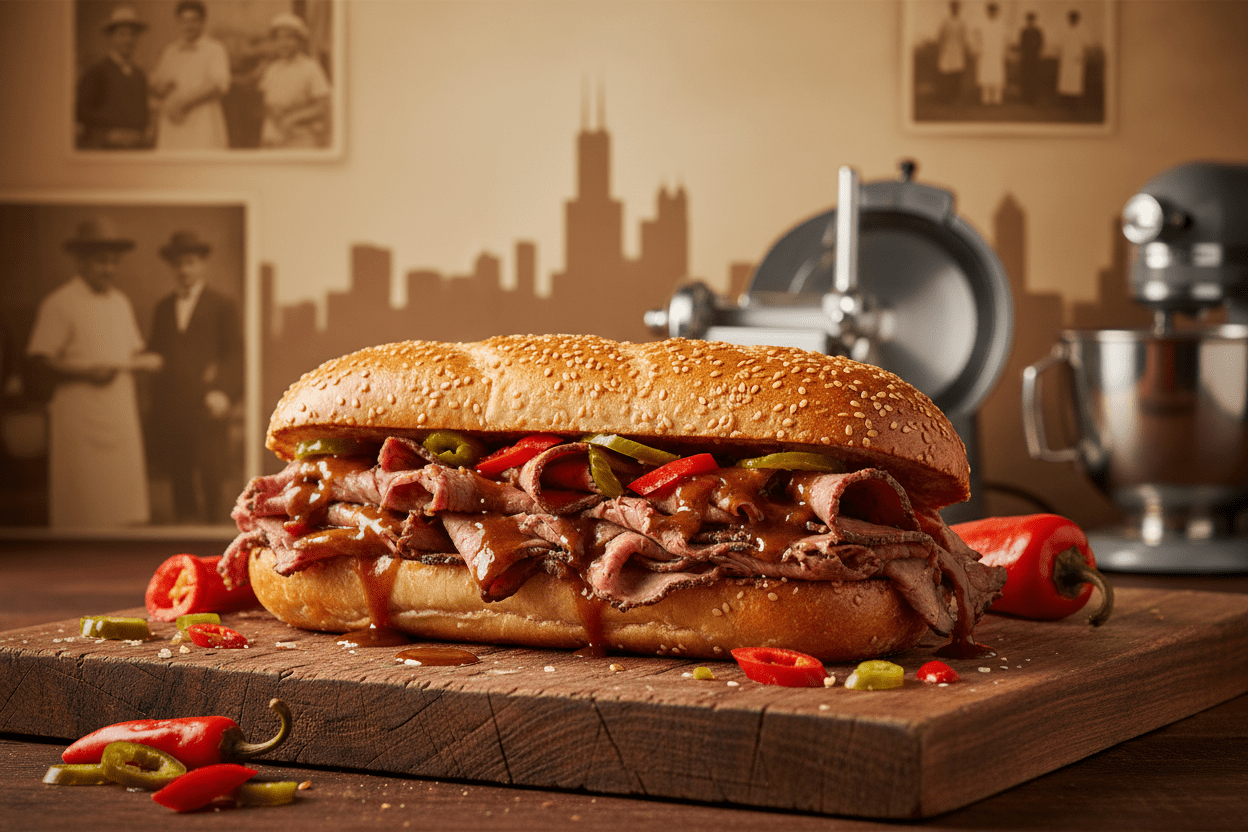
Walk down any street in Chicago, and you’ll catch the unmistakable aroma of seasoned beef, garlic, and oregano wafting from sandwich shops across the city. The Italian beef sandwich isn’t just food in Chicago—it’s a cultural institution that tells the story of immigrant dreams, family traditions, and the evolution of American cuisine. This messy, magnificent sandwich has traveled from the humble kitchens of Italian immigrants to become one of the Windy City’s most beloved culinary exports.
The journey of Chicago’s Italian beef reflects the broader narrative of how immigrant communities shaped American food culture. What began as a practical solution for feeding large families on a budget has transformed into a sandwich that defines Chicago’s identity almost as much as deep-dish pizza or Chicago-style hot dogs.
The Immigrant Roots: Italian Families and the Birth of a Tradition
The story of Italian beef begins in the early 1900s when waves of Italian immigrants arrived in Chicago, seeking better opportunities and escaping economic hardship in their homeland. These families brought with them cherished recipes, cooking techniques, and an unwavering commitment to making the most of every ingredient.
Italian immigrant families faced the challenge of feeding large households while stretching their limited budgets. Beef was expensive, but these resourceful cooks discovered they could make cheaper cuts of meat incredibly flavorful through slow cooking and careful seasoning. They developed a technique of slow-roasting beef with a blend of Italian herbs and spices, then slicing it paper-thin to maximize every ounce.
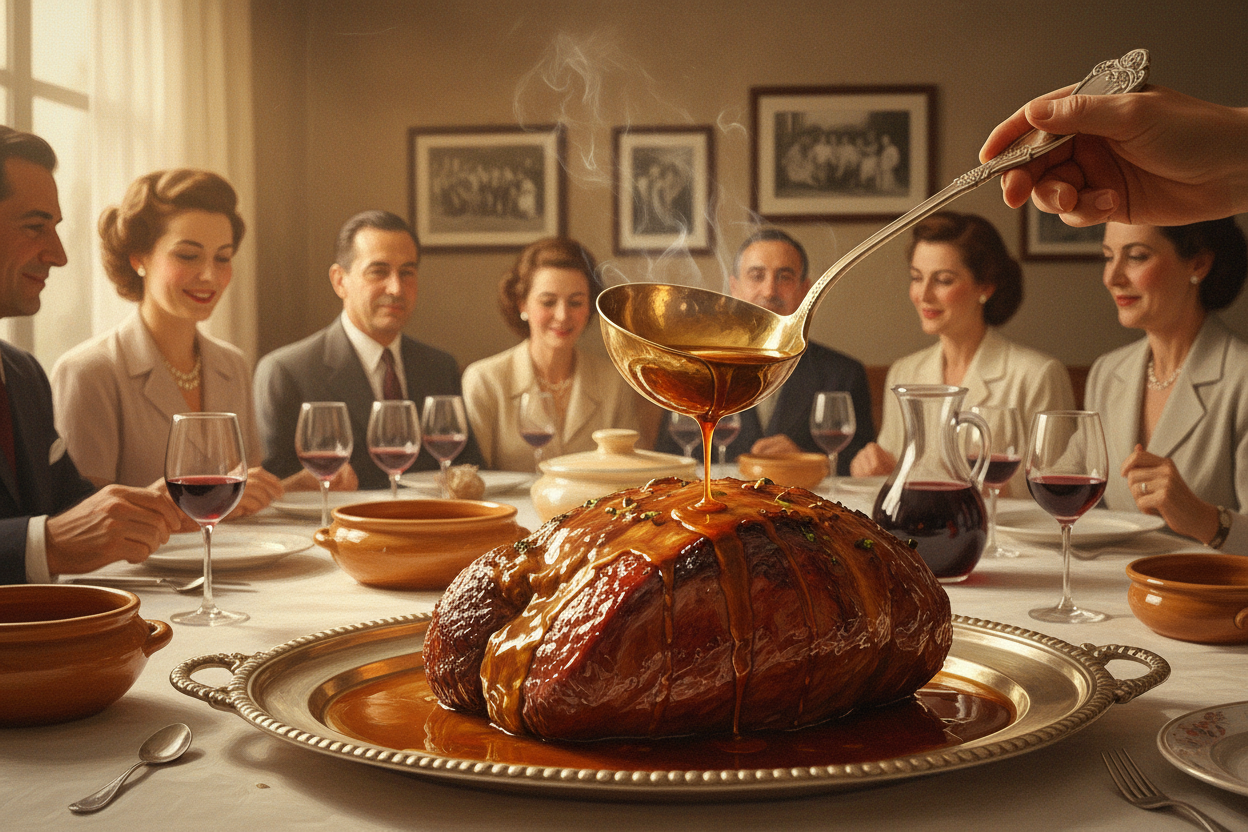
The original Italian beef wasn’t served as a sandwich at all. Instead, families would prepare large roasts for special occasions like weddings, baptisms, and community celebrations. The meat was served alongside the flavorful cooking juices, which Italian families called “gravy” or “jus.” This cooking method ensured that even the toughest cuts became tender and delicious, while the aromatic cooking liquid added incredible depth of flavor.
From Family Kitchens to Street Corners: The Commercial Evolution
The transformation from family tradition to commercial enterprise happened gradually throughout the 1930s and 1940s. Italian-American families began selling their sandwiches from small storefronts and street carts, particularly in neighborhoods like Little Italy and the Near West Side where Italian immigrants had established thriving communities.
One of the most significant developments came when enterprising Italian-Americans realized they could serve the thinly sliced beef on Italian bread, creating a portable meal that working-class Chicagoans could enjoy on the go. The sandwich format made the dish more accessible and practical for busy workers who needed a hearty, affordable lunch.
The cooking method became more refined during this period. Vendors developed specialized techniques for achieving the perfect balance of flavors in their beef seasoning, often closely guarding their family recipes. The meat was typically seasoned with garlic, oregano, basil, black pepper, and other Italian herbs before being slow-roasted to perfection.
The Al’s Beef Legacy: Establishing the Gold Standard
While many families contributed to the development of Italian beef, Al’s Beef holds a special place in the sandwich’s history. Founded by Al Ferreri and his sister Frances in 1938, Al’s Beef began as a small stand serving Italian beef to construction workers and local residents. The Ferreri family’s approach to Italian beef helped establish many of the standards that define the sandwich today.
Al’s Beef introduced several innovations that became industry standards. They perfected the art of slicing the beef incredibly thin, ensuring maximum tenderness and flavor distribution. They also developed the signature serving style where the sandwich could be ordered “dry,” “wet,” or “dipped”—referring to how much of the flavorful cooking juices customers wanted on their sandwich.
The success of Al’s Beef demonstrated that Italian beef had commercial potential beyond the Italian-American community. Their popularity helped introduce the sandwich to Chicagoans of all backgrounds, gradually transforming it from an ethnic specialty into a city-wide phenomenon.
Post-War Expansion: Italian Beef Goes Mainstream
The post-World War II economic boom provided the perfect conditions for Italian beef’s expansion throughout Chicago. Returning veterans had developed more adventurous palates during their service, and the growing suburban population was eager to explore the city’s diverse food offerings.
During the 1950s and 1960s, Italian beef stands began appearing in neighborhoods far from the original Italian enclaves. Family-owned businesses expanded their operations, and new entrepreneurs entered the market, each adding their own variations to the basic recipe while maintaining the core elements that made Italian beef special.
This period also saw the standardization of Italian beef preparation methods. While family recipes remained closely guarded secrets, certain techniques became universal: the slow-roasting process, the paper-thin slicing, and the serving of the meat in its own juices on crusty Italian bread.
The Giardiniera Connection: Adding Heat and Flavor
No discussion of Chicago Italian beef would be complete without mentioning giardiniera, the spicy pickled vegetable relish that became the sandwich’s perfect companion. Like Italian beef itself, giardiniera arrived in Chicago with Italian immigrants who brought their preservation techniques for vegetables.
The marriage between Italian beef and giardiniera happened naturally as both were staples in Italian-American households. The sharp, acidic bite of the pickled vegetables provided the perfect counterpoint to the rich, savory beef, while the oil from the giardiniera added another layer of flavor and moisture to the sandwich.
Chicago-style giardiniera developed its own unique characteristics, becoming spicier and more oil-heavy than its Italian predecessors. This adaptation reflected the preferences of Chicago diners and the practical needs of sandwich preparation, as the oil helped keep the bread from becoming too soggy while adding flavor.
Cultural Impact: More Than Just a Sandwich
By the 1970s and 1980s, Italian beef had transcended its origins to become a true Chicago icon. The sandwich appeared in movies, television shows, and literature as a symbol of authentic Chicago culture. It became a point of pride for Chicagoans, who would passionately defend their city’s version against inferior imitations found elsewhere.
The Italian beef sandwich also played a role in Chicago’s working-class identity. Unlike expensive steakhouse meals or fancy restaurant dishes, Italian beef remained accessible to everyone. Construction workers, office employees, students, and tourists could all enjoy the same high-quality sandwich, creating a shared culinary experience that crossed social and economic boundaries.
Local sports figures, politicians, and celebrities regularly praised Chicago’s Italian beef, further cementing its status as a cultural touchstone. The sandwich became part of the Chicago experience that visitors were expected to try, alongside other local specialties.
Modern Evolution: Tradition Meets Innovation
Today’s Italian beef scene in Chicago represents a fascinating blend of tradition and innovation. While many of the original family-owned establishments continue to operate using recipes and techniques passed down through generations, new players have entered the market with fresh approaches to the classic sandwich.
Some modern Italian beef shops have expanded their menus to include variations like Italian beef pizza, Italian beef egg rolls, or fusion combinations that incorporate elements from other cuisines. However, purists argue that the best Italian beef remains true to its original form: perfectly seasoned beef, sliced thin, served on crusty bread with giardiniera and plenty of jus.
The rise of food tourism and social media has brought renewed attention to Chicago’s Italian beef culture. Food bloggers, travel writers, and culinary enthusiasts regularly make pilgrimages to the city’s most famous Italian beef stands, documenting their experiences and spreading awareness of this uniquely Chicago creation.
The Technique Behind the Taste
What makes Chicago Italian beef truly special isn’t just the ingredients—it’s the technique that has been refined over generations. The process begins with selecting the right cut of beef, typically eye of round or bottom round, which becomes incredibly tender when slow-roasted properly.
The seasoning blend varies from shop to shop, but typically includes garlic, oregano, basil, black pepper, and sometimes fennel or other Italian herbs. The meat is rubbed with these seasonings and slow-roasted at low temperatures, allowing the flavors to penetrate deeply while keeping the meat moist and tender.
The slicing technique is crucial—the beef must be cut paper-thin against the grain to ensure maximum tenderness. This requires skill and the right equipment, as thick slices would make the sandwich tough and difficult to eat. The thin slicing also allows the meat to absorb more of the flavorful cooking juices when assembled into a sandwich.
A Legacy That Continues
The history of Chicago’s Italian beef is ultimately a story about community, tradition, and the American dream. What began as a practical cooking method in immigrant kitchens has evolved into one of America’s most distinctive regional foods. The sandwich represents the creativity and resourcefulness of Italian-American families who transformed simple ingredients into something extraordinary.
Today, as Chicago continues to evolve and change, Italian beef remains a constant—a delicious link to the city’s past and a source of pride for its residents. Whether you order it “wet” or “dry,” with or without giardiniera, the Italian beef sandwich carries with it over a century of Chicago history, family traditions, and the enduring appeal of perfectly prepared comfort food.
The next time you bite into a Chicago Italian beef sandwich, remember that you’re not just enjoying a meal—you’re participating in a culinary tradition that connects you to generations of Italian-American families who helped make Chicago the diverse, flavorful city it is today.