
The History of Navy Pier: From Shipping Hub to Tourist Destination
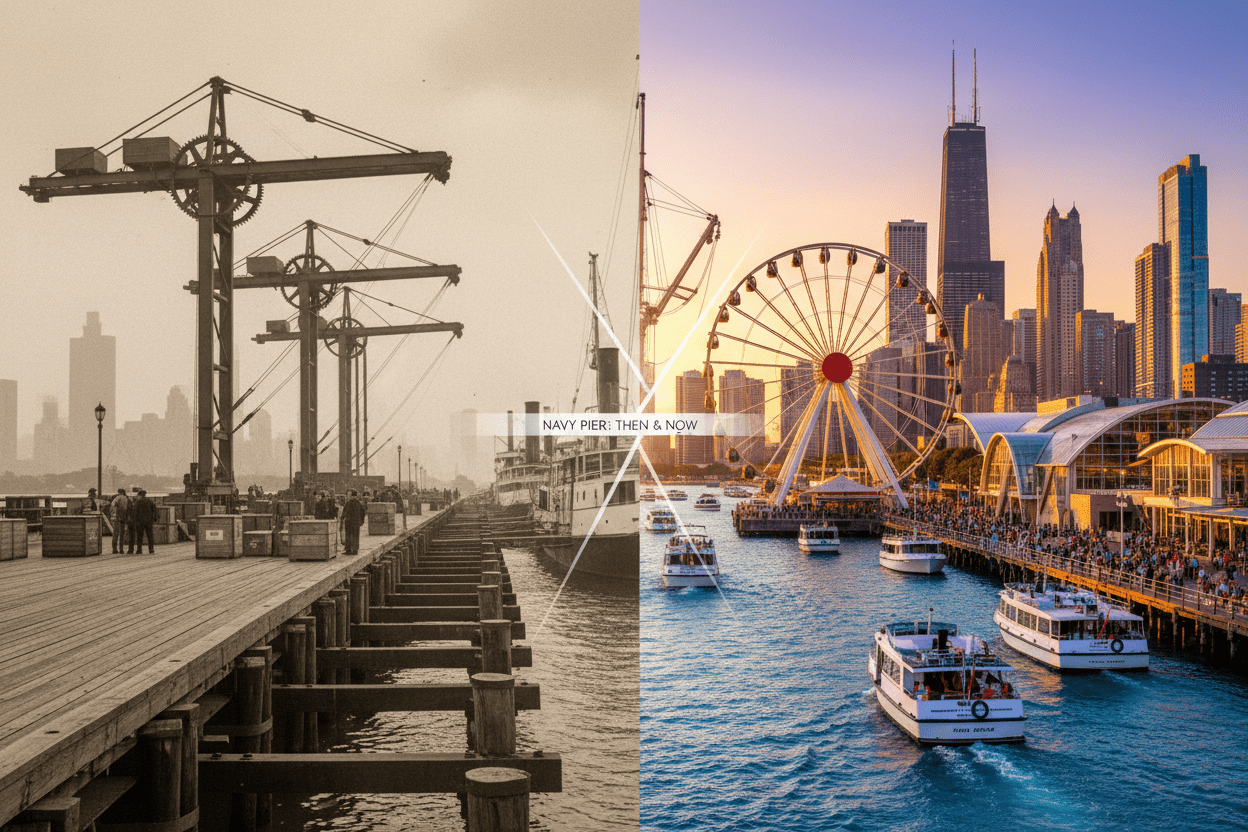
Standing majestically along Chicago’s shoreline, Navy Pier has witnessed over a century of remarkable transformation. What began as a utilitarian shipping facility in the early 1900s has evolved into one of the Midwest’s most beloved tourist destinations, welcoming millions of visitors annually. This iconic structure tells the story of Chicago’s industrial prowess, wartime resilience, and modern reinvention—a testament to how cities can breathe new life into aging infrastructure.
Today, as families stroll along its wooden planks and couples share romantic moments beneath the glow of the Centennial Wheel, few realize they’re walking through layers of American history. From cargo ships to aircraft carriers, from industrial decline to spectacular revival, Navy Pier’s journey mirrors Chicago’s own evolution from a gritty industrial powerhouse to a world-class cultural destination.
The Birth of Municipal Pier: Chicago’s Industrial Vision
The story of Navy Pier begins in 1916 when it opened as Municipal Pier, a bold engineering project designed to establish Chicago as a major shipping and recreational hub on Lake Michigan. The brainchild of architect Charles Sumner Frost and engineer Edward H. Bennett, this massive structure stretched 3,300 feet into the lake—making it the longest pier in the world at the time.
Chicago’s leaders envisioned Municipal Pier as more than just a shipping facility. They dreamed of a multi-purpose venue that would serve both commercial and recreational needs, featuring cargo handling areas alongside public spaces for entertainment and leisure. The pier’s distinctive design, with its grand headhouse and expansive wooden deck, reflected the City Beautiful movement’s influence on urban planning during the Progressive Era.
The timing couldn’t have been more perfect. As World War I raged in Europe, Chicago’s strategic location on the Great Lakes made it crucial for domestic shipping and commerce. Municipal Pier quickly became a bustling center of activity, handling everything from lumber and grain to manufactured goods destined for markets across the Midwest.
World War Years: A Naval Training Ground
The pier’s transformation into a military facility began during World War I, when the U.S. Navy recognized its strategic value. However, it was during World War II that Municipal Pier truly earned its current name. In 1941, the Navy took control of the facility, converting it into a comprehensive training center for aircraft carrier pilots.
The pier’s vast open spaces proved ideal for housing aircraft and conducting training exercises. Thousands of young aviators learned their craft here, preparing for the dangerous missions that awaited them in the Pacific Theater. The facility housed multiple aircraft squadrons and became home to the Navy’s Aircraft Carrier Training Program, where pilots practiced the challenging art of carrier landings.
During this period, the pier buzzed with military activity around the clock. Barracks, mess halls, and training facilities replaced much of the civilian infrastructure. The sound of aircraft engines echoed across the lake as pilots honed their skills, knowing that their training at Navy Pier could mean the difference between life and death in combat.
The military’s presence extended beyond pilot training. Navy Pier also served as a prisoner of war camp, housing German and Italian POWs who worked in various capacities to support the war effort. This chapter in the pier’s history adds another layer to its complex wartime legacy.
Post-War Decline and the Search for Purpose
When World War II ended in 1945, Navy Pier faced an uncertain future. The military no longer needed the facility, and the shipping industry was rapidly changing. Containerization and new transportation methods were making traditional pier facilities less relevant. What had once been a vital commercial and military asset now seemed like a massive white elephant on Chicago’s lakefront.
The 1950s and 1960s brought various attempts to repurpose the pier. The University of Illinois established a temporary campus there, serving students until the main Chicago campus was completed. The pier also hosted trade shows, conventions, and cultural events, but these activities couldn’t fill the enormous space or generate enough revenue to maintain the aging structure.
By the 1970s, Navy Pier had fallen into serious disrepair. The wooden deck was rotting, buildings were deteriorating, and the once-proud facility had become something of an eyesore. Many Chicagoans viewed it as a relic of the past, occupying valuable lakefront real estate that could be better utilized. Some even called for its demolition, arguing that the pier had outlived its usefulness.
However, a small but dedicated group of preservationists and urban planners saw potential in the pier’s bones. They recognized that its prime location, substantial infrastructure, and historical significance made it a candidate for adaptive reuse rather than demolition.
The Grand Transformation: Reimagining Navy Pier
The 1990s marked the beginning of Navy Pier’s most dramatic transformation. Under the leadership of Mayor Richard M. Daley and with significant public and private investment, the pier underwent a massive renovation that would reshape both its physical appearance and cultural significance.
The $196 million renovation project, completed in 1995, was ambitious in scope. Architects and planners worked to preserve the pier’s historical character while creating modern attractions and amenities. The iconic headhouse was restored to its former glory, while new additions included restaurants, shops, theaters, and exhibition spaces.
One of the most significant additions was the installation of a 150-foot Ferris wheel, which quickly became an iconic symbol of the new Navy Pier. The wheel offered breathtaking views of the Chicago skyline and Lake Michigan, creating the kind of memorable experience that would draw visitors from around the world.
The renovation also emphasized the pier’s connection to Lake Michigan. Boat tours, water taxis, and recreational boating facilities were integrated into the design, allowing visitors to experience the pier from both land and water perspectives. This maritime connection honored the pier’s shipping heritage while creating new recreational opportunities.
Modern Navy Pier: A Cultural and Entertainment Destination
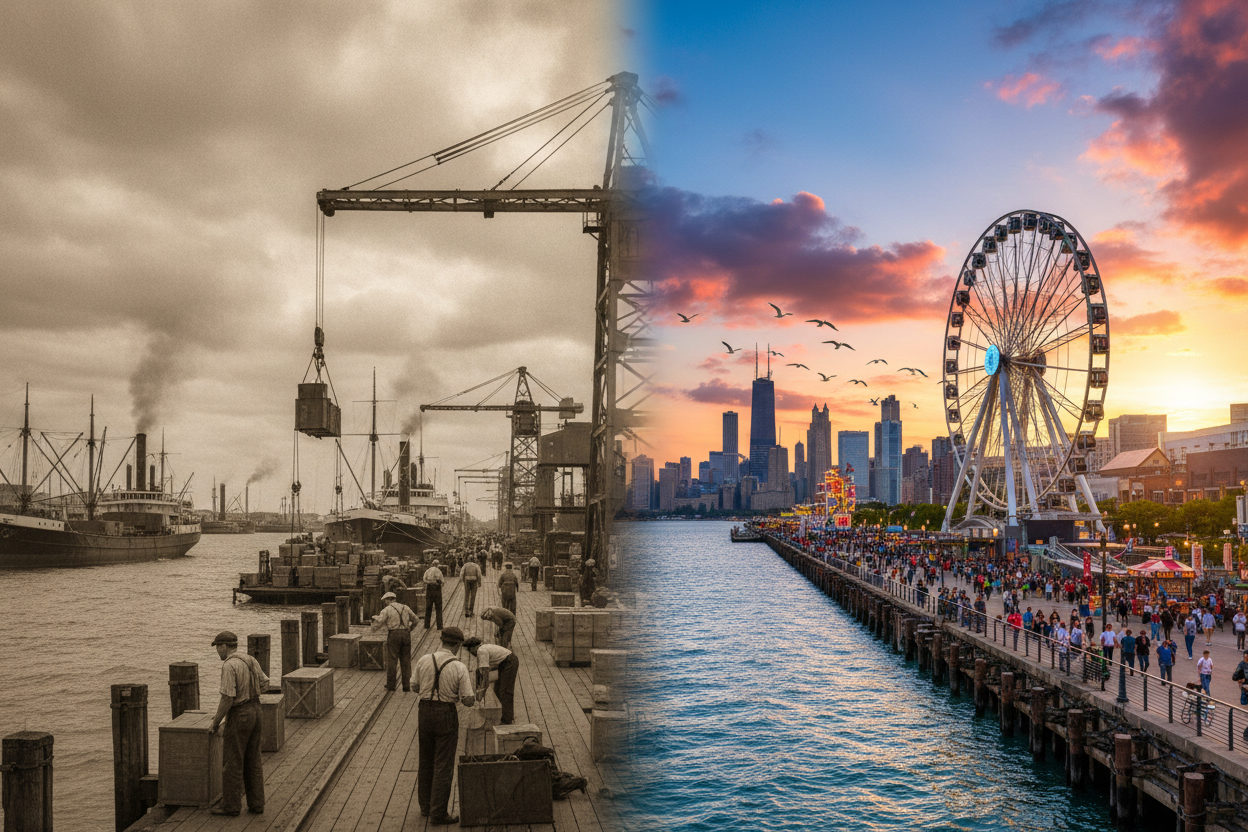
Today’s Navy Pier bears little resemblance to its industrial origins, yet it maintains a connection to its past through thoughtful preservation and interpretation. The pier now welcomes over 9 million visitors annually, making it one of the most popular tourist destinations in the Midwest.
The transformation has been comprehensive. Where cargo once moved through utilitarian warehouses, families now enjoy interactive museums like the Chicago Children’s Museum and the Chicago Shakespeare Theater. The pier’s restaurants offer everything from casual dining to upscale cuisine, all with spectacular lake views that were once reserved for dock workers and sailors.
The Centennial Wheel, which replaced the original Ferris wheel in 2016, stands as a symbol of the pier’s continuous evolution. At 196 feet tall, it offers year-round climate-controlled gondolas and serves as a beacon visible from miles away. The wheel’s LED lighting system creates nightly displays that have become part of Chicago’s skyline identity.
Entertainment options have expanded far beyond what the pier’s original planners could have imagined. The pier hosts concerts, festivals, and fireworks displays throughout the year. The Chicago Shakespeare Theater has gained international recognition, while the pier’s various event spaces accommodate everything from corporate meetings to wedding receptions.
Preserving History While Embracing the Future
One of the most remarkable aspects of Navy Pier’s transformation has been the careful balance between preservation and innovation. Historical elements have been preserved and interpreted for modern visitors, allowing them to understand and appreciate the pier’s layered past.
The pier’s museum spaces regularly feature exhibitions about its history, from its early days as a shipping facility through its military service to its current role as a cultural destination. These educational components help visitors understand that they’re not just visiting an entertainment venue—they’re experiencing a piece of American history.
Ongoing renovation projects continue to refine and improve the pier’s offerings. The recent “Centennial Vision” project has added new public spaces, improved accessibility, and created more opportunities for year-round programming. These improvements ensure that Navy Pier remains relevant and appealing to new generations of visitors.
The pier’s commitment to sustainability also reflects modern values while honoring its lakefront location. Green building practices, energy-efficient systems, and environmental education programs demonstrate how historic structures can be adapted to meet contemporary environmental standards.
Conclusion: A Testament to Urban Renewal
The remarkable journey of Navy Pier from shipping hub to tourist destination represents one of America’s most successful examples of adaptive reuse and urban renewal. This transformation demonstrates how communities can honor their industrial heritage while creating new opportunities for economic development and cultural enrichment.
As visitors walk along Navy Pier today, they’re experiencing more than just entertainment and dining—they’re participating in a living piece of Chicago’s history. The pier’s success has inspired similar projects across the country, proving that with vision, investment, and community support, aging infrastructure can be given new life and purpose.
Navy Pier’s story continues to evolve, with each new attraction, event, and visitor adding another chapter to its rich history. From the cargo ships of the early 1900s to the pleasure boats of today, from military training grounds to family entertainment, Navy Pier embodies Chicago’s resilience, creativity, and ability to reinvent itself while staying true to its roots. It stands as a testament to the power of imagination and the enduring appeal of places where history and innovation meet along the shores of Lake Michigan.