
The Science of Chicago Weather: Understanding the Lake Effect and Urban Heat Island
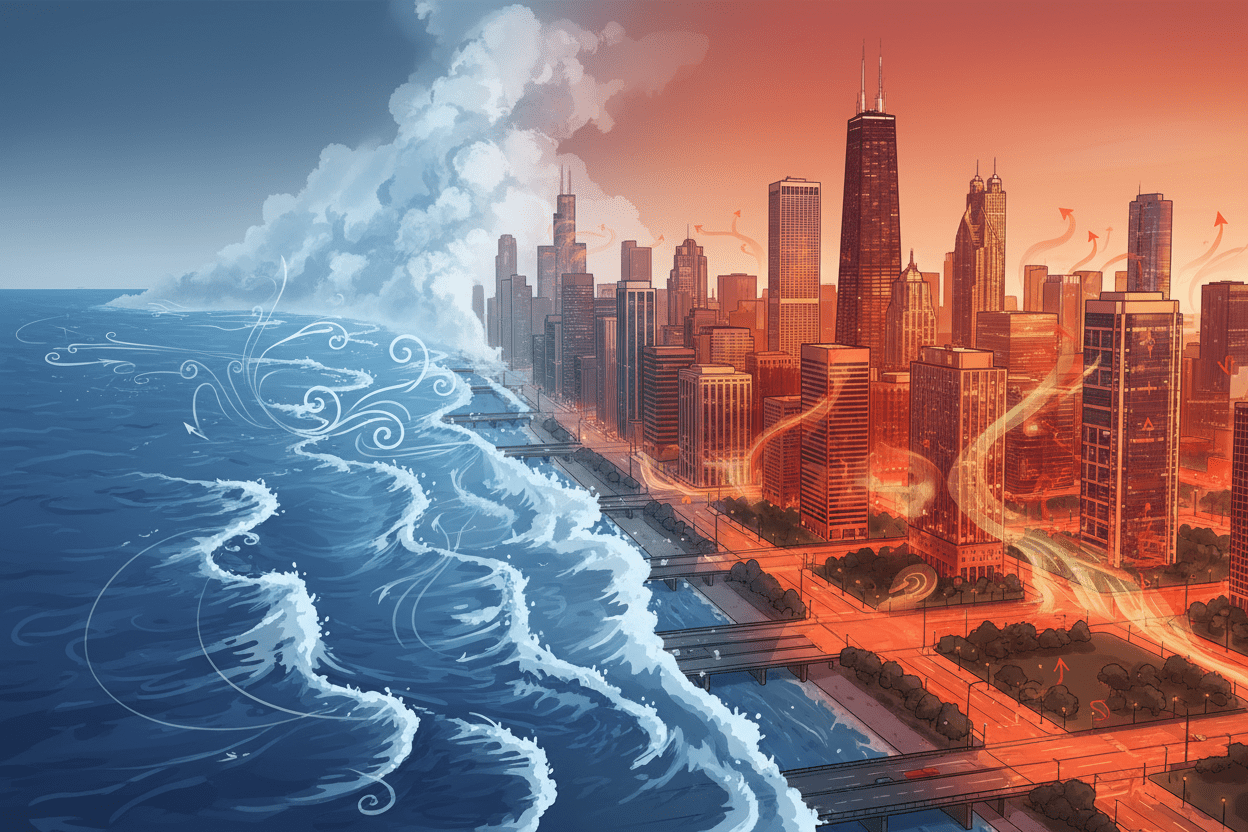
Chicago’s weather has a personality all its own. One moment you’re basking in lakefront breezes, the next you’re battling bone-chilling winds that seem to cut right through your winter coat. If you’ve ever wondered why the Windy City’s weather patterns are so unique and sometimes unpredictable, you’re not alone. The answer lies in two fascinating meteorological phenomena that make Chicago’s climate truly distinctive: the lake effect and the urban heat island.
Living in Chicago means experiencing weather that can change dramatically within just a few miles. Drive from downtown to the suburbs, and you might encounter completely different temperatures, wind patterns, and precipitation levels. This isn’t just your imagination – it’s science in action, shaped by Lake Michigan’s massive presence and the city’s sprawling urban landscape.
The Mighty Lake Michigan: Chicago’s Weather Maker
Lake Michigan isn’t just a beautiful backdrop for Chicago’s skyline – it’s the city’s most influential weather maker. This massive body of water, containing roughly 1,180 cubic miles of water, acts like a giant climate moderator that affects everything from daily temperatures to seasonal weather patterns.
The lake’s sheer size means it heats up and cools down much more slowly than the surrounding land. During summer months, when the sun beats down on Chicago’s concrete and asphalt, Lake Michigan remains relatively cool. Conversely, in winter, the lake retains heat longer than the frozen ground, creating a complex interplay of temperatures that drives the region’s unique weather systems.
This temperature differential between water and land creates pressure differences that generate winds, influence cloud formation, and can even redirect storm systems. For Chicagoans, this means that weather forecasts often need to account for your proximity to the lake – a reality that anyone living in neighborhoods like Lincoln Park or Hyde Park knows all too well.
Decoding the Lake Effect: Snow, Rain, and Temperature Swings
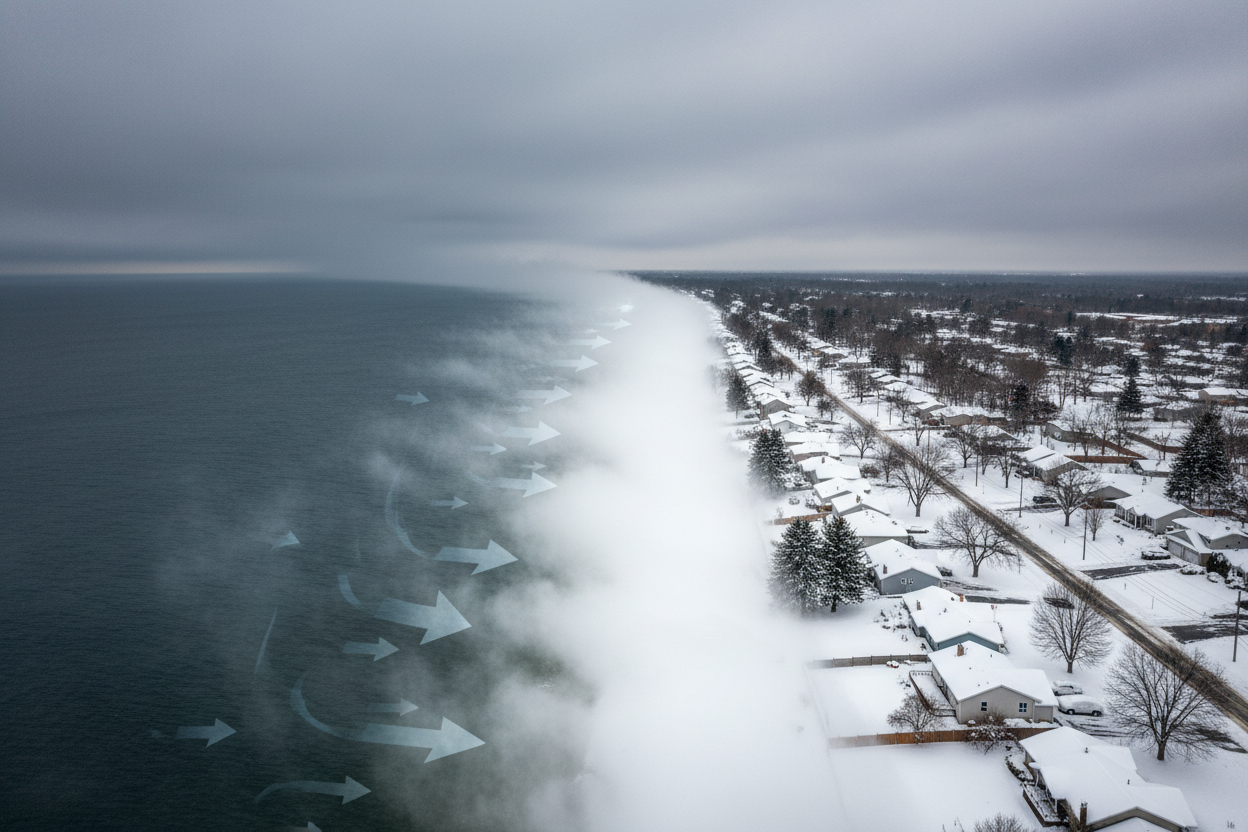
The lake effect phenomenon occurs when cold air masses move across the relatively warmer waters of Lake Michigan. As this cold air travels over the lake, it picks up moisture and heat, creating instability in the atmosphere. When this modified air mass reaches the shore and encounters the cooler land, it rises rapidly, forming clouds and often producing precipitation.
Lake effect snow is perhaps the most dramatic example of this process. During late fall and early winter, when Lake Michigan hasn’t yet frozen over, arctic air sweeping across the lake can create intense, localized snowfall. These snow bands can be remarkably narrow – sometimes just a few miles wide – but incredibly heavy. Residents of lakefront neighborhoods might find themselves digging out from under several inches of snow while friends just a few miles inland barely see a flurry.
The lake effect doesn’t just influence snow patterns. During summer, the same process can create sudden thunderstorms, particularly along the immediate shoreline. The lake can also moderate temperatures year-round, keeping lakefront areas cooler in summer and warmer in winter compared to inland locations.
Chicago’s Urban Heat Island: When Cities Create Their Own Climate
While Lake Michigan works to moderate Chicago’s temperatures, the city itself creates an entirely different meteorological phenomenon: the urban heat island effect. This occurs when urban areas become significantly warmer than their surrounding rural areas, and Chicago provides a textbook example of this process in action.
The urban heat island effect results from several factors working together. Dark surfaces like asphalt roads, parking lots, and rooftops absorb and retain solar radiation much more effectively than natural surfaces like grass, trees, and soil. During the day, these surfaces soak up heat, and at night, they slowly release it back into the atmosphere, keeping urban areas warmer.
Chicago’s dense concentration of buildings, vehicles, and industrial activity compounds this effect. The city’s concrete jungle traps heat in multiple ways: buildings block cooling winds, reduce evaporation from vegetation, and generate additional heat through energy consumption. Air conditioning systems, vehicles, and industrial processes all contribute to raising the ambient temperature.
The result is that Chicago’s downtown core can be anywhere from 2 to 10 degrees Fahrenheit warmer than its surrounding suburbs, with the most dramatic differences occurring on calm, clear nights. This temperature difference isn’t just a curiosity – it has real implications for energy consumption, air quality, and public health.
The Complex Dance: How Lake Effect and Urban Heat Island Interact
What makes Chicago’s weather truly fascinating is how these two phenomena interact with each other. The urban heat island effect can actually enhance or modify lake effect patterns, creating even more complex weather scenarios.
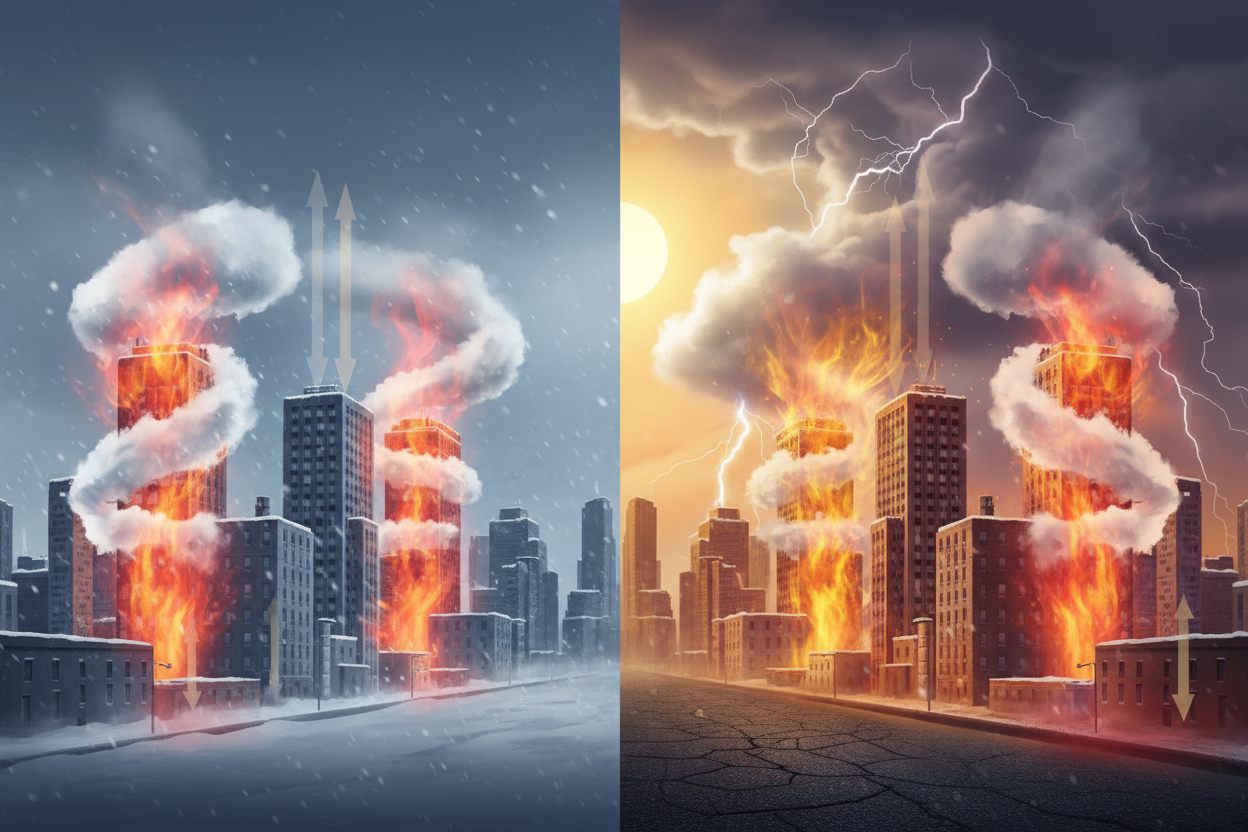
During winter, the urban heat island can intensify lake effect snow by creating additional lift in the atmosphere. The warmer air rising from the city can enhance the vertical motion needed for heavy snowfall, sometimes leading to particularly intense snow bands over urban areas. Conversely, during summer, the interaction can create powerful thunderstorms as the heated urban air provides the energy needed for storm development.
The timing of these interactions matters too. Early morning hours often see the most dramatic temperature differences, as the urban heat island effect is most pronounced after a night of heat retention, while the lake effect cooling is at its peak. By afternoon, solar heating can reduce these contrasts, leading to more uniform conditions across the metropolitan area.
Seasonal Variations: How Chicago’s Weather Patterns Change Throughout the Year
Chicago’s unique weather patterns shift dramatically with the seasons, as the relationship between the lake and the urban environment evolves throughout the year.
Spring brings some of the most variable weather as Lake Michigan slowly warms while the urban areas heat up more quickly. This creates strong temperature gradients that can fuel severe weather, including the tornadoes and severe thunderstorms that occasionally threaten the region.
Summer showcases the moderating influence of the lake at its strongest. Lakefront beaches can be 10-15 degrees cooler than inland areas on hot days, drawing crowds seeking relief from the urban heat. However, the urban heat island effect can create its own weather, with afternoon thunderstorms often developing over the warmest parts of the city.
Fall presents perhaps the most complex interactions, as the lake retains summer heat while the land begins to cool. This can extend the growing season near the lake while creating dramatic weather contrasts across short distances.
Winter transforms the entire system. When Lake Michigan begins to freeze, the lake effect diminishes, but the urban heat island becomes more pronounced as the city’s retained heat contrasts sharply with the frozen landscape.
Practical Implications: What This Means for Chicagoans
Understanding these weather patterns isn’t just academic – it has real practical implications for anyone living in or visiting Chicago. Knowing how the lake effect and urban heat island work can help you make better decisions about everything from what to wear to where to live.
For daily planning, it’s worth checking hyperlocal weather conditions rather than relying on city-wide forecasts. The temperature difference between Millennium Park and O’Hare Airport can be substantial, and precipitation patterns can vary dramatically across the metropolitan area.
Energy costs are another consideration. Homes closer to the lake often have lower cooling costs in summer but may face different heating challenges in winter. Urban areas typically require more air conditioning due to the heat island effect, but they may need less heating during cold snaps.
These patterns also influence Chicago’s famous outdoor culture. Lakefront festivals and events benefit from the moderating lake breezes, while urban areas might become uncomfortably hot during summer events. Understanding these patterns helps explain why some neighborhoods feel more comfortable than others during different seasons.
Climate Change and Chicago’s Future Weather Patterns
As global climate patterns shift, Chicago’s unique weather systems are evolving too. Warmer temperatures are changing the dynamics of both the lake effect and urban heat island, with implications for the city’s future climate.
Lake Michigan is warming, which could intensify lake effect precipitation while extending the season when these effects occur. Warmer lake temperatures mean more moisture available for lake effect snow and rain, potentially leading to more extreme precipitation events.
The urban heat island effect is also intensifying as the city grows and develops. However, Chicago has been implementing strategies to combat this, including green roof initiatives, urban tree planting, and reflective pavement materials. These efforts represent a fascinating intersection of urban planning and meteorology.
Chicago’s weather will always be shaped by the fundamental physics of having a massive lake adjacent to a major urban area. However, understanding these patterns helps us prepare for and adapt to the changes ahead.
The next time you step outside in Chicago and notice the weather doing something unexpected, remember that you’re witnessing the complex interplay of natural and human-made forces. From the ancient glacial processes that carved out Lake Michigan to the modern urban development that creates heat islands, Chicago’s weather tells the story of both natural and human history. Whether you’re a longtime resident or a curious visitor, appreciating the science behind Chicago’s weather patterns adds another layer of understanding to this remarkable city’s character.