
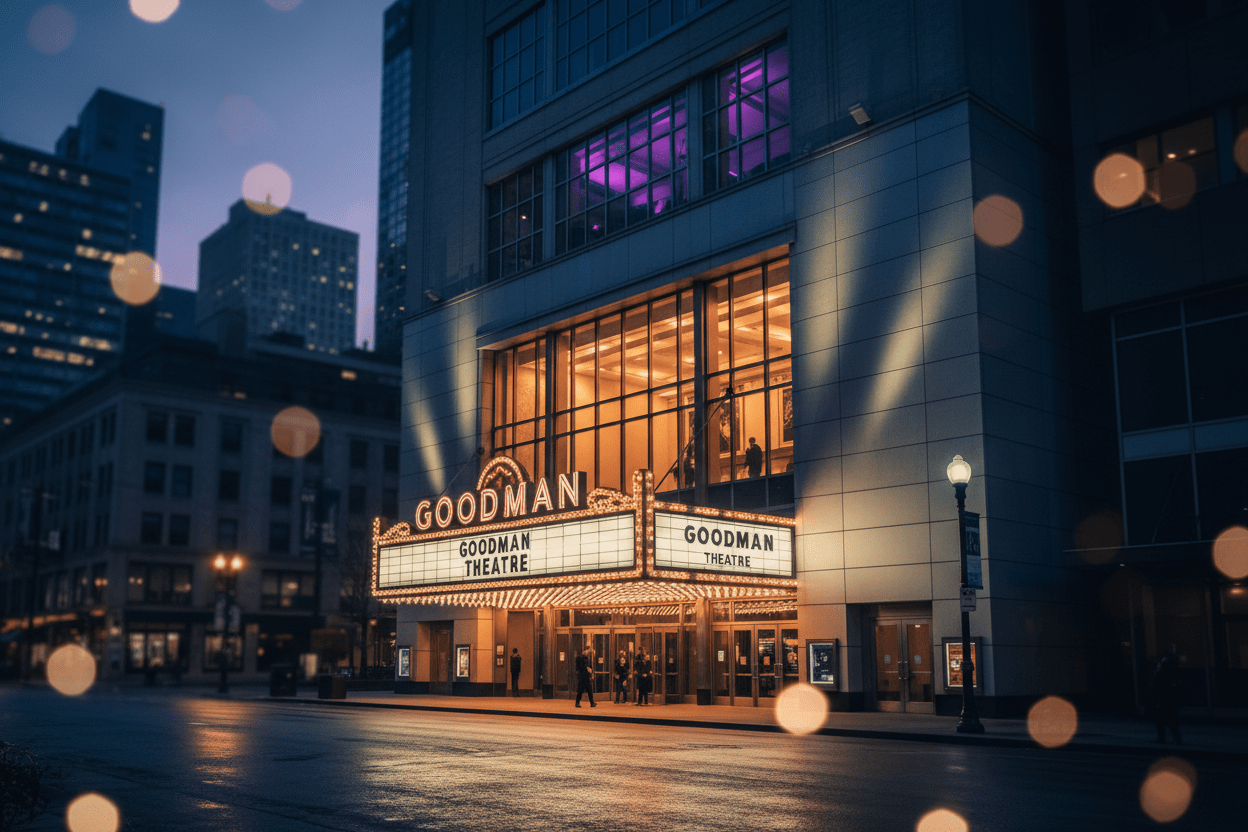
Goodman Theatre: Chicago’s Premier Regional Theater and Its Impact on American Drama
In the heart of Chicago’s bustling theater district stands a cultural institution that has shaped American drama for over half a century. The Goodman Theatre, with its distinctive red brick facade and rich theatrical heritage, represents far more than just another venue for entertainment. Since its founding in 1925, this remarkable theater has become a launching pad for groundbreaking productions, a nurturing ground for emerging talent, and a vital force in defining what American theater looks like today.
From world premieres that later grace Broadway stages to innovative interpretations of classical works, the Goodman Theatre has consistently pushed the boundaries of theatrical excellence. Its influence extends far beyond Chicago’s city limits, reaching into the very fabric of American dramatic arts and helping to establish regional theater as a legitimate and essential component of the nation’s cultural landscape.

The Rich History of Goodman Theatre
The story of Goodman Theatre begins with a generous act of remembrance and hope. In 1925, William O. Goodman and his wife Erna established the theater as a memorial to their son Kenneth, who died in the 1918 flu pandemic. What started as a tribute to a young life cut short evolved into one of America’s most respected regional theaters.
Originally housed at the Art Institute of Chicago, the theater operated as both a professional company and a training ground for aspiring actors. This dual mission would prove prophetic, as the Goodman would go on to influence American theater through both its productions and its role in developing theatrical talent.
The theater’s early years were marked by ambitious programming that included both classical works and contemporary plays. Even in its infancy, the Goodman demonstrated a commitment to theatrical excellence that would become its hallmark. The institution survived the Great Depression, world wars, and numerous changes in artistic leadership, each era adding new layers to its rich theatrical legacy.
A pivotal moment came in 2000 when the Goodman moved to its current location in the Loop’s theater district. The new facility, featuring both the Albert Theatre and the Owen Theatre, provided the company with state-of-the-art performance spaces that could accommodate increasingly ambitious productions. This move symbolized not just a change of address, but a renewed commitment to being at the forefront of American regional theater.
Architectural Marvel and Performance Spaces
The Goodman Theatre’s current home is itself a testament to the marriage of form and function in theatrical design. The building seamlessly blends historic preservation with modern innovation, creating spaces that serve both artists and audiences with remarkable efficiency and beauty.
The Albert Theatre, the larger of the two performance spaces, seats 856 patrons in a configuration that ensures intimate connection between performers and audience members. The space features excellent sightlines from every seat, advanced lighting and sound systems, and flexible staging capabilities that allow for traditional proscenium presentations as well as more experimental configurations.
The Owen Theatre offers a more intimate setting with 443 seats, perfect for smaller productions, experimental works, and pieces that benefit from closer audience proximity. This flexibility in venue size allows the Goodman to present a diverse range of productions, from large-scale musicals to intimate character studies.
Beyond the performance spaces, the building includes extensive rehearsal facilities, costume and set construction workshops, and administrative offices. These behind-the-scenes areas are crucial to the theater’s mission, providing the infrastructure necessary to support high-quality productions and maintain the institution’s reputation for excellence.
Notable Productions and World Premieres
The Goodman Theatre’s production history reads like a catalog of significant moments in American drama. Over the decades, the theater has presented numerous world premieres that have gone on to achieve national and international recognition, establishing the Goodman as a crucial incubator for new theatrical works.
One of the most celebrated examples is the world premiere of “Death of a Salesman” revivals and new interpretations that have brought fresh perspectives to Arthur Miller’s classic. The theater’s commitment to revisiting important American plays with contemporary sensibilities has helped keep these works relevant for new generations of theatergoers.
The Goodman has also been instrumental in developing new works by contemporary playwrights. Productions like “The Iceman Cometh” and various Shakespeare adaptations have showcased the theater’s ability to handle both classical and modern material with equal skill and innovation. These productions often serve as testing grounds for works that later find success in New York and other major theater markets.
Musical theater has also found a home at the Goodman, with productions ranging from intimate revues to full-scale musicals. The theater’s approach to musical productions emphasizes storytelling and character development, often bringing a more dramatic sensibility to works that might be treated purely as entertainment elsewhere.
Perhaps most importantly, the Goodman has consistently championed works by diverse voices, presenting plays that explore the full spectrum of American experience. This commitment to inclusivity and representation has helped broaden the definition of what American theater can and should be.
Impact on American Regional Theater Movement
The Goodman Theatre’s influence extends far beyond its own productions to encompass its role in establishing and legitimizing the regional theater movement in America. Before the rise of regional theaters in the mid-20th century, American theater was largely concentrated in New York City, with touring productions bringing Broadway shows to other markets.
The Goodman helped change this paradigm by demonstrating that high-quality, original theater could be created and sustained outside of New York. This model inspired the development of regional theaters across the country, creating a network of institutions that collectively transformed American theater from a centralized industry into a truly national art form.
The theater’s success also proved that regional audiences hungered for sophisticated theatrical experiences. By consistently presenting challenging, thought-provoking works alongside more accessible fare, the Goodman helped cultivate a theater-going public that expected and appreciated artistic excellence.
This influence can be measured not just in artistic terms, but in practical ones as well. The Goodman’s business model, combining subscription seasons with single-ticket sales, educational programs, and community outreach, became a template that other regional theaters adapted to their own markets. The financial sustainability that the Goodman achieved demonstrated that regional theater could be both artistically ambitious and economically viable.
Development of Theatrical Talent
Throughout its history, the Goodman Theatre has served as a crucial stepping stone for theatrical talent at every level. Directors, actors, playwrights, and designers have all found opportunities at the Goodman to develop their craft and gain the experience necessary for careers in theater.
The theater’s commitment to nurturing talent extends beyond simply providing performance opportunities. Through residencies, workshops, and collaborative development processes, the Goodman has helped shape the careers of numerous theater professionals who have gone on to achieve national and international recognition.
For actors, the Goodman offers the opportunity to tackle substantial roles in both classical and contemporary works. The theater’s reputation for quality attracts performers who might otherwise focus exclusively on film and television, creating a cross-pollination of talent that benefits all media.
Directors find at the Goodman a supportive environment for experimentation and growth. The theater’s willingness to take artistic risks provides directors with opportunities to develop their vision and refine their craft in ways that might not be possible in more commercial environments.
Playwrights particularly benefit from the Goodman’s development programs, which provide not just production opportunities but also dramaturgical support, workshop presentations, and the chance to see their work performed by professional actors before professional audiences. This comprehensive approach to play development has resulted in numerous works that have found success beyond Chicago.
Community Engagement and Educational Programs
The Goodman Theatre’s impact extends far beyond its mainstage productions through comprehensive community engagement and educational initiatives. These programs reflect the theater’s understanding that its mission includes not just presenting excellent theater, but also fostering appreciation for the dramatic arts throughout the Chicago community.
The theater’s education programs serve students from elementary school through college, offering everything from classroom visits and student matinees to intensive summer programs and internships. These initiatives help ensure that future generations will have both appreciation for and access to live theater.
Community engagement takes many forms, from post-show discussions and artist talks to special programming designed to make theater accessible to diverse audiences. The Goodman’s efforts to remove barriers to attendance, whether economic, cultural, or physical, demonstrate a commitment to theater as a democratic art form that should be available to all.
The theater also serves as a cultural anchor for Chicago’s downtown area, contributing to the vitality of the Loop and helping to establish the city as a major theater destination. The economic impact of the Goodman extends beyond its own operations to include the restaurants, hotels, and other businesses that benefit from the theater-going public it attracts.
Modern Innovations and Future Direction
As the Goodman Theatre moves forward in the 21st century, it continues to evolve while maintaining its commitment to excellence and innovation. Recent seasons have seen the theater embracing new technologies, exploring diverse storytelling methods, and addressing contemporary social issues through the lens of dramatic art.
Digital initiatives have expanded the theater’s reach, allowing audiences beyond Chicago to experience Goodman productions through streaming and other online platforms. These technological adaptations, accelerated by the challenges of recent years, have opened new possibilities for how regional theater can connect with audiences.
The theater’s programming continues to balance respect for theatrical tradition with openness to new voices and perspectives. Recent seasons have featured works by emerging playwrights alongside revivals of classic plays, often with fresh interpretations that speak to contemporary audiences.
Sustainability initiatives, both environmental and financial, reflect the theater’s commitment to responsible stewardship of its resources and its role in the community. These efforts ensure that the Goodman will continue to serve as a vital cultural institution for future generations.
Looking ahead, the Goodman faces the same challenges confronting all arts organizations: changing audience demographics, evolving technology, and the need to remain relevant in an increasingly fragmented media landscape. However, the theater’s history of adaptation and innovation suggests that it will continue to find ways to fulfill its mission while embracing necessary changes.
Conclusion
The Goodman Theatre stands as a testament to the power of regional theater to shape and define American dramatic arts. From its origins as a memorial to a young man’s unrealized potential to its current status as one of the nation’s premier theatrical institutions, the Goodman has consistently demonstrated that excellence in theater is not limited to Broadway or other traditional centers of theatrical power.
Through nearly a century of operation, the theater has launched careers, developed new works, and provided Chicago audiences with theatrical experiences that rival those available anywhere in the world. Its influence on the broader American theater landscape cannot be overstated, as it helped establish the model for regional theater that has enriched communities across the nation.
As the Goodman continues to evolve and adapt to changing times, it remains true to its founding mission of presenting excellent theater while serving its community. The theater’s ongoing commitment to artistic excellence, community engagement, and the development of new talent ensures that its impact on American drama will continue for generations to come.
For theater lovers, cultural historians, and anyone interested in the development of American arts, the Goodman Theatre represents both a remarkable achievement and an ongoing promise. It stands as proof that regional institutions can achieve national significance while remaining deeply rooted in their local communities, creating a model that continues to inspire and influence theaters across the country.