Fulton Market District: From Meatpacking to Chicago’s Hottest Dining Destination
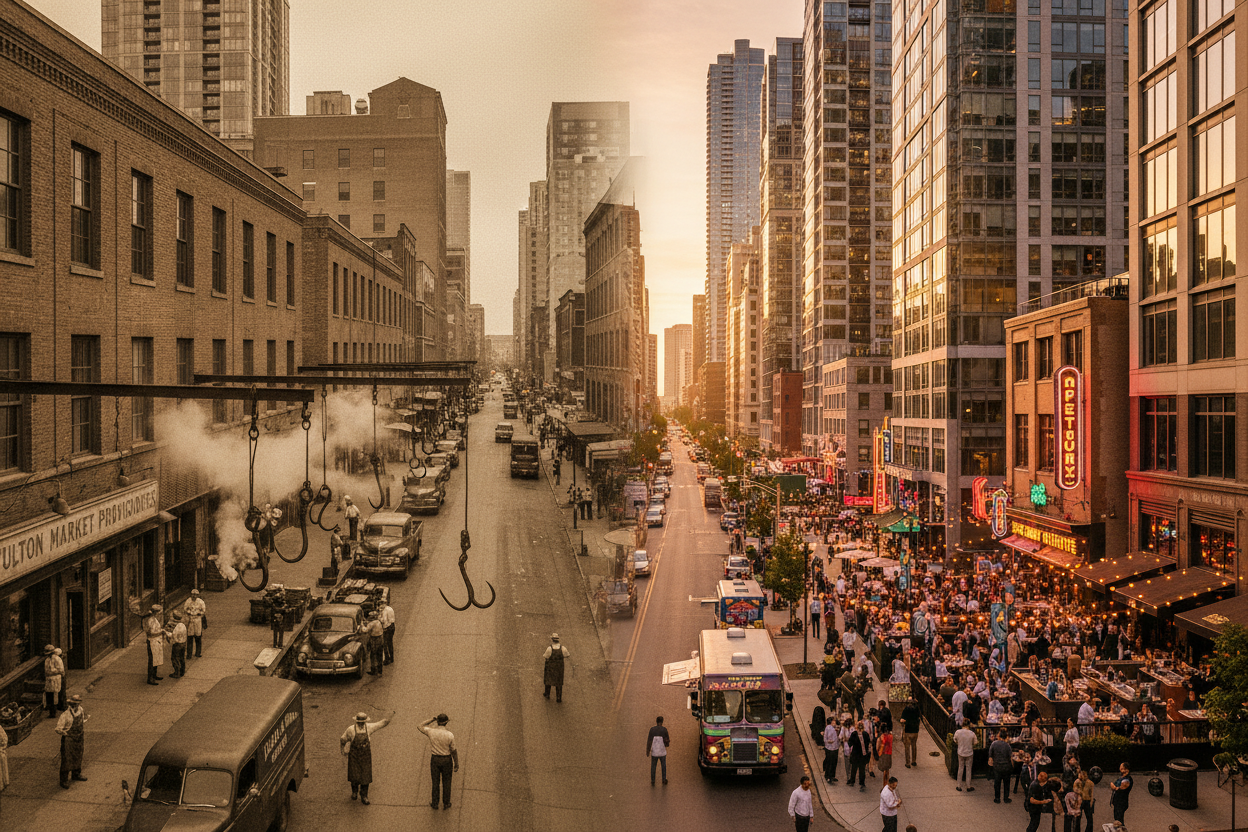
Walk through Chicago’s Fulton Market District today, and you’ll find yourself surrounded by buzzing restaurants, trendy cocktail bars, and sleek glass towers. The aroma of artisanal cuisine wafts through streets that once carried the pungent scent of raw meat and fish. This remarkable transformation from industrial meatpacking hub to culinary paradise represents one of the most dramatic neighborhood makeovers in Chicago’s history.
The Fulton Market District, nestled in the West Loop, has become synonymous with innovative dining and nightlife. But this wasn’t always the case. Just two decades ago, this area was home to wholesale meat distributors, cold storage warehouses, and early morning deliveries that kept the city fed. Today, it’s where food lovers flock to experience some of the nation’s most acclaimed restaurants.
The Industrial Roots of Fulton Market
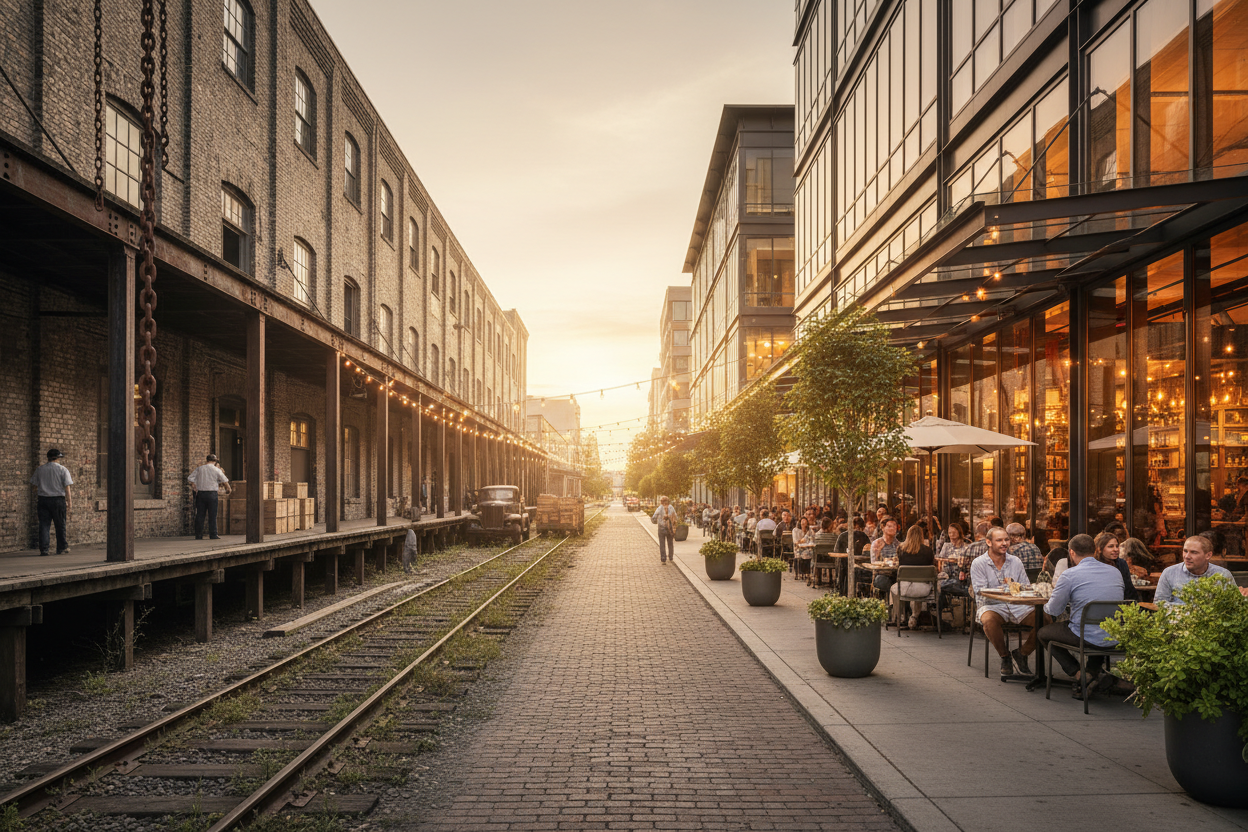
The story of Fulton Market begins in the late 1800s when Chicago established itself as America’s meatpacking capital. The district earned its name from Fulton Street, which became the heart of the city’s wholesale food distribution network. For over a century, this area hummed with the activity of butchers, fishmongers, and produce vendors who supplied restaurants and grocery stores throughout the Midwest.
The neighborhood’s industrial character was defined by its utilitarian buildings – sturdy brick and concrete structures designed for function over form. These warehouses featured high ceilings, thick walls, and loading docks that could accommodate the constant flow of refrigerated trucks. The architecture reflected the area’s no-nonsense approach to feeding a growing city.
During its heyday, Fulton Market operated on a schedule that most Chicagoans never witnessed. The real action happened between midnight and dawn, when vendors received fresh shipments and restaurant buyers made their selections for the day ahead. By sunrise, the district would quiet down, leaving behind the lingering smells and scattered remnants of another night’s commerce.
Seeds of Culinary Change
The transformation didn’t happen overnight. In the 1990s, a few pioneering restaurateurs began to see potential in the district’s industrial bones. The same features that made these buildings perfect for food storage – spacious interiors, solid construction, and affordable rent – also made them attractive to chefs looking for unique dining spaces.
One of the earliest culinary pioneers was Blackbird, which opened in 1997 and brought fine dining to an area still dominated by meat wholesalers. The restaurant’s success demonstrated that diners were willing to venture into this gritty neighborhood for exceptional food. This bold move laid the groundwork for what would become a dining revolution.
The existing food infrastructure actually worked in the area’s favor during this transition period. Restaurants could easily source high-quality ingredients from the remaining wholesale vendors, creating a symbiotic relationship between old and new. This unique advantage helped establish Fulton Market’s reputation for fresh, premium ingredients that continues today.
The Restaurant Renaissance Begins
The early 2000s marked the beginning of Fulton Market’s culinary renaissance. As more restaurants opened, the district began attracting attention from food critics and adventurous diners. The industrial aesthetic that once served purely functional purposes became a sought-after design element, with exposed brick walls, steel beams, and concrete floors creating an authentic urban atmosphere that couldn’t be replicated in traditional dining districts.
Restaurants like Avec and The Publican capitalized on this industrial charm while introducing innovative concepts that would define modern Chicago dining. These establishments proved that the neighborhood could support diverse culinary styles, from Mediterranean small plates to oyster-focused seafood houses. Each success encouraged more restaurateurs to take the leap into this emerging dining destination.
The area’s transformation accelerated as word spread through Chicago’s tight-knit culinary community. Chefs began viewing Fulton Market as a place where they could experiment with bold concepts without the constraints of more established dining districts. This creative freedom led to some of the most innovative restaurants in the city’s history.
Celebrity Chefs and National Recognition
Fulton Market’s rise to national prominence reached new heights when celebrity chef Rick Bayless opened Xoco in 2009, followed by other high-profile openings. However, it was the arrival of Girl and the Goat in 2010, helmed by Top Chef winner Stephanie Izard, that truly put the district on the national culinary map. The restaurant’s immediate success and critical acclaim drew food lovers from across the country.
This period saw an influx of James Beard Award winners and nominees choosing Fulton Market for their flagship restaurants. The concentration of culinary talent created a competitive environment that pushed every establishment to elevate their game. Restaurants weren’t just competing locally anymore; they were vying for national recognition and Michelin stars.
The media attention surrounding these celebrity chef openings created a snowball effect. Food magazines, travel guides, and culinary television shows began featuring Fulton Market as a must-visit destination. This exposure attracted both tourists and investors, further accelerating the district’s transformation from industrial zone to culinary hotspot.
Beyond Fine Dining: A Complete Culinary Ecosystem
While high-end restaurants initially drove Fulton Market’s transformation, the district has evolved into a complete culinary ecosystem. Today, visitors can find everything from casual brunch spots to late-night cocktail bars, creating a dining scene that caters to every occasion and budget.
The neighborhood now boasts artisanal coffee shops that roast their own beans, craft breweries producing small-batch beers, and specialty food stores offering gourmet ingredients. This diversity ensures that Fulton Market appeals to both serious food enthusiasts and casual diners looking for a great meal in a vibrant atmosphere.
Food halls and markets have also found their place in the district, paying homage to its wholesale food heritage while serving modern consumers. These venues combine multiple vendors under one roof, creating dynamic spaces where visitors can sample various cuisines and discover new favorites. The concept bridges the gap between the area’s commercial food past and its restaurant-focused present.
The Real Estate Boom and Its Impact
The culinary success of Fulton Market inevitably attracted real estate developers and corporate tenants. Tech companies, advertising agencies, and other businesses began relocating to the area, drawn by its creative energy and central location. This influx of white-collar workers created a built-in customer base for restaurants throughout the day, not just during dinner hours.
New residential developments have also transformed the neighborhood’s character. Luxury condominiums and apartment buildings now rise alongside converted warehouse lofts, creating a diverse residential community that supports the local dining scene. These residents have become regular customers, providing restaurants with the steady business needed to thrive.
However, this rapid development has also brought challenges. Rising rents have forced some longtime food vendors to relocate, and the neighborhood’s gritty industrial character has given way to sleek modern developments. While this evolution has brought prosperity, it has also sparked debates about gentrification and the preservation of the area’s unique identity.
Current Dining Landscape and Future Trends
Today’s Fulton Market District represents the pinnacle of Chicago’s dining evolution. The neighborhood hosts restaurants representing virtually every cuisine and price point, from intimate tasting menu experiences to bustling sports bars. This diversity ensures that the district remains relevant to changing dining trends and consumer preferences.
Sustainability and local sourcing have become major themes among Fulton Market restaurants, with many establishments partnering directly with Midwest farms and producers. This farm-to-table approach honors the district’s agricultural heritage while meeting modern diners’ expectations for responsible sourcing and environmental consciousness.
The COVID-19 pandemic tested the resilience of Fulton Market’s dining scene, but the neighborhood’s adaptability shone through. Restaurants quickly pivoted to outdoor dining, delivery services, and innovative takeout concepts. Many establishments used the challenging period to renovate and reimagine their spaces, emerging stronger and more creative than before.
A Living Testament to Urban Evolution
The transformation of Fulton Market District from meatpacking hub to dining destination represents more than just neighborhood change – it’s a testament to Chicago’s ability to reinvent itself while honoring its industrial heritage. The district’s success has inspired similar transformations in other cities, proving that thoughtful development can create vibrant communities from unlikely beginnings.
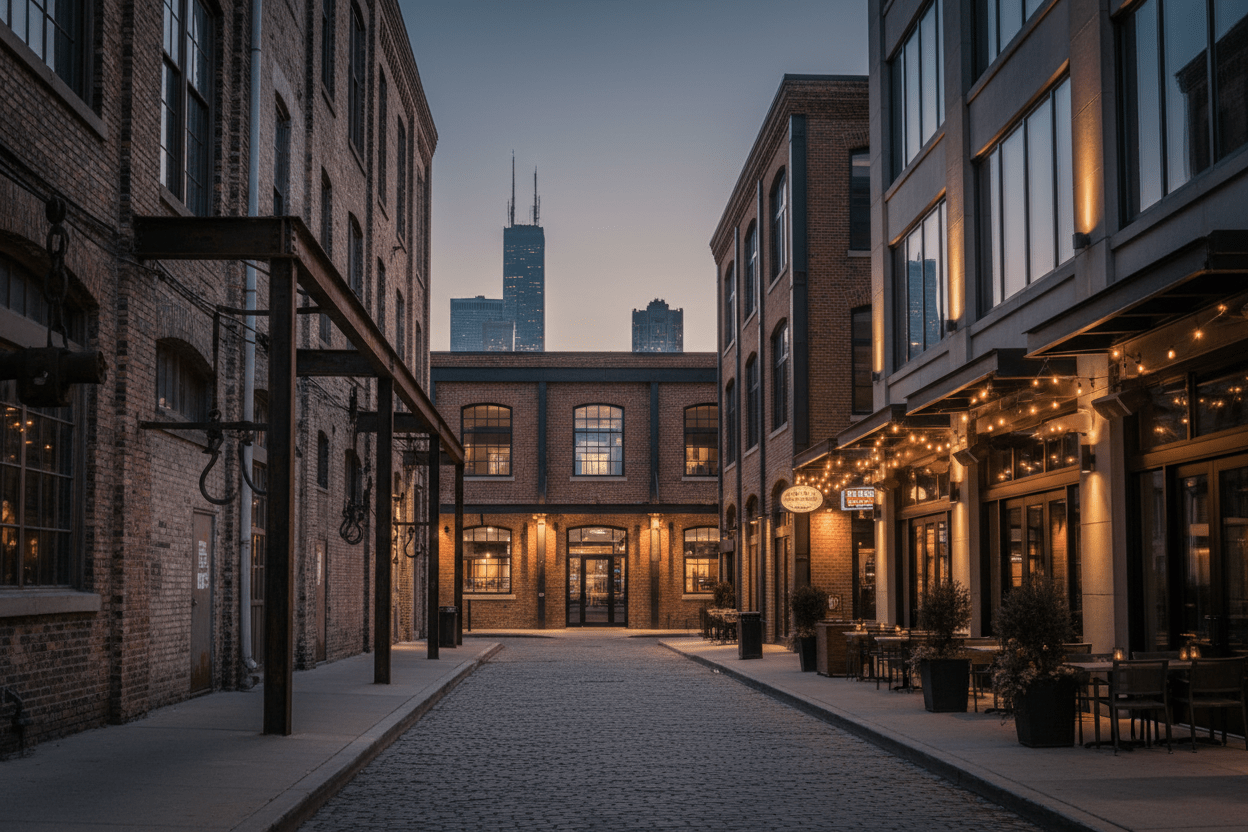
Walking through Fulton Market today, you can still glimpse remnants of its industrial past in the architecture and street layout. These elements serve as reminders of the area’s working-class roots and the generations of people who kept Chicago fed. The best restaurants in the district acknowledge this history, incorporating industrial design elements and celebrating the honest, hardworking spirit that originally defined the neighborhood.
As Fulton Market continues to evolve, it faces the ongoing challenge of balancing growth with authenticity. The most successful establishments understand that the district’s appeal lies not just in excellent food, but in the unique atmosphere created by its remarkable transformation. By respecting the past while embracing innovation, Fulton Market District has secured its place as one of America’s premier dining destinations, proving that the best urban success stories honor where they came from while boldly pursuing where they’re going.