
Museum of Science and Industry: Interactive Learning in Chicago’s Largest Museum
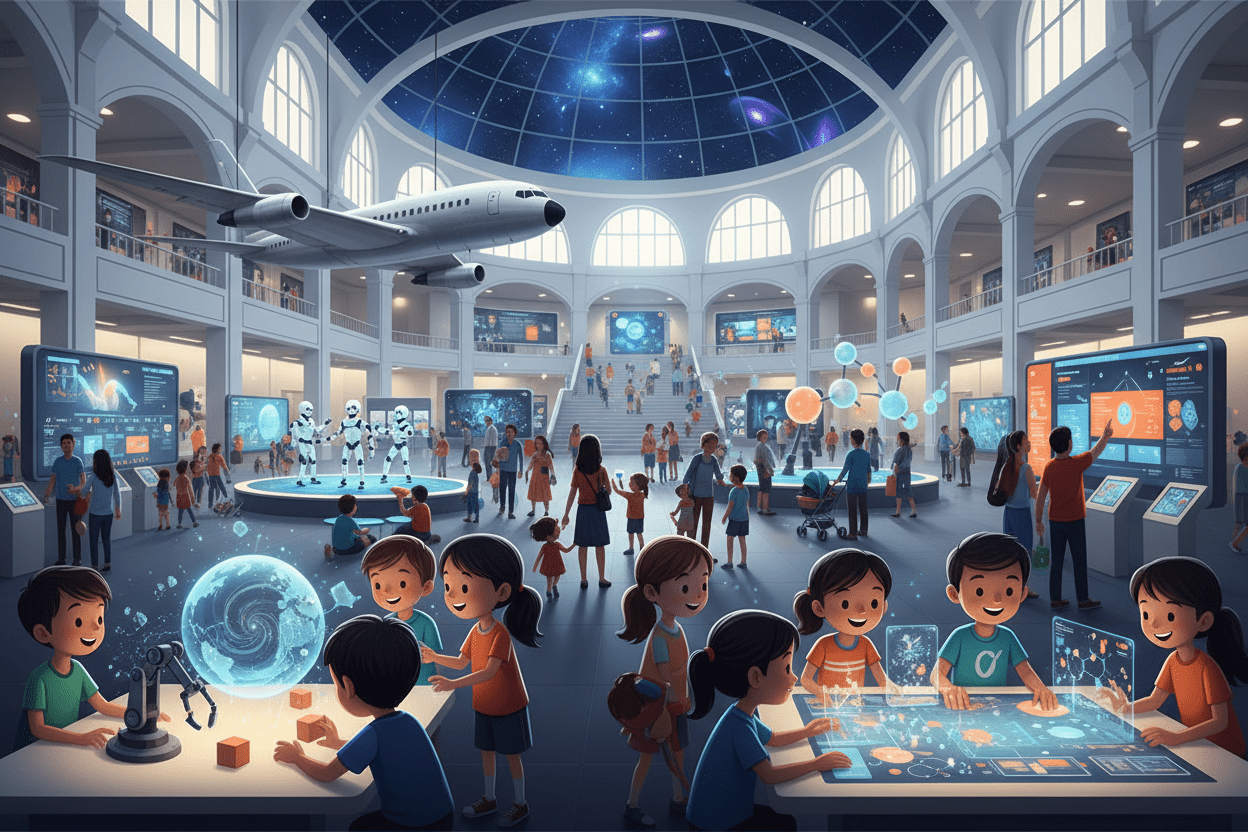
Nestled in Chicago’s historic Hyde Park neighborhood stands a magnificent testament to human curiosity and innovation. The Museum of Science and Industry (MSI) isn’t just another museum you quietly shuffle through while reading plaques – it’s an immersive playground where science comes alive through hands-on experiences. As Chicago’s largest museum and one of the largest science museums in the world, MSI has been captivating visitors for nearly a century with its unique approach to education through interaction.
Whether you’re a parent seeking an educational adventure for your children, a student diving deep into STEM subjects, or simply someone who never lost that childlike wonder about how things work, the Museum of Science and Industry offers something extraordinary. This isn’t passive learning – it’s discovery in action, where every exhibit invites you to touch, experiment, and explore.

A Historic Foundation Built for Discovery
The Museum of Science and Industry opened its doors in 1933, housed in the stunning Palace of Fine Arts building left over from the 1893 World’s Columbian Exposition. This architectural gem, with its neoclassical columns and grand rotunda, provides a beautiful contrast to the cutting-edge exhibits within its walls. The museum’s founding philosophy was revolutionary for its time: learning should be interactive, engaging, and fun.
What makes MSI truly special is its commitment to hands-on education. While traditional museums might ask you to keep your hands to yourself, here you’re encouraged to get involved. This approach has made it a beloved destination for families, school groups, and curious minds of all ages for generations.
Iconic Exhibits That Define Interactive Learning
U-505 Submarine: History You Can Walk Through
Perhaps no exhibit captures the museum’s interactive spirit better than the German U-505 submarine. This isn’t a replica or a model – it’s the actual World War II submarine captured by the U.S. Navy in 1944. Visitors can walk through the cramped quarters where 59 crew members lived and worked, experiencing firsthand the claustrophobic conditions of underwater warfare.
The submarine tour goes beyond simple observation. You’ll hear authentic sounds, see original equipment, and gain a visceral understanding of naval history that no textbook could provide. The accompanying exhibit hall features interactive displays about submarine technology, naval warfare, and the specific story of the U-505’s capture.
Science Storms: Natural Phenomena in Action
Science Storms transforms abstract scientific concepts into tangible experiences. This 26,000-square-foot exhibit recreates natural phenomena on a scale you can safely observe and interact with. Watch a 40-foot tornado swirl before your eyes, experience the power of lightning in a Tesla coil demonstration, or explore the physics of tsunamis through a massive water table.
What sets Science Storms apart is how it connects these spectacular displays to everyday science. Interactive stations help you understand the meteorology behind storm formation, the physics of wave motion, and the chemistry of combustion. It’s entertainment that educates, making complex scientific principles accessible to visitors of all ages.
Cutting-Edge Technology Meets Hands-On Learning
The Idea Factory: Innovation in Real-Time
The Idea Factory represents the museum’s commitment to showcasing contemporary innovation. This dynamic space features rotating exhibits that highlight current technological breakthroughs and scientific discoveries. From artificial intelligence demonstrations to biotechnology labs, visitors can interact with the tools and technologies shaping our future.
What makes the Idea Factory particularly engaging is its focus on the innovation process itself. Interactive displays walk you through how ideas develop from concept to reality, featuring real stories from inventors, scientists, and entrepreneurs. You might find yourself programming a robot one day or exploring genetic engineering the next.
Numbers in Nature: Mathematics Made Visible
Mathematics often feels abstract and intimidating, but Numbers in Nature transforms mathematical concepts into visual, interactive experiences. This exhibit reveals the mathematical patterns hidden in everything from flower petals to galaxy formations. Visitors can manipulate variables to see how mathematical relationships create the natural world around us.
Interactive stations let you explore fractals, experiment with probability, and discover the golden ratio in art and nature. It’s a perfect example of how MSI makes challenging subjects accessible through hands-on exploration rather than passive observation.
Educational Programs That Extend Beyond the Visit
School Programs and Field Trips
The Museum of Science and Industry has perfected the art of educational programming for school groups. Their field trip experiences go far beyond a simple museum tour. Students participate in hands-on workshops, conduct experiments, and engage with exhibits designed to reinforce classroom learning.
Teachers particularly appreciate how MSI’s programs align with educational standards while providing experiences impossible to replicate in a traditional classroom. Whether students are exploring the physics of flight in the Transportation Gallery or conducting chemistry experiments in dedicated lab spaces, these programs make abstract concepts concrete and memorable.
Summer Camps and Extended Learning
MSI’s summer camps represent some of the most sought-after STEM education experiences in Chicago. These intensive programs combine museum resources with structured learning activities, giving young people deep dives into subjects like robotics, marine biology, and aerospace engineering.
What distinguishes these camps is their use of the museum’s unique resources. Where else can students study marine life while standing next to a real submarine, or explore physics principles using exhibits designed by world-class scientists and engineers?
Planning Your Interactive Learning Adventure
Making the Most of Your Visit
With over 400,000 square feet of exhibit space, the Museum of Science and Industry can feel overwhelming. First-time visitors should consider focusing on 2-3 major exhibits rather than trying to see everything. This approach allows for deeper engagement with interactive elements and prevents exhibit fatigue.
The museum offers various ticket options, including basic admission and premium experiences that include special exhibits and demonstrations. Many visitors find that purchasing a membership pays for itself after just two visits, especially for families planning multiple trips throughout the year.
Interactive Experiences for Different Age Groups
MSI excels at providing age-appropriate interactive experiences. The Idea Factory and advanced exhibits appeal to teenagers and adults interested in cutting-edge science and technology. Meanwhile, areas like the Farm Tech exhibit offer hands-on activities perfect for elementary school children, including the chance to see baby chicks hatch and explore agricultural technology.
The museum’s design ensures that families with mixed age groups can find something engaging for everyone. Interactive elements are layered, offering simple engagement for younger children while providing deeper exploration opportunities for older visitors.
The Future of Interactive Learning at MSI
The Museum of Science and Industry continues evolving its approach to interactive education. Recent additions incorporate virtual reality, augmented reality, and artificial intelligence to create even more immersive learning experiences. These technologies don’t replace hands-on interaction but enhance it, creating multi-layered experiences that appeal to digital natives while maintaining the tactile engagement that makes MSI special.
Future plans include expanded maker spaces, more real-time science demonstrations, and enhanced connectivity between exhibits to create comprehensive learning journeys. The museum’s commitment to staying current with both scientific advancement and educational methodology ensures it remains relevant for future generations of learners.
Conclusion: Where Curiosity Meets Discovery
The Museum of Science and Industry stands as a testament to the power of interactive learning. In a world increasingly dominated by passive screen time, MSI provides something irreplaceable: the opportunity to engage with science and technology through direct, hands-on experience. It’s a place where abstract concepts become tangible realities, where curiosity is rewarded with discovery, and where learning happens naturally through exploration and play.
Whether you’re marveling at the engineering of a World War II submarine, creating tornadoes in Science Storms, or programming robots in the Idea Factory, MSI offers experiences that stick with you long after your visit ends. It’s more than Chicago’s largest museum – it’s a gateway to understanding our world through the joy of interactive discovery.
For anyone seeking to ignite a passion for science, technology, engineering, or mathematics, the Museum of Science and Industry provides an unparalleled environment where learning comes alive through interaction. In an age when STEM education is more important than ever, MSI continues its nearly century-long mission of making science accessible, engaging, and unforgettable through the simple but powerful principle that the best way to learn is by doing.