
The Complete Guide to Chicago’s Lakefront Trail: 18 Miles of Urban Paradise
Stretching along the magnificent shores of Lake Michigan, Chicago’s Lakefront Trail stands as one of America’s premier urban recreational pathways. This 18-mile concrete ribbon connects neighborhoods, parks, and beaches while offering breathtaking views that rival any coastal destination. Whether you’re a serious cyclist, casual jogger, or someone who simply loves a scenic walk, the Lakefront Trail delivers an unparalleled urban outdoor experience that showcases the very best of the Windy City.
What makes this trail truly special isn’t just its length or lakefront location – it’s the way it seamlessly weaves together Chicago’s diverse neighborhoods, world-class parks, and stunning architecture. From the bustling energy of Navy Pier to the tranquil beaches of the far north side, every mile tells a different story of this remarkable city.
Trail Overview and Key Features
The Chicago Lakefront Trail officially spans 18.5 miles, running from Ardmore Street on the north side down to 71st Street on the south side. This paved pathway serves multiple purposes: it’s a crucial transportation corridor for commuters, a recreational haven for fitness enthusiasts, and a tourist attraction that draws millions of visitors annually.
The trail’s design prioritizes safety and accessibility, featuring separate lanes for cyclists and pedestrians in many sections. Recent renovations have improved signage, lighting, and surface quality, making it safer and more enjoyable for users of all ages and abilities. The pathway maintains a relatively flat grade throughout most of its length, with only gentle inclines that make it accessible to wheelchair users and families with strollers.

One of the trail’s most impressive features is its integration with Chicago’s extensive park system. As you travel the route, you’ll pass through Lincoln Park, Grant Park, Burnham Park, and numerous smaller green spaces, each offering unique amenities like beaches, harbors, museums, and recreational facilities.
Northern Section Highlights
Starting from the trail’s northern terminus near Ardmore Beach, the first several miles showcase some of Chicago’s most charming residential neighborhoods. The Edgewater and Uptown sections offer a more intimate lakefront experience, with tree-lined paths and smaller, less crowded beaches perfect for a peaceful morning run or evening stroll.
As you head south, you’ll encounter Montrose Beach and Harbor, a favorite spot among kite surfers and beach volleyball players. The harbor area provides excellent people-watching opportunities and features one of the trail’s most popular rest stops. The nearby Montrose Point Bird Sanctuary attracts nature lovers and birdwatchers, especially during spring and fall migration periods.
Lincoln Park marks a significant transition point where the trail becomes busier and more urban. Here, you’ll find the Lincoln Park Zoo, one of the country’s last free admission major zoos, and the Alfred Caldwell Lily Pool, a hidden gem designed by the famous Prairie School architect. The North Avenue Beach area buzzes with activity during summer months, featuring beach volleyball courts, kayak rentals, and the iconic North Avenue Beach House.
Central Downtown Corridor
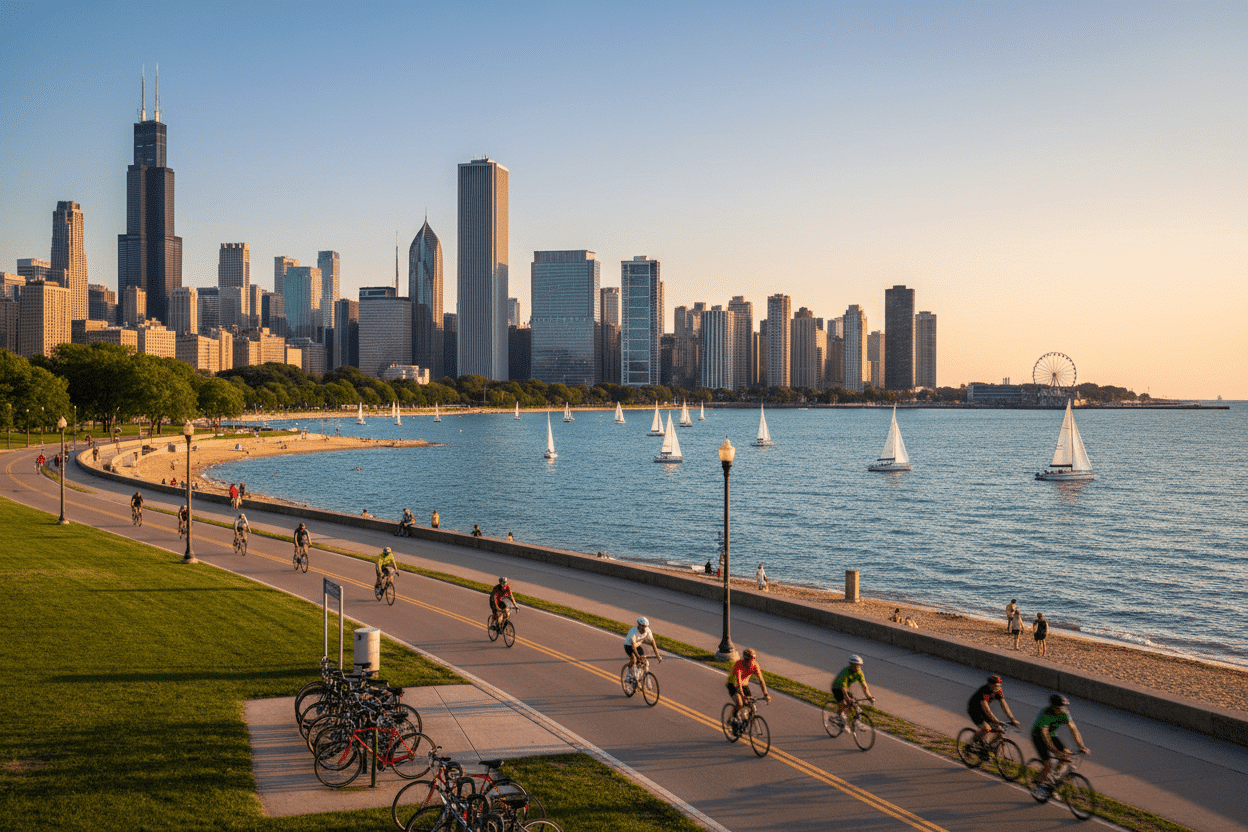
The downtown section of the Lakefront Trail offers perhaps the most spectacular urban scenery in America. As you approach the Loop, Chicago’s famous skyline creates a dramatic backdrop that changes with every step. Oak Street Beach provides an upscale beach experience with stunning views of the Gold Coast’s luxury high-rises.
Navy Pier represents the trail’s most tourist-heavy section, where you’ll navigate through crowds of visitors exploring the pier’s attractions, restaurants, and seasonal events. While this area can be congested, especially on weekends, the energy is infectious and the views of the city from the pier are absolutely worth the temporary slowdown.
Grant Park and the Museum Campus form the cultural heart of the trail experience. Here, you’ll pass world-renowned institutions like the Field Museum, Shedd Aquarium, and Adler Planetarium. Buckingham Fountain, one of Chicago’s most photographed landmarks, provides a perfect rest stop and photo opportunity. The Millennium Park area, with its famous Cloud Gate sculpture and Crown Fountain, offers easy access to some of the city’s most beloved public art installations.
Southern Route Adventures
South of downtown, the Lakefront Trail takes on a different character as it winds through the Museum Campus and into the Burnham Park area. This section tends to be less crowded, offering a more relaxed pace and equally stunning lake views. The trail here provides excellent opportunities for longer, uninterrupted runs or bike rides.
Northerly Island, a 91-acre peninsula that was once home to Meigs Field airport, now serves as a nature preserve and concert venue. The island offers hiking trails, prairie restoration areas, and some of the best skyline views available anywhere in the city. It’s a perfect spot for a picnic or simply to sit and watch the boats in Burnham Harbor.
As you continue south, you’ll pass through neighborhoods like Bronzeville and South Shore, areas rich in African American history and culture. The trail provides access to several beautiful beaches, including 31st Street Beach and Rainbow Beach, which tend to be less crowded than their northern counterparts while offering the same pristine lakefront experience.
Seasonal Considerations and Best Times to Visit
Each season transforms the Lakefront Trail into a completely different experience. Spring brings migrating birds, blooming trees, and the first warm-weather crowds eager to shake off winter’s hibernation. The trail can be muddy in spots during early spring, but the energy of renewal is palpable as Chicago awakens from its winter slumber.
Summer represents peak season, when the trail truly comes alive with activity. Early morning hours, typically before 8 AM, offer the most peaceful experience with cooler temperatures and fewer crowds. Evening hours around sunset provide magical lighting for photography and a romantic atmosphere for couples. However, be prepared for significant crowds during weekends and holidays, especially in the downtown and North Avenue Beach areas.
Fall delivers some of the trail’s most spectacular scenery as the trees in Lincoln Park and other green spaces explode in autumn colors. The cooler temperatures make for comfortable exercise conditions, and the reduced tourist crowds create a more local, authentic experience. This season is particularly popular among photographers and serious cyclists.
Winter transforms the trail into a stark, beautiful landscape where hardy Chicagoans continue their outdoor activities despite freezing temperatures. While some sections may be less well-maintained during heavy snow periods, the winter lakefront offers a unique perspective on the city’s resilience and natural beauty.
Safety Tips and Trail Etiquette
Success on the Lakefront Trail requires understanding and following basic safety protocols and courtesy guidelines. The trail’s popularity means you’ll share the space with cyclists, joggers, walkers, families with children, dog owners, and tourists – all moving at different speeds and with varying levels of trail experience.
Cyclists should always announce their presence when passing pedestrians with a friendly “on your left” and maintain reasonable speeds, especially in crowded areas. Pedestrians should stay aware of their surroundings and avoid blocking the entire path width when walking in groups. Dog owners must keep pets on leashes and clean up after them – the trail’s beauty depends on everyone’s cooperation in maintaining cleanliness.
Personal safety considerations include staying hydrated, especially during summer months when temperatures and humidity can be extreme. The lake’s proximity means weather conditions can change rapidly, so checking forecasts before longer outings is always wise. Evening users should consider bringing lights or reflective gear, as some trail sections have limited lighting after dark.
Access Points and Transportation
One of the Lakefront Trail’s greatest strengths is its accessibility from numerous points throughout the city. The Chicago Transit Authority’s bus and train systems provide convenient access to multiple trail entry points, making it easy to explore different sections without needing a car.
Popular northern access points include the Belmont, Fullerton, and North/Clybourn Red Line stations, each within easy walking distance of the trail. Downtown access is available via numerous CTA stations, with the Roosevelt Red Line station providing particularly convenient access to the Museum Campus area.
For those driving, parking can be challenging during peak times, especially in popular areas like North Avenue Beach or Navy Pier. Early morning arrival typically offers the best parking availability, and several areas offer metered parking that’s more affordable than private lots.
Bike rental stations are strategically located along the trail through Chicago’s Divvy bike-share program, allowing visitors to explore different sections without bringing their own bicycles. Many local shops also offer traditional bike rentals with a wider variety of bike types and longer rental periods.
Making the Most of Your Lakefront Trail Experience
The Lakefront Trail offers something for everyone, but planning can significantly enhance your experience. First-time visitors should consider starting with shorter sections to get familiar with the trail’s rhythm and their own comfort level. The North Avenue Beach to Navy Pier section provides an excellent introduction, combining manageable distance with spectacular scenery and numerous amenities.
Serious athletes might prefer the less crowded southern sections for training runs or long bike rides, while families with children often enjoy the northern areas with their calmer atmosphere and proximity to playgrounds and the Lincoln Park Zoo. Photography enthusiasts should plan visits during golden hour times – shortly after sunrise or before sunset – when the lighting creates magical conditions for capturing the city skyline.
Consider combining your trail experience with visits to nearby attractions. The trail’s design makes it easy to stop at museums, beaches, restaurants, and parks along the way. Many users find that breaking up longer distances with strategic stops actually makes the experience more enjoyable and less physically demanding.
Conclusion
Chicago’s Lakefront Trail represents far more than just a recreational pathway – it’s a celebration of urban planning done right, a testament to the city’s commitment to public spaces, and a daily reminder of why Chicago consistently ranks among America’s most livable cities. These 18 miles of lakefront paradise offer residents and visitors alike the opportunity to experience the city’s natural beauty, architectural wonders, and vibrant community spirit all in one unforgettable journey.
Whether you complete the entire trail in one ambitious outing or explore it section by section over multiple visits, the Lakefront Trail will reward you with memories, exercise, and a deeper appreciation for Chicago’s unique character. It’s a place where the urban and natural worlds coexist in perfect harmony, where every season brings new discoveries, and where the simple act of putting one foot in front of the other becomes an exploration of one of America’s greatest cities.
So lace up your shoes, hop on your bike, or simply plan a leisurely stroll – Chicago’s Lakefront Trail awaits, ready to show you why this ribbon of concrete along Lake Michigan has captured the hearts of millions and continues to define what makes Chicago truly special.