The Ultimate Guide to Chicago’s Jazz Scene: Past, Present, and Future
When you think of jazz music, certain cities immediately come to mind – New Orleans, New York, Kansas City. But there’s one city that deserves equal recognition for its profound impact on the genre: Chicago. The Windy City has been a jazz powerhouse for over a century, nurturing legendary musicians, fostering innovative styles, and maintaining a vibrant scene that continues to evolve today. Whether you’re a longtime jazz enthusiast or just beginning to explore this rich musical tradition, understanding Chicago’s jazz heritage offers insights into both the city’s cultural soul and the broader evolution of American music.
From the Great Migration that brought Southern musicians northward to the bustling clubs of today’s neighborhoods, Chicago’s jazz story is one of resilience, creativity, and constant reinvention. This comprehensive guide will take you through the fascinating journey of Chicago jazz – from its historic roots to its current renaissance and exciting future possibilities.
The Historic Roots of Chicago Jazz
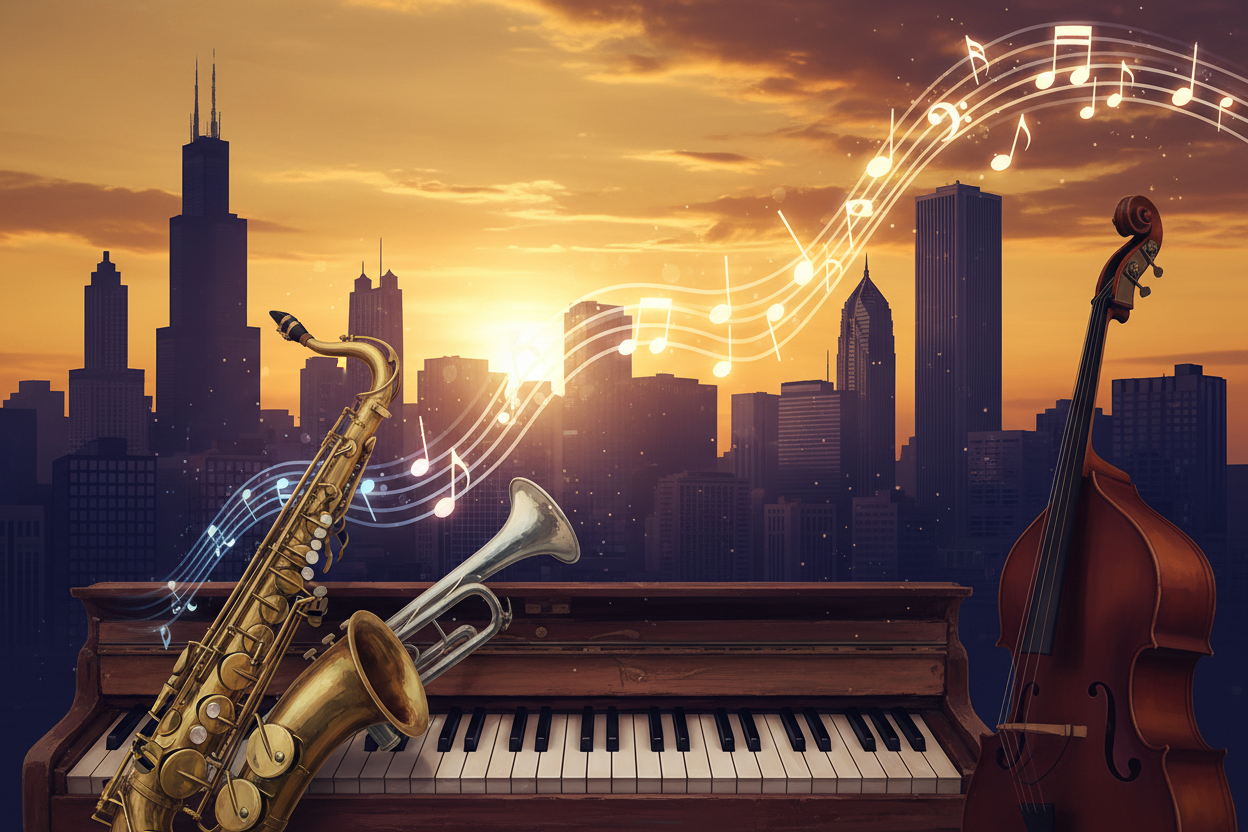
Chicago’s jazz story begins in the early 1900s, deeply intertwined with the Great Migration. As African Americans moved north seeking better opportunities and escaping Jim Crow laws, they brought their musical traditions with them. New Orleans musicians, in particular, found Chicago’s South Side welcoming, and the city became a crucial stop on the jazz migration route.
The 1920s marked Chicago’s emergence as a jazz capital. While New Orleans is often credited as jazz’s birthplace, Chicago became where the music truly grew up and found its voice. The city’s unique industrial character and diverse population created a perfect storm for musical innovation. Unlike the more tourist-focused scene in New Orleans, Chicago’s jazz developed in neighborhood clubs, dance halls, and speakeasies where locals gathered to unwind after long days in factories and stockyards.
King Oliver’s Creole Jazz Band, featuring a young Louis Armstrong, made Chicago their base in 1922. This move was pivotal – it established Chicago as a serious jazz destination and introduced Armstrong to the wider world. The band’s recordings at Gennett Studios became some of the first important jazz recordings, capturing the energy and innovation that would define Chicago jazz for decades to come.
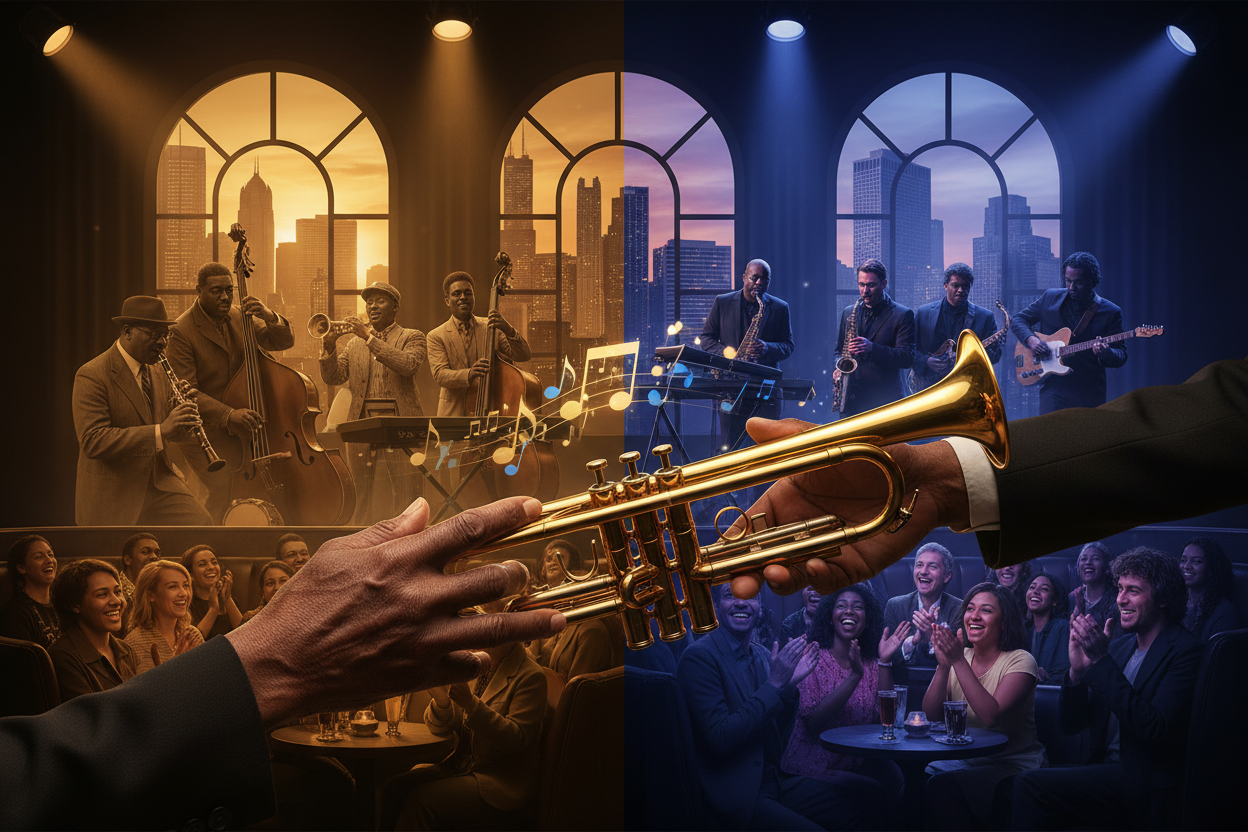
The city’s South Side became particularly significant, with venues like the Sunset Cafe and the Dreamland Ballroom hosting legendary performances. These weren’t just entertainment venues; they were cultural institutions where musicians experimented, audiences discovered new sounds, and the jazz language continued to evolve.
Legendary Chicago Jazz Musicians Who Shaped the Genre
Chicago has been home to an extraordinary roster of jazz legends, each contributing unique elements to the genre’s development. Louis Armstrong, though born in New Orleans, truly came of age musically in Chicago. His time with King Oliver and later his own Hot Five and Hot Seven recordings revolutionized jazz, introducing the concept of the jazz soloist and demonstrating the expressive possibilities of improvisation.
Earl “Fatha” Hines, a Chicago native, redefined jazz piano with his revolutionary “trumpet-style” playing. His octave runs and single-note lines influenced countless pianists and helped establish the piano as a lead instrument rather than just rhythmic support. Hines spent much of his career in Chicago, and his Grand Terrace Ballroom became a launching pad for many careers.
The city also nurtured Benny Goodman, the “King of Swing,” who grew up in Chicago’s Maxwell Street area. Goodman’s later success in New York and beyond had its roots in the musical education he received in Chicago’s vibrant jazz community. His integration of black and white musicians in his small groups was groundbreaking and helped break down racial barriers in music.
Muddy Waters, while primarily known for blues, represents another crucial aspect of Chicago’s musical heritage. His electric blues style influenced jazz musicians and demonstrated the city’s role as a crossroads where different African American musical traditions intersected and influenced each other.
More recently, musicians like Ramsey Lewis, Patricia Barber, and Kurt Elling have carried the Chicago jazz torch, each bringing contemporary sensibilities while honoring the city’s rich musical traditions. Their success demonstrates that Chicago continues to produce world-class jazz talent.
Iconic Jazz Venues That Defined Chicago’s Sound
Chicago’s jazz venues have been more than just performance spaces – they’ve been laboratories where the music evolved and communities formed. The Green Mill Cocktail Lounge, operating since 1907, stands as perhaps the most famous. This Uptown venue survived Prohibition, hosted Al Capone, and continues to present jazz seven nights a week. Its intimate atmosphere and excellent acoustics have made it a favorite among both musicians and audiences for generations.
The Cotton Club on the South Side was another legendary venue, though it operated under the same segregated policies as its more famous New York namesake. Despite these restrictions, it showcased incredible talent and helped establish Chicago as a major jazz destination during the 1920s and 1930s.
The Jazz Showcase, founded by Joe Segal in 1947, has been presenting world-class jazz for over seven decades. Segal’s dedication to the music and his ability to spot and nurture talent made the venue a crucial part of Chicago’s jazz ecosystem. The club has hosted everyone from Count Basie to contemporary stars, maintaining its reputation as one of the country’s premier jazz rooms.
Smaller venues have been equally important. Places like the Velvet Lounge, run by saxophonist Fred Anderson until his death in 2010, provided spaces for experimental and avant-garde jazz. These venues ensured that Chicago’s jazz scene remained diverse and forward-thinking, not just nostalgic for past glories.
The Chicago Theatre and Orchestra Hall have also played crucial roles, hosting larger jazz productions and festivals that brought the music to broader audiences. These venues helped legitimize jazz as a serious art form worthy of concert hall presentation.
Chicago’s Current Jazz Scene: Where to Experience Live Music Today
Today’s Chicago jazz scene is remarkably vibrant and diverse, offering everything from traditional swing to cutting-edge experimental music. The Green Mill remains the crown jewel, but it’s joined by numerous other venues that keep the city’s jazz flame burning bright.
Andy’s Jazz Club in River North has become a cornerstone of the contemporary scene, featuring both local favorites and touring acts. Its central location and consistent programming make it accessible to both residents and visitors. The club’s afternoon sessions are particularly popular, offering a more relaxed atmosphere for jazz appreciation.
The Chicago Jazz Festival, held annually in Millennium Park, represents the scene’s public face. This free festival attracts hundreds of thousands of visitors and showcases the breadth of Chicago’s jazz community, from established stars to emerging artists. The festival’s success demonstrates the continued public appetite for jazz and the city’s commitment to supporting the art form.
Smaller venues continue to play crucial roles. The Hideout, primarily known for alternative country and indie rock, has embraced jazz programming, reflecting the genre’s growing crossover appeal. Similarly, venues like Constellation in Roscoe Village focus on experimental and avant-garde music, ensuring that Chicago’s jazz scene continues to push boundaries.
The city’s universities, particularly DePaul and Northwestern, contribute significantly to the scene through their jazz programs and performance venues. These institutions not only train the next generation of musicians but also present regular concerts that enrich the city’s cultural offerings.
Jazz brunch has become increasingly popular, with restaurants throughout the city featuring live music alongside weekend meals. This trend has made jazz more accessible to casual listeners and created new performance opportunities for musicians.
The Evolution of Chicago Jazz Styles and Innovations
Chicago jazz has never been monolithic – it’s always encompassed multiple styles and approaches that reflect the city’s diverse musical influences. The “Chicago style” that emerged in the 1920s was characterized by a more aggressive, driving rhythm than New Orleans jazz, reflecting the city’s industrial energy and urban pace.
The Association for the Advancement of Creative Musicians (AACM), founded in 1965, represents one of Chicago’s most significant contributions to jazz innovation. This collective of musicians, including Art Ensemble of Chicago and Anthony Braxton, pioneered free jazz and experimental approaches that challenged traditional jazz conventions. The AACM’s influence extended far beyond Chicago, inspiring similar collectives worldwide and establishing the city as a center for avant-garde jazz.
Chicago’s blues tradition has consistently influenced its jazz scene, creating a distinctive sound that’s earthier and more blues-inflected than jazz from other cities. Musicians like Buddy Guy and Junior Wells regularly crossed between blues and jazz, creating hybrid styles that reflected the city’s musical diversity.
The city has also been at the forefront of jazz education and preservation. The Chicago Jazz Institute and various university programs have worked to document the city’s jazz history while training new generations of musicians. This combination of preservation and innovation ensures that Chicago jazz continues to evolve while honoring its roots.
Contemporary Chicago jazz musicians continue to innovate, incorporating elements from hip-hop, electronic music, and world music traditions. Artists like Makaya McCraven and Tomeka Reid represent a new generation that respects jazz traditions while fearlessly exploring new possibilities.
The Future of Jazz in the Windy City
Looking ahead, Chicago’s jazz scene faces both challenges and opportunities that will shape its future direction. The ongoing gentrification of historically significant neighborhoods threatens some venues and displaces communities that have long supported jazz. However, the city’s strong institutional support for the arts and the dedication of its jazz community provide reasons for optimism.
Technology is creating new opportunities for jazz presentation and education. Virtual concerts, online jazz education programs, and digital archiving projects are making Chicago jazz more accessible to global audiences while preserving its history for future generations. The COVID-19 pandemic accelerated these trends, and many innovations developed during that period continue to enhance the jazz experience.
The city’s commitment to jazz education remains strong, with programs in schools and community centers introducing new generations to the music. Organizations like Jazz at Lincoln Center’s educational outreach and local initiatives like the Chicago Jazz Philharmonic’s community programs ensure that jazz knowledge and appreciation continue to grow.
Collaboration between jazz and other musical genres is likely to increase, reflecting broader trends in contemporary music. Chicago’s diverse musical landscape makes it an ideal place for such cross-pollination, and younger musicians seem particularly interested in breaking down genre barriers.
The international jazz community increasingly recognizes Chicago’s contributions, with the city hosting more international festivals and exchanges. This global perspective enriches the local scene while sharing Chicago’s jazz innovations with the world.
Conclusion
Chicago’s jazz legacy is both a source of pride and a living, breathing part of the city’s cultural identity. From the early days when Southern musicians found new opportunities in the Windy City to today’s innovative artists who continue pushing musical boundaries, Chicago jazz represents the best of American creativity and resilience.
The city’s jazz scene succeeded because it never became a museum piece – it remained vital, relevant, and connected to the communities that created it. Today’s Chicago jazz builds on this foundation while embracing new influences and technologies that ensure its continued evolution.
Whether you’re exploring the historic Green Mill, discovering new artists at contemporary venues, or attending the annual jazz festival, you’re participating in a musical tradition that spans more than a century. Chicago’s jazz scene offers something for everyone, from the casual listener to the serious student of the music.
As Chicago jazz moves into the future, it carries with it the innovations of past generations while remaining open to new possibilities. The city’s commitment to both preserving its jazz heritage and fostering new talent ensures that this vital art form will continue to thrive for generations to come. In a world that often seems divided, jazz remains a unifying force that brings people together through the universal language of music, and Chicago continues to be one of its most eloquent speakers.