The Ultimate Guide to Chicago’s Film Scene: Movies Made in the Windy City
Chicago has always been more than just America’s Second City when it comes to cinema. With its stunning architecture, diverse neighborhoods, and unmistakable urban character, the Windy City has served as both backdrop and star in countless films over the decades. From classic comedies to intense thrillers, Chicago’s film scene offers a rich tapestry of storytelling that captures the essence of this remarkable metropolis.
Whether you’re a film buff planning a movie-themed tour of Chicago or simply curious about the city’s cinematic legacy, this comprehensive guide will take you through the most iconic films shot in Chicago, the locations that made them memorable, and why filmmakers continue to fall in love with this incredible city.
Why Filmmakers Choose Chicago: The Perfect Urban Canvas
Chicago’s appeal to filmmakers goes far beyond its photogenic skyline. The city offers an authentic urban experience that feels distinctly American yet uniquely Chicago. Unlike the polished glamour of Los Angeles or the frenetic energy of New York, Chicago provides a grounded, blue-collar authenticity that translates beautifully on screen.
The architectural diversity is simply breathtaking. From the Gothic Revival towers of the Tribune Building to the sleek modernism of the Willis Tower, Chicago’s buildings tell stories of different eras. The city’s grid system and elevated train lines create natural frames for cinematographers, while Lake Michigan provides a stunning natural backdrop that rivals any coastal city.
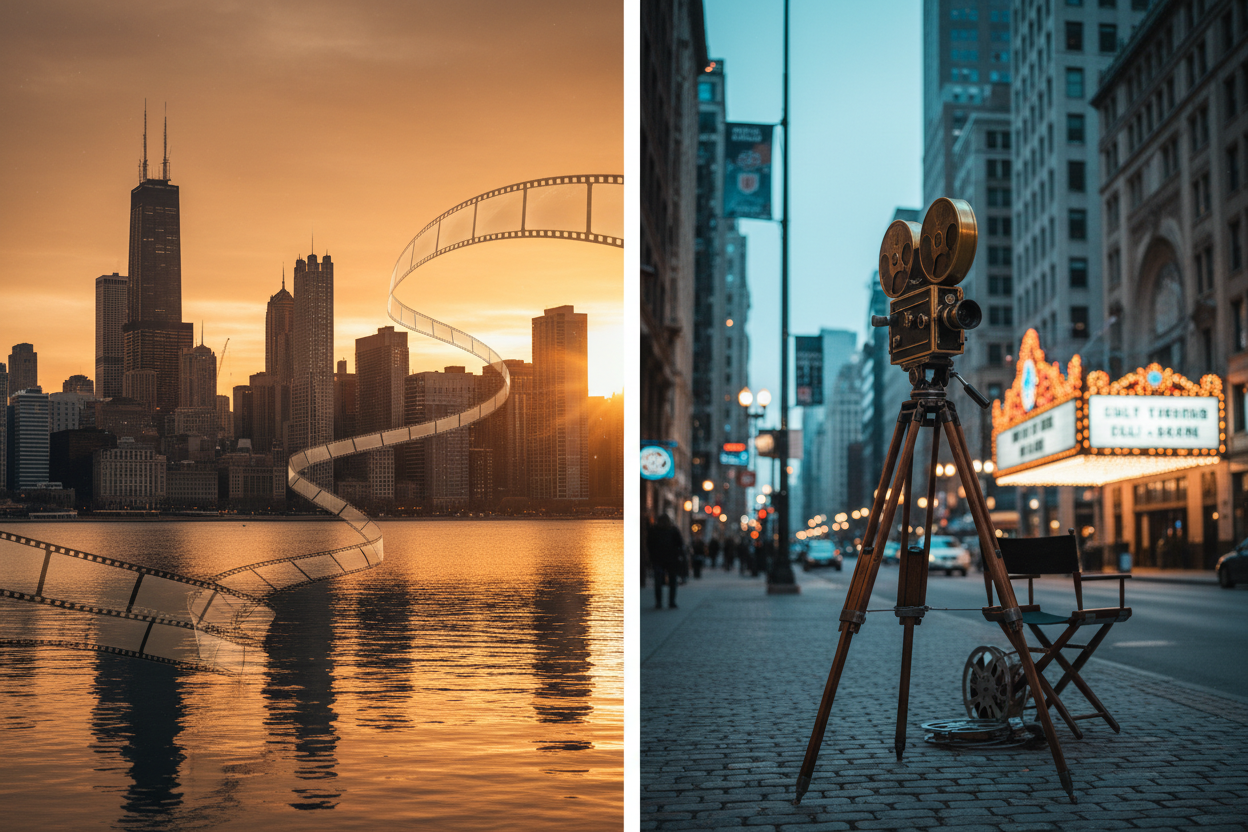
Chicago’s neighborhoods each have their own personality, offering filmmakers a variety of settings within a single city. The upscale Gold Coast feels worlds away from the working-class charm of Pilsen, while Lincoln Park’s tree-lined streets contrast beautifully with the industrial landscapes of the South Side.
Iconic Chicago Films That Defined Cinema
Some movies become so synonymous with their locations that it’s impossible to think of one without the other. Chicago has been fortunate to host several such films that have become cultural touchstones.
“Ferris Bueller’s Day Off” remains perhaps the most beloved Chicago film ever made. John Hughes’ 1986 masterpiece turned the city into a playground, showcasing everything from the Art Institute to Wrigley Field. The film’s famous parade scene, shot during the actual Von Steuben Day Parade, captures the spontaneous joy that makes Chicago special.
“The Blues Brothers” transformed Chicago into a musical wonderland in 1980. The film’s car chases through Lower Wacker Drive and the iconic scene at Daley Plaza demonstrated Chicago’s cinematic versatility. Dan Aykroyd and John Belushi’s love letter to Chicago blues culture introduced audiences worldwide to the city’s rich musical heritage.
“High Fidelity” gave us a more intimate view of Chicago in 2000. John Cusack’s record store owner navigated heartbreak against the backdrop of Wicker Park and Lincoln Park, showing Chicago as a place where real people live real lives. The film captured the city’s music scene and neighborhood culture with remarkable authenticity.
Chicago’s Architectural Stars: Buildings That Steal Scenes
Chicago’s architecture doesn’t just provide backdrops; it becomes a character in many films. The city’s buildings have personalities, histories, and visual impact that enhance every story told within their shadows.
The Chicago Board of Trade Building has appeared in numerous films, its Art Deco magnificence lending gravitas to everything from “The Untouchables” to “Transformers: Dark of the Moon.” The building’s imposing presence at the foot of LaSalle Street creates a natural focal point that directors can’t resist.
Union Station, with its soaring ceilings and classical columns, has hosted some of cinema’s most memorable scenes. The famous baby carriage sequence in “The Untouchables” turned the station’s grand staircase into a stage for one of film’s most tension-filled moments. More recently, films like “The Dark Knight” have used the station’s timeless elegance to suggest both grandeur and vulnerability.
The Marina City towers, those distinctive corn cob-shaped buildings, have appeared in films ranging from “The Hunter” to “Divergent.” Their unique cylindrical form makes them instantly recognizable symbols of Chicago’s architectural innovation.
Neighborhood Spotlight: Where Chicago’s Stories Come Alive
Each Chicago neighborhood brings its own flavor to the films shot there, creating authentic backdrops that enhance storytelling in unique ways.
The Loop serves as Chicago’s business heart and has been featured in countless films depicting urban professional life. Its canyon-like streets and elevated trains create a distinctly Chicago atmosphere that can’t be replicated anywhere else. Films like “The Fugitive” used the Loop’s maze-like quality to create tension and confusion.
Lincoln Park offers tree-lined streets and elegant brownstones that suggest comfortable middle-class life. This neighborhood has been the setting for romantic comedies and family dramas that need to convey stability and aspiration. The area around DePaul University provides youthful energy, while the lakefront offers scenic beauty.
Wicker Park and Bucktown represent Chicago’s artistic soul. These neighborhoods have gentrified significantly since films like “High Fidelity” were shot there, but they still maintain an creative energy that attracts filmmakers looking to capture Chicago’s cultural side.
Action and Adventure: Chicago as Urban Playground
Chicago’s infrastructure creates natural opportunities for spectacular action sequences that have become legendary in cinema history.
The elevated train system, known locally as the “L,” has provided the setting for numerous chase scenes and dramatic moments. “While You Were Sleeping” used the Brown Line to create romantic tension, while “Source Code” turned a Metra train into the center of a sci-fi thriller. The trains themselves become characters, representing the constant motion and energy of city life.
Lower Wacker Drive, the underground roadway that runs beneath downtown Chicago, has become famous among film buffs for its appearances in action movies. “The Dark Knight” featured an spectacular chase scene through these tunnels, while “The Blues Brothers” used them for one of cinema’s most elaborate car chases. The tunnels provide a unique urban environment that looks futuristic while remaining distinctly Chicago.
Lake Shore Drive offers filmmakers a scenic route that combines urban sophistication with natural beauty. The drive’s curves along Lake Michigan provide dynamic shots that capture both the city’s skyline and its relationship with the lake that defines its eastern border.
Modern Chicago Cinema: Contemporary Films Shaping the City’s Image
Recent films continue to discover new ways to showcase Chicago’s cinematic potential, often focusing on neighborhoods and aspects of the city that earlier films overlooked.
“The Dark Knight” trilogy brought superhero spectacle to Chicago, using the city’s architecture and infrastructure to create Gotham City. Christopher Nolan’s films showcased Chicago’s dramatic potential while introducing the city to a new generation of moviegoers worldwide.
“Barbershop” and its sequels brought attention to Chicago’s South Side, showing neighborhood life with humor and heart. These films demonstrated that Chicago’s story extends far beyond the downtown area that dominates many movies.
“Divergent” used Chicago’s architecture to create a dystopian future, transforming familiar landmarks into elements of a sci-fi world. The film’s use of the city showed how Chicago’s distinctive look can be adapted for any genre or time period.
Behind the Scenes: Chicago’s Film Industry Infrastructure
Chicago’s success as a filming location isn’t just about its looks; the city has developed a robust infrastructure to support film production that makes it attractive to filmmakers.
The Chicago Film Office works actively to attract productions to the city, offering location scouting assistance and permitting services that streamline the filming process. This support has been crucial in bringing major productions to Chicago and maintaining the city’s reputation as a film-friendly destination.
Local film schools, including Columbia College Chicago and Northwestern University, provide a steady stream of trained professionals who can work on productions. This local talent pool means that filmmakers don’t have to import entire crews, making Chicago productions more cost-effective.
The city’s compact size and efficient transportation system make it relatively easy to move equipment and crews between locations. Unlike sprawling cities where travel between locations can consume entire days, Chicago’s density allows filmmakers to capture multiple locations efficiently.
Planning Your Chicago Film Location Tour
For movie enthusiasts visiting Chicago, creating a film-themed itinerary can be an exciting way to explore the city while reliving favorite movie moments.
Start downtown with the major landmarks featured in blockbuster films. Visit the Chicago Board of Trade Building, walk through Union Station, and take photos at Daley Plaza. The Architecture Foundation offers tours that include many film locations while providing historical context about the buildings.
Take a ride on the “L” to experience the elevated train system that’s featured in so many films. The Brown Line offers particularly scenic views, while the Blue Line provides a more authentic local experience. Many film scenes were shot at specific stations, so research your favorites before you go.
Explore neighborhoods beyond downtown to see where character-driven films were shot. Walk through Lincoln Park to see locations from romantic comedies, or visit Wicker Park to experience the bohemian atmosphere captured in indie films.
The Future of Chicago Cinema
Chicago’s film scene continues to evolve as new technologies and storytelling approaches emerge. The city’s timeless qualities ensure its continued relevance, while its adaptability allows it to serve new genres and styles.
Streaming services have created new opportunities for Chicago-based content, with series like “Shameless” and “Chicago Fire” bringing sustained production to the city. These longer-form narratives allow for deeper exploration of Chicago’s neighborhoods and culture.
Independent filmmakers continue to discover Chicago’s potential, often focusing on communities and stories that major studio films overlook. This grassroots filmmaking helps maintain Chicago’s reputation for authentic storytelling.
Chicago’s film scene represents more than just a collection of movies shot in a particular city. It’s a testament to how location can enhance storytelling, how architecture can become character, and how a city’s personality can shine through cinema. From the romantic comedy perfection of “Ferris Bueller’s Day Off” to the dark intensity of “The Dark Knight,” Chicago has proven its versatility as a cinematic setting.
The Windy City’s film legacy continues to grow with each new production that recognizes the unique qualities that make Chicago special. Whether you’re a filmmaker scouting locations, a tourist planning a movie-themed visit, or simply someone who appreciates great cinema, Chicago’s film scene offers endless discoveries and the promise that the city’s best cinematic moments may still be ahead.