The Story of Chicago’s Prohibition Era: Speakeasies and Organized Crime
When the Volstead Act went into effect on January 17, 1920, America officially became a “dry” nation. But in Chicago, the City of Big Shoulders, Prohibition became something entirely different – a golden opportunity for organized crime and underground culture to flourish like never before. The thirteen-year period from 1920 to 1933 transformed Chicago into the epicenter of bootlegging, speakeasies, and criminal enterprise, creating a legacy that continues to fascinate us nearly a century later.
Chicago’s unique position as a transportation hub, combined with its already established culture of political corruption and working-class defiance, made it the perfect storm for Prohibition-era chaos. What emerged was a city where the line between law enforcement and lawbreakers became increasingly blurred, where ordinary citizens became criminals simply by wanting a drink, and where organized crime syndicates grew more powerful than many legitimate businesses.
The Perfect Storm: Why Chicago Became Prohibition’s Capital
Chicago didn’t stumble into its role as America’s bootlegging capital by accident. The city possessed several key advantages that made it irresistible to organized crime operations. Its strategic location on Lake Michigan provided easy access to Canadian liquor smugglers, while its extensive railroad network allowed for efficient distribution throughout the Midwest and beyond.
The city’s political landscape also played a crucial role. Chicago had a long-standing tradition of machine politics, where corruption wasn’t just tolerated – it was practically institutionalized. Mayor William “Big Bill” Thompson, who served during much of the Prohibition era, was notoriously corrupt and maintained cozy relationships with criminal organizations. This created an environment where bootleggers could operate with relative impunity, as long as the right palms were greased.
Perhaps most importantly, Chicago’s diverse, working-class population had little patience for what they saw as government overreach. Many immigrants from European countries where alcohol was deeply embedded in cultural traditions viewed Prohibition as an attack on their way of life. This widespread public opposition to the law created a ready market for illegal alcohol and a general unwillingness to cooperate with federal enforcement efforts.
The Rise of Al Capone and Organized Crime Syndicates
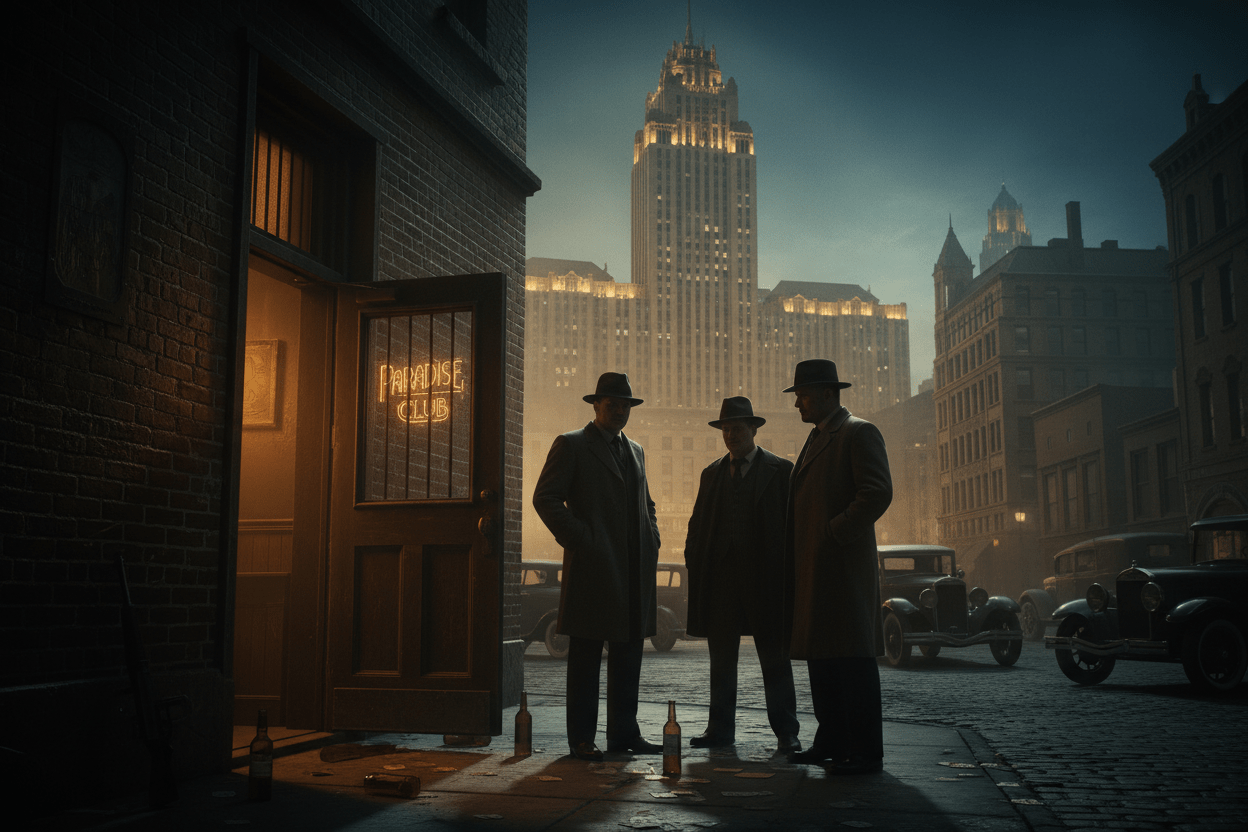
No discussion of Chicago’s Prohibition era would be complete without examining the meteoric rise of Alphonse “Al” Capone. Arriving in Chicago in 1919 as a relatively minor player in Johnny Torrio’s criminal organization, Capone quickly proved himself to be a brilliant businessman with a talent for violence when necessary.
When Torrio retired in 1925 following an assassination attempt, Capone inherited control of what would become the most powerful criminal organization in American history. At its peak, the Capone organization controlled much of Chicago’s illegal alcohol trade, generating an estimated $60 million annually – equivalent to nearly $900 million today.
Capone’s success wasn’t built on brutality alone, though violence certainly played a role. He understood that running a successful bootlegging operation required the same skills as any legitimate business: supply chain management, customer service, quality control, and strategic planning. He established relationships with breweries, distilleries, and smugglers, creating a vertically integrated operation that controlled alcohol from production to final sale.
The Chicago Outfit, as Capone’s organization became known, wasn’t the only game in town. The city was divided among several competing syndicates, including the North Side Gang led by George “Bugs” Moran, and various ethnic organizations representing Irish, Jewish, and Polish criminal interests. This competition often turned violent, culminating in events like the infamous St. Valentine’s Day Massacre of 1929.
Speakeasies: Chicago’s Hidden Nightlife Revolution
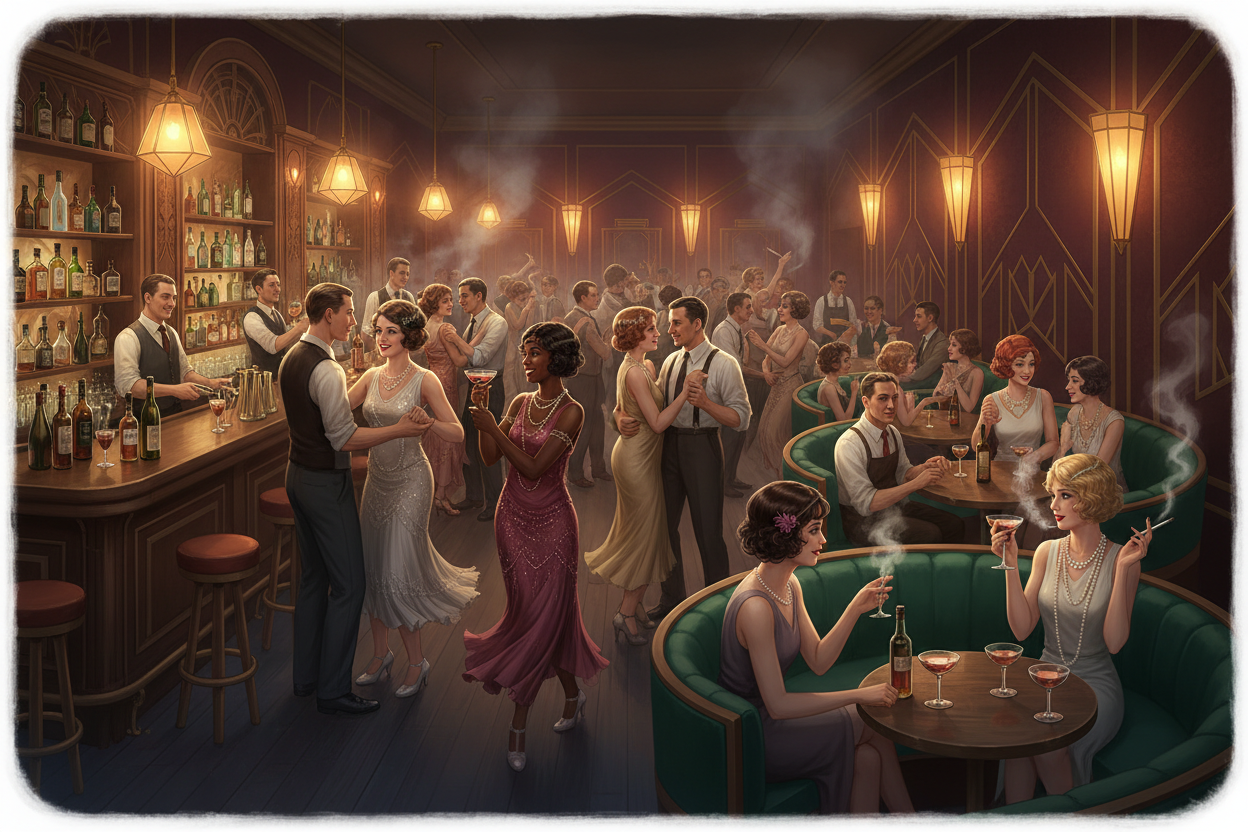
While organized crime provided the supply, speakeasies created the demand that made Prohibition-era Chicago so profitable. These illegal drinking establishments ranged from sophisticated nightclubs that rivaled the finest legal establishments of the pre-Prohibition era to dingy basement operations that served rotgut alcohol in coffee cups.
Chicago’s speakeasy scene was remarkably diverse and innovative. The Green Mill Cocktail Lounge, which still operates today, was one of Capone’s favorite haunts and featured some of the era’s best jazz musicians. The Colosimo Cafe served as both a restaurant and the headquarters for James “Big Jim” Colosimo’s criminal operations. Meanwhile, thousands of smaller establishments operated in neighborhoods throughout the city, often disguised as legitimate businesses like barbershops, soda fountains, or private clubs.
The speakeasy culture had a profound impact on Chicago’s social dynamics. These establishments were often more integrated than their legal predecessors, bringing together people from different social classes, ethnic backgrounds, and races in ways that wouldn’t have been possible in conventional society. Women gained unprecedented social freedom in speakeasies, drinking and socializing in public in ways that would have been scandalous just a decade earlier.
The economic impact of speakeasies extended far beyond the establishments themselves. They created jobs for bartenders, musicians, waiters, and security personnel, while generating demand for everything from glassware to musical instruments. Many legitimate businesses turned a blind eye to their customers’ involvement in the illegal alcohol trade, recognizing that Prohibition-era money spent just as well as any other kind.
Law Enforcement’s Uphill Battle
Federal agents faced an almost impossible task in trying to enforce Prohibition in Chicago. The Prohibition Bureau was chronically understaffed and underfunded, with agents earning salaries so low that corruption was almost inevitable. Many local police officers were either on criminal payrolls or simply refused to enforce what they saw as an unpopular and unworkable law.
The most famous federal agent assigned to Chicago was Eliot Ness, leader of the “Untouchables” – a small group of agents chosen for their supposed incorruptibility. While Ness and his team did succeed in disrupting some of Capone’s operations and generating positive publicity for federal enforcement efforts, their actual impact on Chicago’s bootlegging trade was relatively minimal.
The real challenge facing law enforcement wasn’t just the scale of criminal operations, but the level of public support they enjoyed. Raids on speakeasies were often met with community resistance, and juries frequently refused to convict bootleggers even when the evidence against them was overwhelming. This “nullification” by ordinary citizens made it clear that Prohibition had lost whatever legitimacy it might have initially possessed.
Ironically, the most effective law enforcement strategy against organized crime leaders like Capone turned out to be tax evasion charges rather than Prohibition violations. The federal government’s case against Capone relied primarily on his failure to pay income taxes on his illegal earnings, demonstrating the limitations of Prohibition as a legal framework.
The Cultural Legacy of Prohibition-Era Chicago
The impact of Chicago’s Prohibition era extended far beyond the thirteen years of the “Noble Experiment.” The period fundamentally changed American attitudes toward alcohol, government authority, and organized crime, while creating cultural touchstones that continue to influence popular entertainment nearly a century later.
Jazz music flourished in Chicago’s speakeasies, with legendary venues like the Green Mill helping to launch the careers of musicians who would define American popular music for generations. The association between jazz and rebellion, sophistication, and urban culture was forged in the smoke-filled basements and hidden nightclubs of Prohibition-era Chicago.
The era also established Chicago’s reputation as a city where rules were made to be broken and where political corruption was simply a fact of life. This image, while often exaggerated, has persisted in popular culture and continues to influence how the city is portrayed in movies, television shows, and literature.
Perhaps most importantly, Chicago’s Prohibition experience demonstrated the limitations of using criminal law to regulate personal behavior. The widespread failure of alcohol prohibition helped lay the groundwork for more nuanced approaches to drug policy and social regulation that continue to evolve today.
The End of an Era and Its Lasting Impact
When the Twenty-first Amendment repealed Prohibition on December 5, 1933, Chicago’s bootlegging empire didn’t disappear overnight. Many of the criminal organizations that had grown wealthy during Prohibition simply shifted their focus to other illegal activities like gambling, labor racketeering, and narcotics trafficking. The organizational structures and corruption networks established during the 1920s continued to influence Chicago politics and crime for decades to come.
The economic impact of Prohibition’s end was significant but mixed. While legitimate businesses could once again sell alcohol legally, thousands of jobs in the illegal alcohol trade disappeared almost overnight. Many speakeasies attempted to transition into legal bars and restaurants, though few succeeded in maintaining their Prohibition-era glamour and excitement.
For law enforcement, the end of Prohibition brought both relief and new challenges. While agents no longer had to chase bootleggers, the criminal organizations they had been fighting remained intact and well-funded. The Chicago Police Department and federal agencies would spend the next several decades trying to dismantle the criminal empires that Prohibition had helped create.
Today, Chicago’s Prohibition legacy lives on in restored speakeasies, historical tours, and countless books and movies. The Green Mill still hosts jazz performances, while the Chicago History Museum preserves artifacts from the era that transformed a Midwest industrial city into the stuff of legend. The story of Chicago’s Prohibition era serves as a fascinating case study in unintended consequences, demonstrating how well-intentioned laws can sometimes create the very problems they were designed to solve.
The tale of speakeasies and organized crime in Prohibition-era Chicago remains one of the most compelling chapters in American urban history, offering insights into the complex relationships between law, culture, and social change that continue to resonate in our contemporary world.