The Story of Chicago’s Blues: How the City Shaped American Music
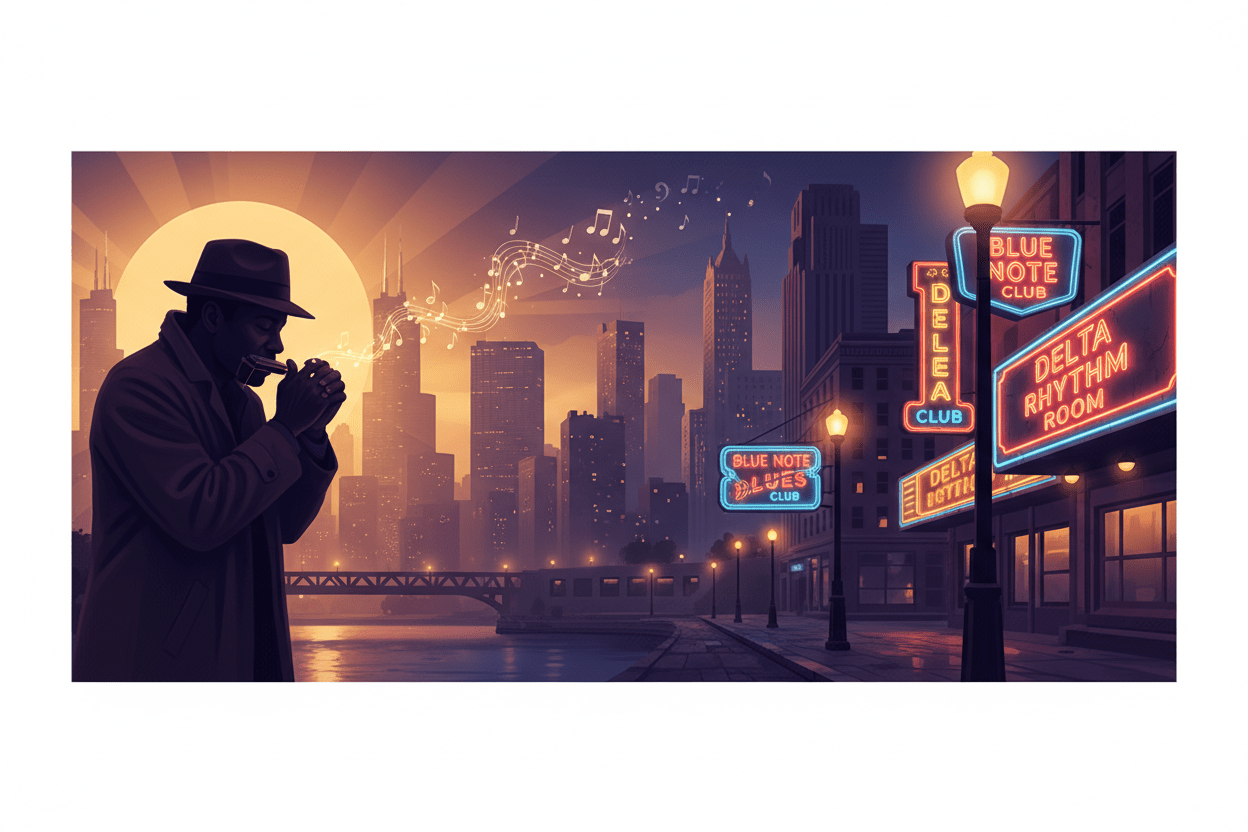
When you walk down the streets of Chicago today, you can almost hear the echoes of a musical revolution that transformed American culture forever. The Windy City didn’t just embrace the blues – it reimagined, electrified, and amplified this deeply emotional art form until it became the backbone of modern popular music. From the Mississippi Delta to the South Side, Chicago’s blues story is one of migration, innovation, and the relentless pursuit of musical expression that would influence everything from rock and roll to hip-hop.
The tale of Chicago blues isn’t just about music; it’s about people seeking better lives, communities forming around shared experiences, and artists pushing boundaries in ways that would echo through generations. This is the story of how a city of steel and ambition became the crucible where American music was forever changed.

The Great Migration: Seeds of Musical Revolution
The roots of Chicago’s blues revolution stretch back to the early 1900s, when thousands of African Americans began their journey north during what historians call the Great Migration. Between 1916 and 1970, over six million Black Americans left the rural South, seeking economic opportunities and escaping the harsh realities of Jim Crow laws. Chicago, with its booming industrial economy and promise of factory jobs, became a beacon of hope.
These migrants didn’t just bring their belongings – they carried with them the musical traditions of the Mississippi Delta, the Carolinas, and other Southern regions. The acoustic blues that had developed in rural communities suddenly found itself in an urban environment, surrounded by the sounds of industry, traffic, and city life. This dramatic change in setting would prove to be the catalyst for an entirely new musical evolution.
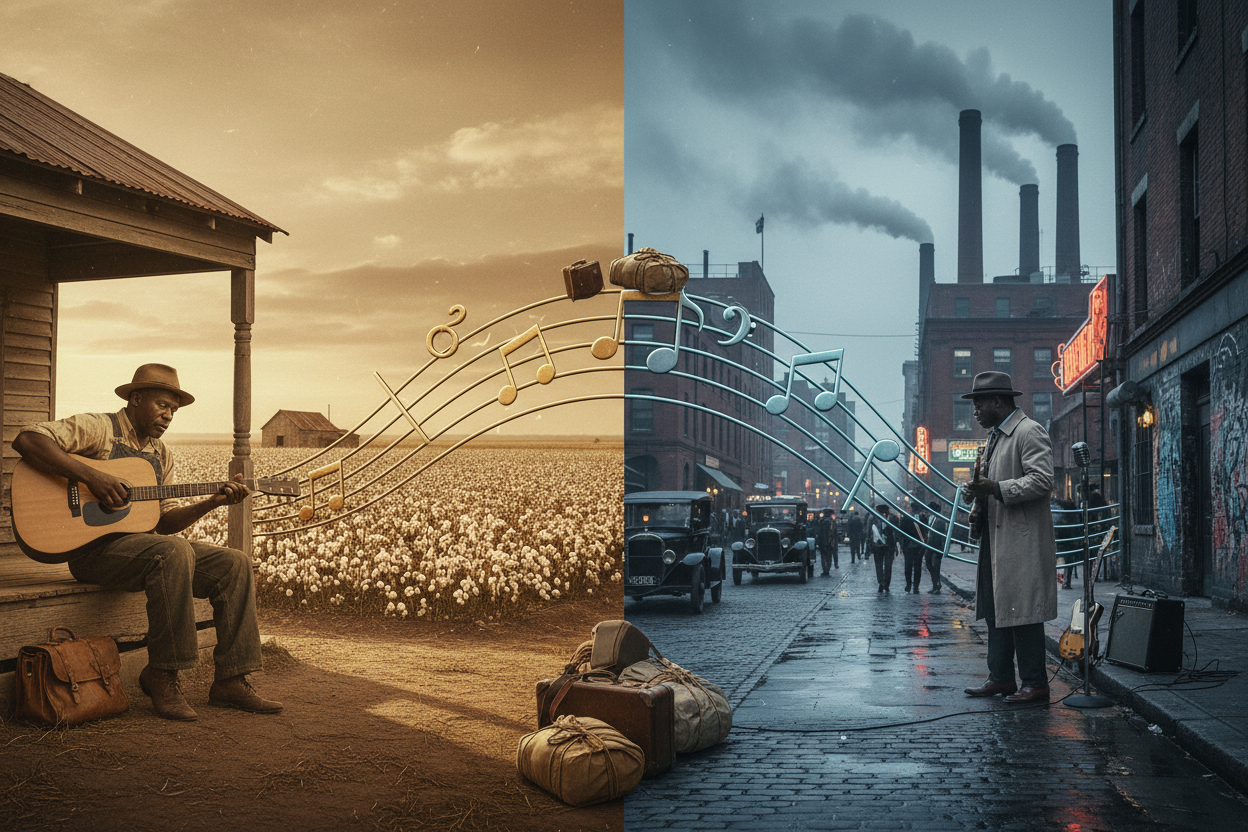
The South Side of Chicago became the primary destination for many of these newcomers. Neighborhoods like Bronzeville transformed into vibrant cultural centers where Southern traditions met Northern opportunities. Here, in crowded tenements and bustling streets, the quiet, introspective country blues began its metamorphosis into something louder, more urgent, and undeniably electric.
From Acoustic Roots to Electric Innovation
The transformation from Delta blues to Chicago blues wasn’t just about changing locations – it was about adapting to survive and thrive in a completely different environment. The gentle fingerpicking and intimate vocals that worked perfectly for front porch gatherings simply couldn’t compete with the noise of urban life. Musicians quickly realized they needed to amplify their sound, both literally and figuratively.
The introduction of electric guitars, amplified harmonicas, and full rhythm sections marked the birth of what we now recognize as Chicago blues. This wasn’t just about volume – it was about creating a new emotional intensity that matched the energy and struggles of urban life. The music became more aggressive, more driving, reflecting the industrial heartbeat of the city itself.
Recording studios began popping up throughout the city, with labels like Chess Records becoming legendary for their role in documenting and promoting this new sound. These studios weren’t just recording facilities; they were laboratories where musicians experimented with new techniques, sounds, and arrangements that would influence popular music for decades to come.
Legendary Venues That Made History
No discussion of Chicago blues would be complete without exploring the legendary venues that served as both launching pads and proving grounds for countless musicians. These weren’t just places to hear music – they were community centers, cultural institutions, and the beating heart of the city’s blues scene.
The Checkerboard Lounge, established in 1972, became synonymous with authentic Chicago blues. Located on the South Side, it hosted everyone from Muddy Waters to Buddy Guy, creating an atmosphere where both established stars and unknown talents could share the same stage. The venue’s intimate setting allowed for the kind of musical communication between artist and audience that defines great blues performance.
Kingston Mines, another iconic venue, has been showcasing blues talent since 1968. What made these clubs special wasn’t just the music – it was the sense of community they fostered. Regular patrons became extended family, musicians supported each other’s careers, and the venues themselves became cultural ambassadors, introducing Chicago blues to visitors from around the world.
These clubs operated on a philosophy that music was meant to be experienced live, in person, with all the raw emotion and spontaneous magic that can only happen when musicians and audiences share the same space. This tradition continues today, keeping the authentic spirit of Chicago blues alive in an increasingly digital world.
The Kings and Queens of Chicago Blues
The story of Chicago blues is inseparable from the larger-than-life personalities who shaped its sound and spread its influence around the world. These weren’t just musicians – they were innovators, storytellers, and cultural ambassadors who carried the blues from Chicago’s neighborhoods to international stages.
Muddy Waters, often called the father of Chicago blues, epitomized this transformation. Born McKinley Morganfield in Mississippi, he brought Delta blues traditions to Chicago and then revolutionized them with electric instruments and urban sensibilities. His powerful voice and commanding stage presence made him a natural leader of the Chicago blues movement, and his influence extended far beyond music into fashion, attitude, and cultural identity.
Howlin’ Wolf, with his massive physical presence and equally imposing voice, represented the raw power that Chicago blues could achieve. His performances were legendary for their intensity, and his ability to command a room was unmatched. Wolf understood that Chicago blues wasn’t just about technical skill – it was about emotional impact and the ability to move people both physically and spiritually.
Buddy Guy continues to carry the torch of Chicago blues into the modern era. His guitar playing combines technical brilliance with emotional depth, and his longevity in the business speaks to both his talent and his understanding of what makes blues music timeless. Guy’s career demonstrates how Chicago blues has evolved while maintaining its essential character and emotional core.
The Ripple Effect: Chicago Blues Influences Rock, Soul, and Beyond
The impact of Chicago blues extended far beyond the city limits and the blues genre itself. The electric sound, driving rhythms, and emotional intensity that characterized Chicago blues became fundamental elements in the development of rock and roll, soul music, and even early hip-hop.
British musicians in the 1960s, including the Rolling Stones, Led Zeppelin, and Eric Clapton, openly acknowledged their debt to Chicago blues artists. They didn’t just cover Chicago blues songs – they absorbed the attitude, the energy, and the approach to electric instruments that had been pioneered in Chicago clubs. This cross-cultural exchange helped spread Chicago blues influence around the world while also bringing international attention back to the original artists.
The rhythmic innovations of Chicago blues also influenced the development of soul and R&B music. The tight rhythm sections, the interplay between instruments, and the emphasis on groove over pure technical display became hallmarks of popular music that continue to influence artists today. Even modern genres like hip-hop can trace some of their DNA back to the rhythmic innovations that emerged from Chicago’s blues scene.
This influence wasn’t just musical – it was cultural. The attitude of independence, authenticity, and emotional honesty that characterized Chicago blues became part of the broader American musical identity. The idea that music should be real, that it should reflect genuine human experience, and that it should have the power to move people both physically and emotionally – these concepts became fundamental to American popular music.
Modern Chicago Blues: Tradition Meets Innovation
Today’s Chicago blues scene faces the challenge of honoring tradition while remaining relevant to contemporary audiences. Modern blues artists in Chicago understand that they’re not just musicians – they’re custodians of a cultural legacy that must be preserved, celebrated, and continuously renewed.
Contemporary venues like Buddy Guy’s Legends continue the tradition of providing platforms for both established artists and emerging talent. These modern clubs understand that Chicago blues isn’t a museum piece – it’s a living, breathing art form that must continue to evolve while maintaining its essential character.
The annual Chicago Blues Festival demonstrates the city’s ongoing commitment to its musical heritage. This event brings together traditional blues artists with contemporary innovators, showing how the genre continues to grow and adapt. The festival also serves an educational function, introducing new generations to the history and significance of Chicago blues while celebrating its ongoing vitality.
Modern Chicago blues artists are finding ways to incorporate contemporary influences while respecting traditional forms. They understand that authenticity doesn’t mean stagnation – it means staying true to the emotional core of the music while allowing it to reflect contemporary experiences and concerns.
The Enduring Legacy of Chicago’s Musical Revolution
The story of Chicago blues represents something larger than just musical evolution – it’s a testament to the power of cultural adaptation, community building, and artistic innovation. What began as the musical traditions of displaced Southern communities became a global cultural phenomenon that continues to influence artists and audiences around the world.
The lessons of Chicago blues extend beyond music into broader questions about cultural identity, community resilience, and the power of art to transform both individuals and societies. The musicians who created Chicago blues weren’t just entertainers – they were cultural innovators who showed how tradition and innovation could work together to create something entirely new and profoundly influential.
As Chicago continues to evolve as a city, its blues heritage remains a source of pride and identity. The music that emerged from the South Side clubs and recording studios didn’t just change American music – it helped define what American music could be. Bold, innovative, emotionally honest, and deeply rooted in human experience, Chicago blues established principles that continue to guide musicians and music lovers today.
The next time you hear a blues song, a rock guitar solo, or even a hip-hop beat, remember that you’re hearing echoes of a musical revolution that began in the neighborhoods of Chicago. The city didn’t just shape American music – it helped create the template for how music could serve as a bridge between cultures, a voice for the voiceless, and a source of both personal expression and community identity. That’s the true legacy of Chicago’s blues, and it’s a story that continues to unfold with every note played in the city’s clubs, studios, and streets.