
O’Hare vs. Midway: Which Chicago Airport Should You Choose for Your Trip?
Flying into the Windy City? You’ve got two solid options: O’Hare International Airport (ORD) and Midway International Airport (MDW). Both serve Chicago well, but they’re as different as deep-dish pizza and Italian beef sandwiches. After countless trips through both airports – sometimes by choice, sometimes by necessity – I’ve learned that picking the right one can make or break your travel experience.
Whether you’re a business traveler rushing to catch a connecting flight or a family heading to Navy Pier for vacation, understanding the key differences between these airports will save you time, money, and potentially a lot of stress. Let’s dive into what makes each airport unique and help you make the best choice for your Chicago adventure.
Size and Scale: David vs. Goliath
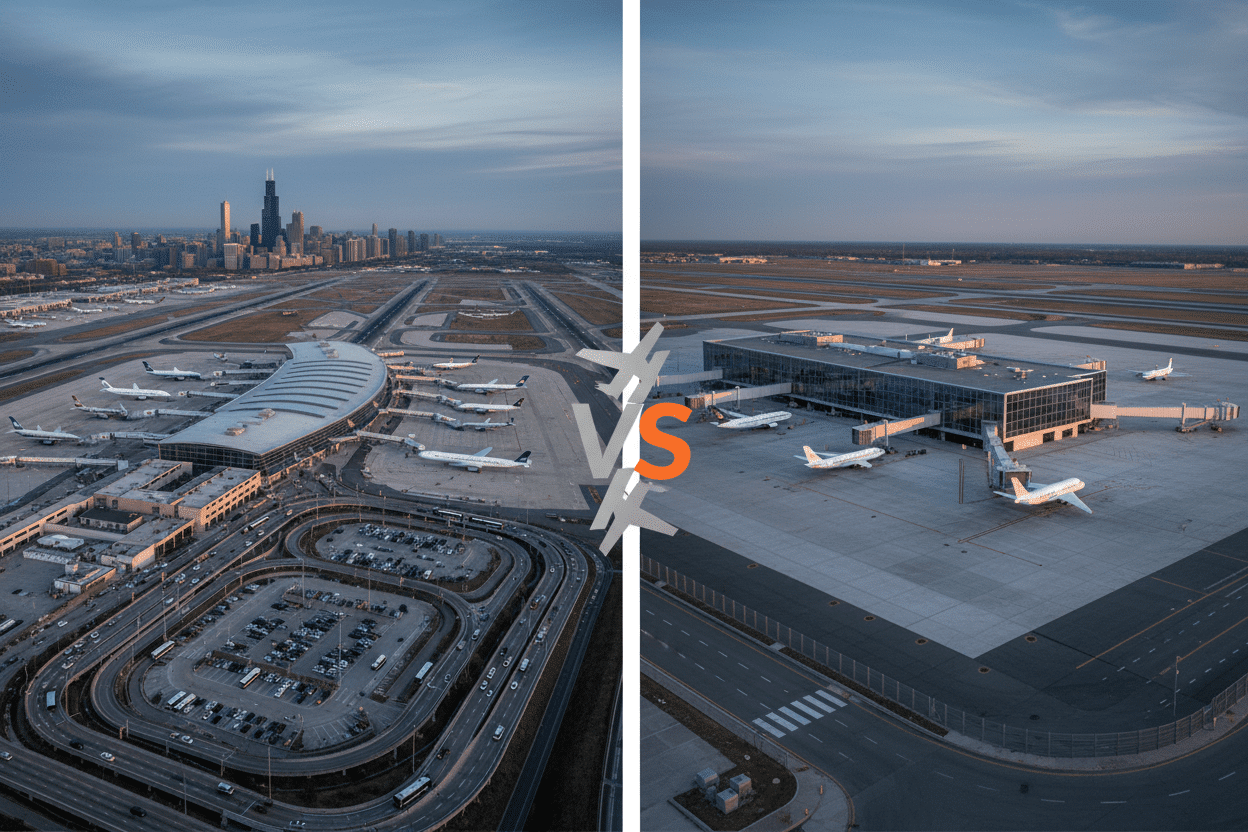
O’Hare International Airport is absolutely massive – we’re talking about one of the busiest airports in the world. With four terminals and eight concourses, O’Hare handles over 83 million passengers annually. Walking from one end to the other feels like a marathon, and I’ve definitely broken a sweat hauling luggage through those seemingly endless corridors.
Midway, on the other hand, is refreshingly compact. This single-terminal airport serves about 22 million passengers per year, making it roughly a quarter the size of O’Hare. You can walk from security to your gate in under 10 minutes, which feels like a luxury when you’re running late.
The size difference impacts everything from navigation to wait times. At O’Hare, you might need to budget an extra 30 minutes just to get from the train station to your gate. At Midway, everything is within easy walking distance, making it much more manageable for travelers with mobility concerns or those traveling with young children.

Flight Options and Airline Coverage
O’Hare is a major hub for both American Airlines and United Airlines, which means extensive domestic and international route networks. If you’re looking for direct flights to Europe, Asia, or South America, O’Hare is typically your best bet. The airport serves over 200 destinations worldwide, giving you incredible flexibility in planning your travels.
Midway is Southwest Airlines’ largest hub, and honestly, Southwest dominates this airport like nowhere else. You’ll also find Delta, Porter Airlines, and a few other carriers, but your options are more limited. Midway primarily focuses on domestic destinations, with some service to Mexico, Central America, and the Caribbean.
For international travelers, this difference is crucial. While Midway has grown its international offerings in recent years, O’Hare remains the clear winner for overseas destinations. However, if you’re flying domestically and Southwest’s route network works for your needs, Midway often offers better value and convenience.
Location and Transportation: Getting There and Back
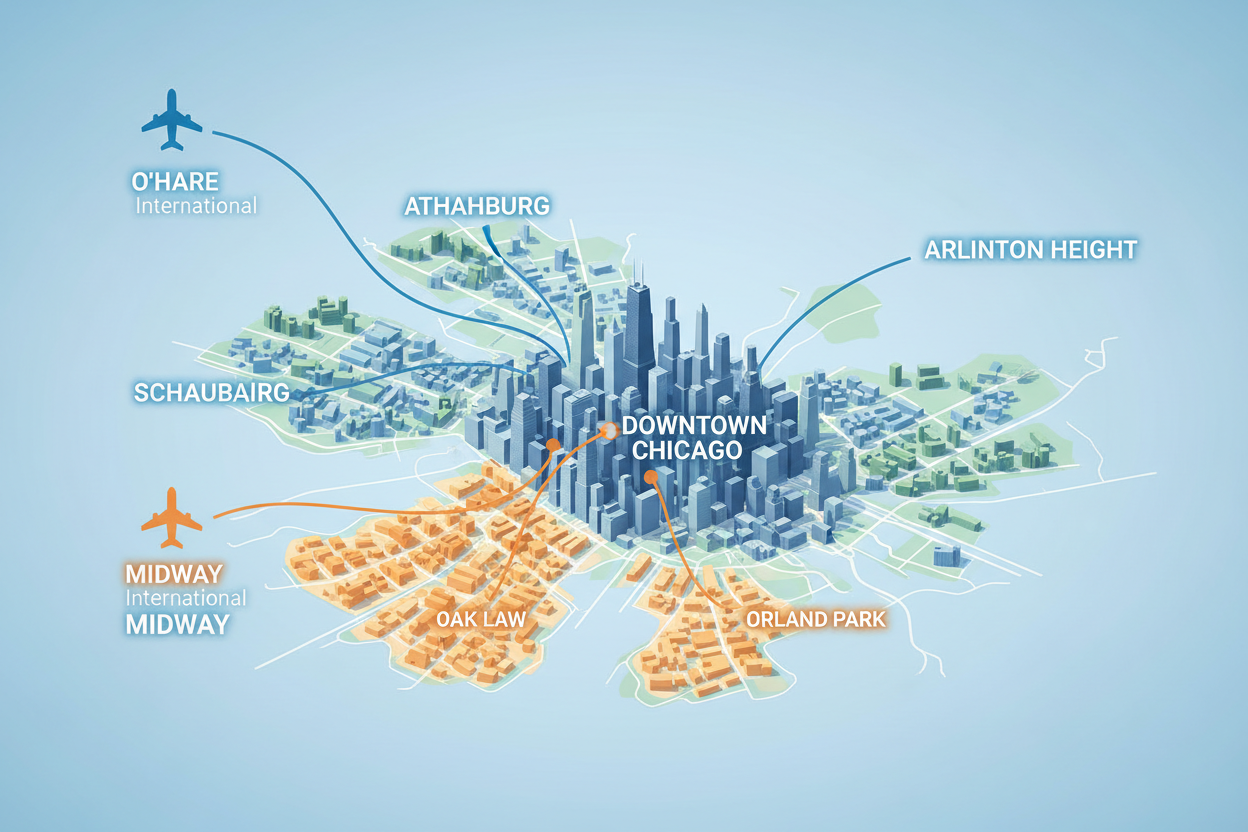
Both airports offer solid transportation options, but they serve different parts of the Chicago metropolitan area more effectively. O’Hare sits in the northwest suburbs, about 17 miles from downtown Chicago. The CTA Blue Line connects directly to the airport, offering an affordable $5 ride to the Loop that takes about 45 minutes.
Midway is located on Chicago’s southwest side, roughly 10 miles from downtown. The CTA Orange Line provides direct service to the Loop in about 30 minutes for the same $5 fare. The shorter distance often translates to quicker and cheaper taxi or rideshare trips.
If you’re staying in downtown Chicago, both airports are reasonably accessible. However, if your hotel is on the south side or you’re heading to suburbs like Oak Lawn or Orland Park, Midway might save you significant travel time. Conversely, if you’re staying near the northwest suburbs or heading to destinations like Schaumburg or Arlington Heights, O’Hare is more convenient.
Cost Considerations: Your Wallet Will Notice
Here’s where things get interesting from a budget perspective. Flight prices can vary significantly between the two airports, and it’s not always predictable which will be cheaper. Southwest’s presence at Midway often drives competitive pricing for domestic routes, especially if you’re flexible with your travel dates.
Ground transportation costs also differ. While public transit costs the same from both airports, taxi and rideshare prices to downtown Chicago are typically $10-15 less from Midway due to the shorter distance. Parking fees are generally comparable, though Midway’s economy lots tend to fill up faster during peak travel periods.
Airport dining and shopping prices are notoriously high at both locations, but I’ve noticed Midway tends to have slightly more reasonable options. O’Hare’s sheer size means more choices, but you’ll pay premium prices for the convenience.
Passenger Experience: Comfort and Convenience
The passenger experience varies dramatically between these airports. O’Hare’s size can be overwhelming, especially during peak travel times. Security lines can stretch forever, and gate changes might require a 15-minute walk or even a train ride between terminals. However, the airport offers more amenities, including better dining options, shopping, and services like spas and workout facilities.
Midway feels more like a regional airport despite its significant passenger volume. Security lines move faster, gates are clearly visible from the central area, and you’re never more than a few minutes from any service you might need. The trade-off is fewer amenities and dining options, though what’s available is generally quite good.
For families traveling with children, Midway’s compact layout is a godsend. Kids can’t wander far, and you won’t spend your layover hiking through endless terminals. Business travelers often prefer O’Hare for its lounges and work-friendly spaces, though the crowds can be intense.
Weather and Delays: Chicago’s Challenging Climate
Chicago weather affects both airports, but their different layouts and runway configurations mean they handle severe weather differently. O’Hare’s multiple runways and sophisticated air traffic control systems generally handle high-volume operations better, but the airport’s popularity means delays can cascade quickly during weather events.
Midway’s smaller size can be an advantage during weather delays – it’s easier to rebook, find customer service, or grab food while waiting. However, with fewer flights overall, your rebooking options might be more limited if your flight gets canceled.
Winter weather impacts both airports significantly, but O’Hare’s international connections mean delays there can affect travel plans worldwide. If you’re traveling during Chicago’s notoriously harsh winters, building extra time into your schedule is wise regardless of which airport you choose.
Making Your Decision: Practical Recommendations
Choose O’Hare if you’re flying internationally, need extensive flight options, prefer major airline hubs, or are staying in Chicago’s northwest suburbs. The airport’s size and amenities make it worth the extra complexity for longer trips or when you need specific routing options.
Choose Midway if you’re flying domestically (especially on Southwest), value convenience and speed over options, are traveling with family, or want to minimize ground transportation costs. The airport’s efficiency can turn a potentially stressful travel day into a surprisingly pleasant experience.
For connecting flights, consider your airline and route carefully. O’Hare’s hub status makes it excellent for connections, but tight layovers can be risky given the airport’s size. Midway’s connections are more limited but much easier to navigate.
Final Thoughts: There’s No Wrong Choice
Both O’Hare and Midway serve Chicago travelers well, just in different ways. Your choice ultimately depends on your specific travel needs, budget, and personal preferences. I’ve had great experiences at both airports and frustrating ones too – often depending more on weather, timing, and travel circumstances than the airport itself.
The beauty of Chicago having two major airports is that you have options. Don’t automatically default to the bigger, more famous O’Hare if Midway better serves your needs. Sometimes the smaller, more efficient choice is exactly what your trip requires.
Whatever you decide, arrive with realistic expectations and enough buffer time for Chicago’s unpredictable weather. Both airports will get you where you need to go – it’s just a matter of choosing the experience that best fits your travel style and itinerary.