
Chicago’s St. Patrick’s Day Spectacle: The Science Behind Dyeing the River Green
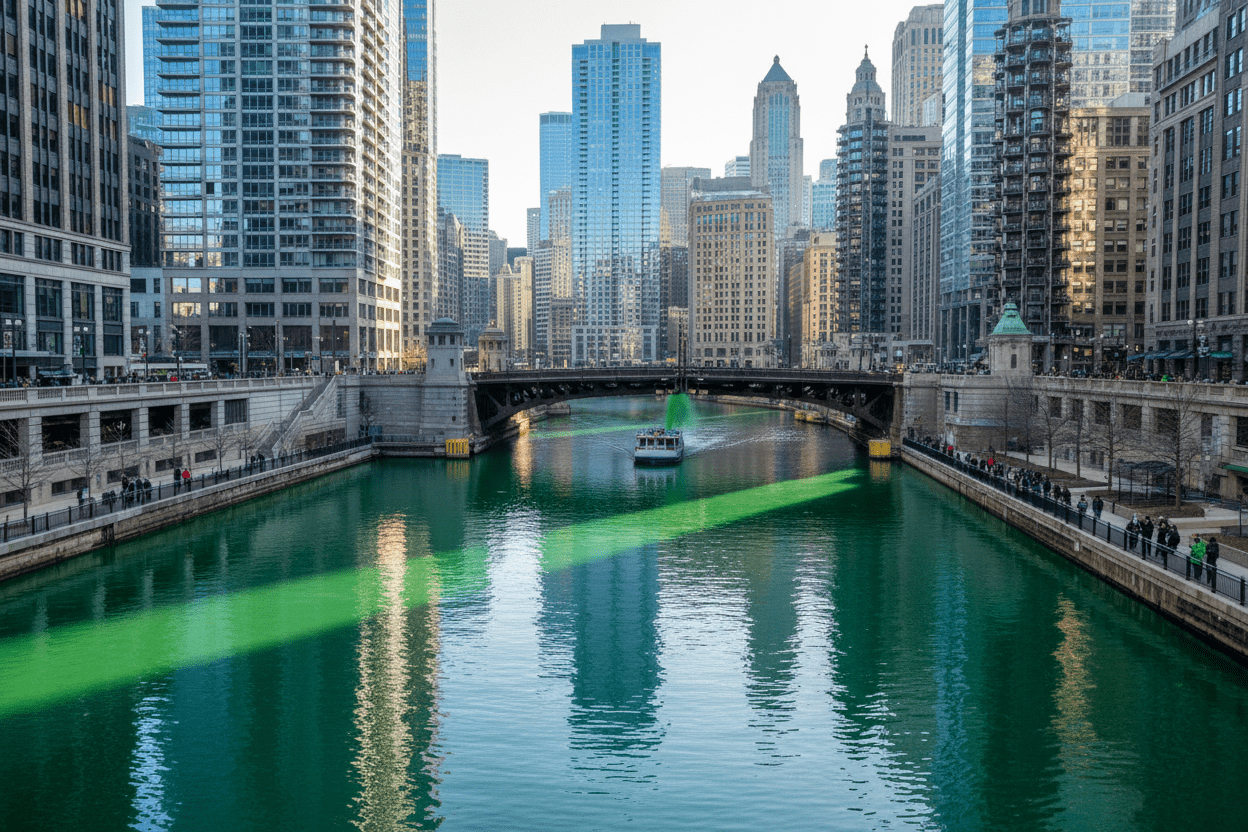
Every March, millions of people gather along the banks of the Chicago River to witness one of the most spectacular urban traditions in America. The transformation of the murky brown waterway into a brilliant emerald ribbon cutting through downtown Chicago has become synonymous with St. Patrick’s Day celebrations. But have you ever wondered about the fascinating science that makes this incredible green river phenomenon possible?
What started as a whimsical idea in 1962 has evolved into a carefully orchestrated scientific process that captures the imagination of locals and tourists alike. The annual Chicago River dyeing isn’t just a matter of dumping green paint into the water – it’s a sophisticated operation that involves chemistry, environmental science, and precise timing to create this breathtaking visual masterpiece.
The Origins of Chicago’s Green River Tradition
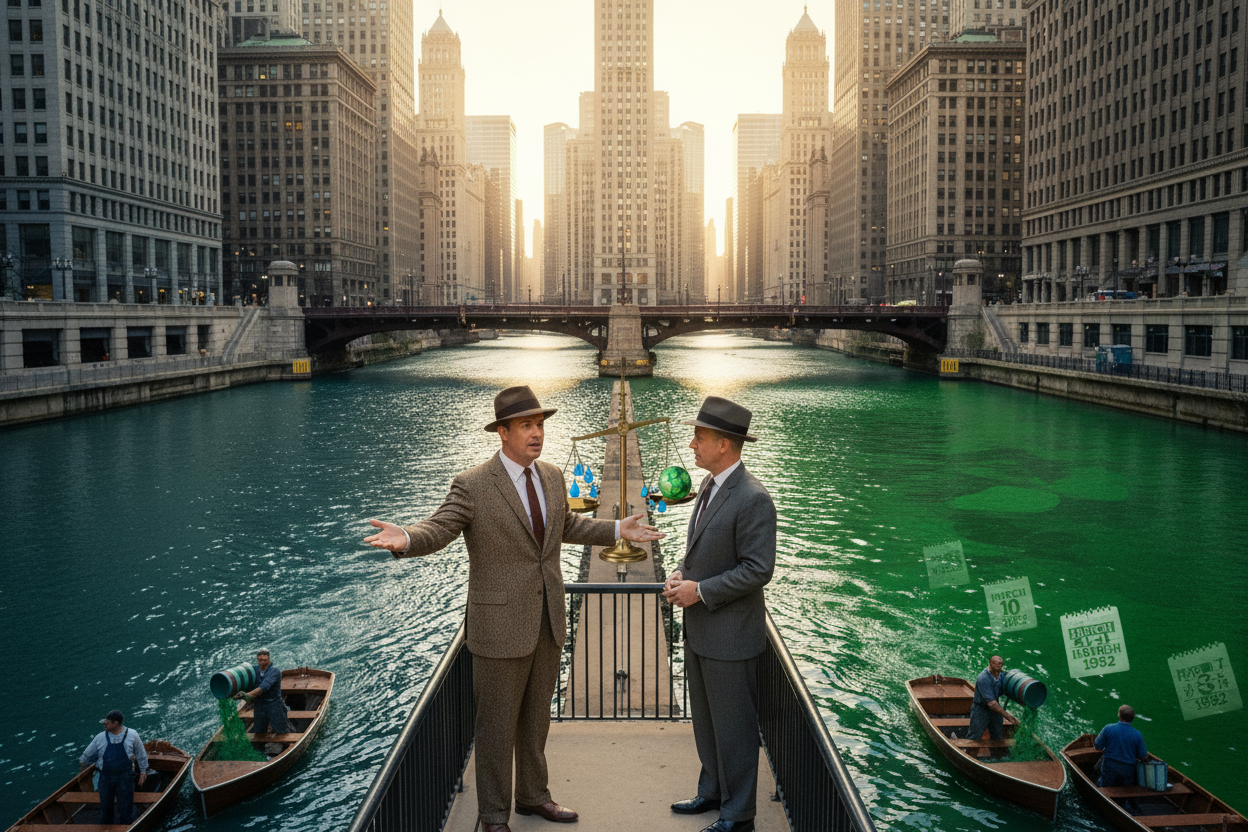
The story of Chicago’s green river begins with Stephen Bailey, a plumber who was part of the Chicago Journeymen Plumbers Local Union. In 1962, Bailey noticed that a fluorescent dye used to detect leaks in the city’s plumbing systems had turned his white coveralls bright green. This observation sparked an ingenious idea that would become one of Chicago’s most beloved traditions.
Bailey approached the mayor with his concept of dyeing the entire Chicago River green for St. Patrick’s Day. The city embraced this creative proposal, and the first river dyeing took place that same year. Initially, they used about 100 pounds of dye, which kept the river green for an entire week. Over the years, the formula and quantity have been refined to create the perfect balance between visual impact and environmental responsibility.
The tradition has been carried on by the Bailey family for generations, with Stephen’s son and grandson continuing to oversee this remarkable annual event. Their dedication to maintaining both the spectacle and the science behind it has made the Chicago River dyeing a world-renowned celebration.
The Chemistry Behind the Green Transformation
The magic of turning the Chicago River green lies in understanding the complex chemistry of water-based dyes and their interaction with the river’s natural composition. The process involves much more than simply adding color to water – it requires careful consideration of pH levels, water temperature, flow rates, and environmental factors.
The dye used in the Chicago River is a vegetable-based compound that’s completely safe for aquatic life and the environment. This wasn’t always the case – in the early years, the city used a different type of dye that raised environmental concerns. Today’s formula represents decades of scientific refinement to achieve maximum visual impact while maintaining ecological safety.
The chemical properties of the dye allow it to disperse evenly throughout the water column, creating a uniform green color that photographs beautifully from every angle. The molecular structure of the dye interacts with light wavelengths in a way that produces that distinctive emerald hue that has become Chicago’s signature St. Patrick’s Day color.
Environmental Safety and Ecological Considerations
One of the most frequently asked questions about the Chicago River dyeing concerns its environmental impact. The good news is that extensive research and testing have ensured that this beloved tradition poses no threat to the river’s ecosystem or the wildlife that calls it home.
The current dye formula is derived from vegetable sources and is completely biodegradable. It contains no harmful chemicals that could affect fish populations, water quality, or the broader Lake Michigan ecosystem into which the river flows. Environmental scientists have conducted numerous studies to verify that the dye breaks down naturally without leaving any toxic residue.
The amount of dye used has also been significantly reduced over the years. While the original 1962 dyeing used 100 pounds of dye and lasted a week, today’s process uses only about 40 pounds and maintains the green color for approximately five hours. This reduction demonstrates the ongoing commitment to environmental stewardship while preserving the visual spectacle that makes the event so special.
Regular water quality monitoring before, during, and after the dyeing process ensures that all environmental standards are maintained. The Illinois Environmental Protection Agency works closely with event organizers to guarantee that this celebration continues to meet all safety and ecological requirements.
The Technical Process of River Dyeing
The actual process of dyeing the Chicago River is a carefully choreographed operation that requires precise timing, specialized equipment, and years of experience. The dyeing typically begins around 9:00 AM on the Saturday before St. Patrick’s Day, with the entire process taking about 45 minutes to complete.
Two boats participate in the dyeing process: the lead boat carries the dye and the crew responsible for dispersing it, while a second boat follows behind with large outboard motors to help mix and distribute the dye throughout the water. The mixing process is crucial for achieving the even, vibrant green color that spans the entire width of the river.
The crew uses specialized equipment to ensure even distribution of the dye. Large sifters help disperse the powdered dye into the water, while the churning action of the boat motors creates the turbulence necessary for proper mixing. The timing of the release must account for wind conditions, water temperature, and flow rates to achieve optimal results.
Weather conditions play a significant role in the success of the dyeing process. Cold temperatures can affect how the dye disperses, while strong winds might blow the powder before it reaches the water. The experienced crew has learned to adapt their techniques based on these variables, ensuring spectacular results regardless of Chicago’s unpredictable March weather.
The Science of Color Perception in Water
Understanding why the Chicago River appears so brilliantly green involves delving into the physics of light and color perception. Water naturally absorbs different wavelengths of light at varying rates, with red wavelengths being absorbed first and blue wavelengths penetrating deepest. This is why natural bodies of water typically appear blue or blue-green.
The dye used in the Chicago River is specifically formulated to reflect green wavelengths while absorbing others. When sunlight hits the dyed water, the green wavelengths bounce back to our eyes while other colors are absorbed or scattered. This selective reflection creates the intense green appearance that makes for such stunning photographs and memories.
The depth and movement of the Chicago River also contribute to the visual effect. As the dyed water moves and creates ripples, it reflects light at different angles, creating variations in the intensity of the green color. This dynamic quality gives the river a living, breathing appearance that changes throughout the day as lighting conditions shift.
Photographers and scientists have noted that the green color appears most vibrant when viewed from certain angles and under specific lighting conditions. The contrast between the green water and the surrounding urban architecture creates a surreal visual experience that has made this event internationally famous.
Modern Innovations and Future Developments
As technology and environmental science continue to advance, the Chicago River dyeing tradition has embraced innovations that enhance both the spectacle and its sustainability. Recent years have seen improvements in dye formulation, application techniques, and environmental monitoring that ensure this tradition can continue for future generations.
Advances in biodegradable dye technology have made it possible to achieve even more vibrant colors while further reducing any potential environmental impact. Scientists continue to research new formulations that could extend the duration of the green color without increasing the quantity of dye needed or compromising ecological safety.
Digital technology has also transformed how people experience and share the event. High-definition cameras, drones, and social media have brought the Chicago River dyeing to global audiences, inspiring similar traditions in other cities while highlighting Chicago’s pioneering role in this unique celebration.
Looking toward the future, researchers are exploring possibilities for smart dyes that could change color throughout the day or respond to environmental conditions. While such innovations remain experimental, they represent the ongoing evolution of this beloved tradition at the intersection of science, art, and community celebration.
Conclusion
The annual dyeing of the Chicago River represents far more than a simple St. Patrick’s Day celebration – it’s a remarkable demonstration of applied science, environmental stewardship, and community tradition. From its humble beginnings as a plumber’s creative observation to its current status as a world-renowned spectacle, this event showcases how scientific innovation can enhance cultural celebrations while respecting ecological responsibility.
The careful balance of chemistry, environmental science, and artistic vision required to transform the Chicago River into a flowing emerald ribbon demonstrates the power of human creativity working in harmony with natural systems. As we continue to face environmental challenges in our modern world, the Chicago River dyeing serves as an inspiring example of how traditions can evolve to become more sustainable while maintaining their cultural significance and visual impact.
Whether you’re a science enthusiast fascinated by the chemistry behind the transformation, an environmental advocate appreciating the commitment to ecological safety, or simply someone who loves spectacular community celebrations, Chicago’s green river tradition offers something truly special. It reminds us that with careful planning, scientific understanding, and respect for our environment, we can create moments of wonder that bring communities together and inspire people around the world.