
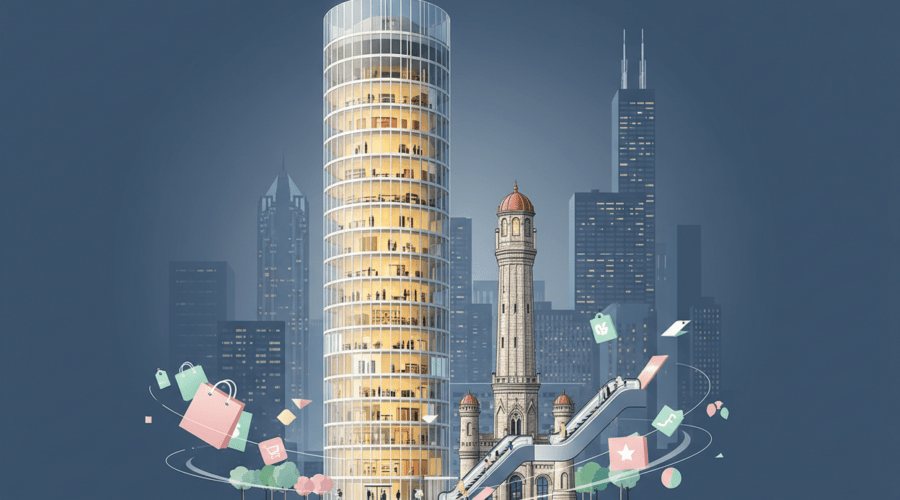
Water Tower Place: Vertical Shopping Mall Innovation on the Magnificent Mile
Standing tall against Chicago’s skyline like a gleaming beacon of retail innovation, Water Tower Place revolutionized the shopping experience when it opened its doors in 1975. This architectural marvel didn’t just change how people shopped in Chicago – it fundamentally transformed the concept of urban retail spaces across America. As the world’s first vertical shopping mall, Water Tower Place proved that when you can’t build out, you build up, creating a shopping destination that continues to captivate visitors nearly five decades later.
Located at the heart of Michigan Avenue’s prestigious Magnificent Mile, this 74-story mixed-use tower represents more than just a shopping center. It’s a testament to human ingenuity, urban planning excellence, and the endless possibilities that emerge when visionary thinking meets practical necessity. From its humble beginnings as a bold architectural experiment to its current status as a Chicago landmark, Water Tower Place has weathered economic storms, adapted to changing consumer preferences, and remained a cornerstone of the Windy City’s retail landscape.
The Birth of Vertical Retail: A Revolutionary Concept
The story of Water Tower Place begins in the early 1970s when Chicago faced a unique urban challenge. The Magnificent Mile was prime real estate, but horizontal expansion was simply impossible in the densely packed downtown area. Traditional suburban shopping malls were sprawling across single levels, but Chicago needed something different – something that could maximize retail space while minimizing the footprint.
Enter the visionary team of developers who dared to think vertically. The concept was audacious: create a shopping mall that climbed skyward instead of spreading outward. This wasn’t just about stacking stores on top of each other; it required reimagining how people move through retail spaces, how natural light could penetrate multiple floors, and how to create the same sense of community and flow that made horizontal malls successful.
The developers partnered with renowned architectural firm Loebl Schlossman & Hackl to bring this ambitious vision to life. The challenge was immense – how do you create the open, airy feeling of a traditional mall when you’re working within the constraints of a vertical tower? The solution lay in innovative design elements that would become Water Tower Place’s signature features.
Architectural Marvel: Design That Defied Convention
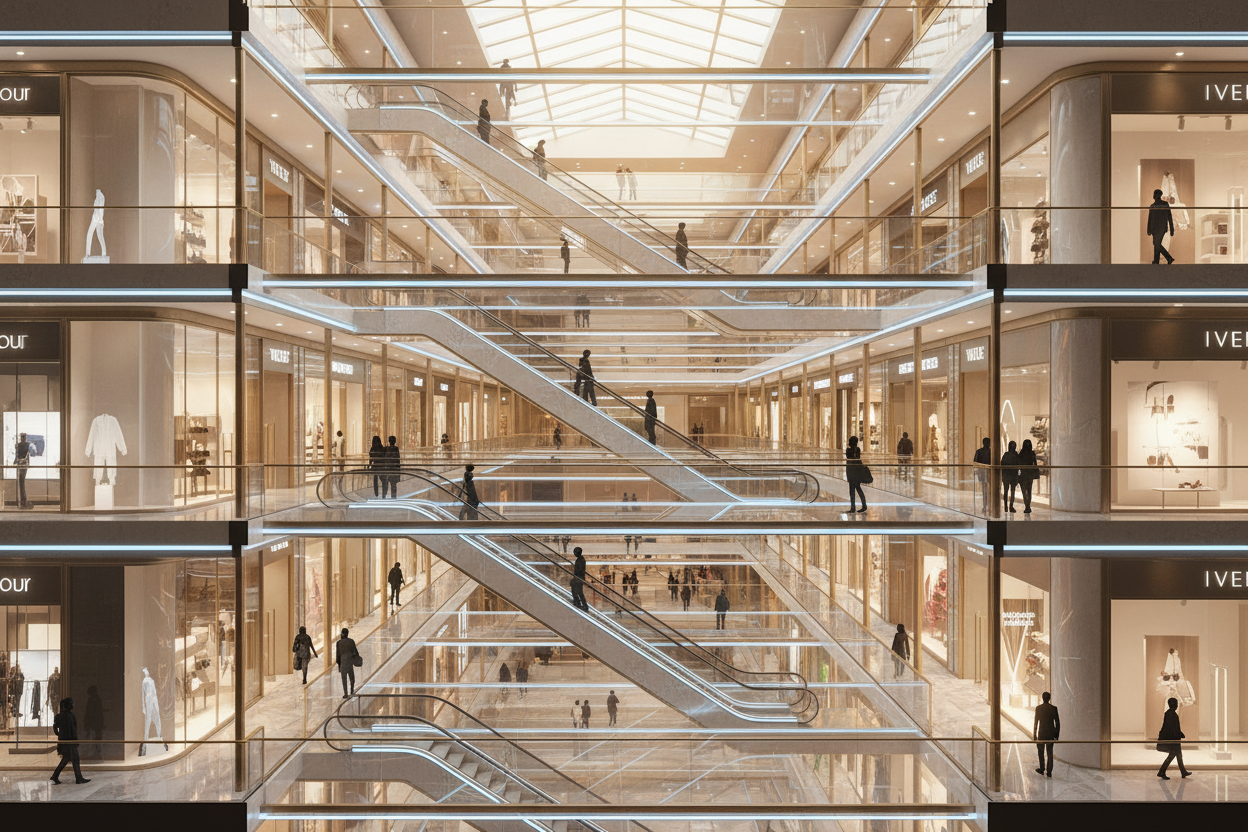
Walking into Water Tower Place for the first time is an experience that still takes visitors’ breath away. The central atrium soars upward, creating a sense of openness that seems impossible within the confines of an urban high-rise. This dramatic space serves as the mall’s heart, with escalators crisscrossing through the void like mechanical arteries, carrying shoppers between the various retail levels.
The building’s exterior reflects the bold thinking that went into its conception. The tower’s facade combines sleek modernist lines with practical considerations, featuring extensive use of glass to maximize natural light penetration into the shopping levels. The architects understood that successful retail spaces need to feel inviting and energetic, not cramped and artificial.
Perhaps most ingeniously, the designers created what they called “retail streets in the sky.” Each shopping level maintains the feeling of a traditional mall corridor, complete with storefronts that face inward toward common areas. The key innovation was ensuring that despite the vertical orientation, shoppers never felt disconnected from the overall retail environment. Sight lines were carefully planned so that visitors could see multiple levels simultaneously, creating a sense of the bustling activity that makes shopping districts exciting.
The integration of residential and office spaces above the retail levels was another stroke of genius. This mixed-use approach meant that Water Tower Place had built-in foot traffic from residents and office workers, creating a more sustainable business model than standalone retail properties. The building essentially became a vertical neighborhood, complete with its own ecosystem of residents, workers, and visitors.
Magnificent Mile Integration: More Than Just Location
Water Tower Place didn’t just happen to be built on the Magnificent Mile – it was designed specifically to enhance and complement this world-famous shopping district. The building’s ground-level retail spaces seamlessly connect with the sidewalk-level shopping experience, creating natural flow between indoor and outdoor retail environments.
The tower’s positioning across from the historic Chicago Water Tower (from which it takes its name) was deliberate. This proximity to one of Chicago’s most recognizable landmarks helped establish Water Tower Place as more than just a shopping center – it became part of the city’s architectural narrative. The juxtaposition of the historic stone water tower with the sleek modern shopping complex symbolized Chicago’s ability to honor its past while embracing innovation.
The Magnificent Mile integration extends beyond mere physical proximity. Water Tower Place became an anchor that helped define the character of North Michigan Avenue as a premier shopping destination. Its success demonstrated that urban retail could compete with suburban malls, helping to revitalize downtown shopping districts across America during a time when many city centers were struggling with suburban flight.
Retail Innovation: Changing How America Shops
When Water Tower Place opened, it housed an unprecedented mix of retailers across its seven shopping levels. The vertical format allowed for a diverse tenant mix that would have been impossible in a traditional single-level mall. Department stores like Marshall Field’s (later Macy’s) and Lord & Taylor occupied multiple floors, while smaller specialty retailers filled in the gaps, creating a comprehensive shopping ecosystem.
The mall pioneered several retail concepts that are now considered standard. The food court, located on the mezzanine level, was one of the first of its kind in an urban setting. Rather than relegating dining to a basement or top floor afterthought, Water Tower Place positioned its dining options as an integral part of the shopping experience, with views overlooking the bustling Magnificent Mile.
The vertical layout also allowed for innovative store designs. Retailers could lease multiple levels and create dramatic multi-story shopping experiences. Some stores used the height to their advantage, creating impressive displays and installations that simply wouldn’t have been possible in traditional mall spaces. This vertical real estate gave merchants new ways to tell their brand stories and create memorable shopping experiences.
Water Tower Place also demonstrated that urban shopping could offer conveniences that suburban malls couldn’t match. The building’s connectivity to public transportation, its walkability from hotels and offices, and its integration with the broader urban fabric made it accessible in ways that car-dependent suburban malls weren’t. This accessibility helped establish a new model for urban retail development.
Economic Impact: A Catalyst for Urban Development
The economic impact of Water Tower Place extended far beyond its own retail sales figures. The tower’s success proved that significant private investment in urban retail could be profitable, encouraging similar developments in Chicago and other cities. The project helped stabilize property values along the Magnificent Mile and attracted additional retailers to the area.
From an employment perspective, Water Tower Place created thousands of jobs in retail, food service, building maintenance, and security. But perhaps more importantly, it created a model for high-density job creation in urban cores. The building’s mixed-use nature meant that it generated employment across multiple sectors – retail workers, office employees, and residential building staff all contributed to a vibrant economic ecosystem.
The tax revenue generated by Water Tower Place helped fund city services and infrastructure improvements that benefited the broader community. The building’s success also demonstrated to other developers that mixed-use urban projects could be financially viable, leading to a wave of similar developments that helped revitalize downtown areas across the United States.
Real estate professionals point to Water Tower Place as a turning point in urban development thinking. Before its success, many developers viewed city centers as risky investments. The tower’s consistent profitability and high occupancy rates helped change those perceptions, contributing to the urban renaissance that many American cities experienced in the following decades.
Modern Challenges and Adaptations
Like all retail properties, Water Tower Place has faced significant challenges in recent years. The rise of e-commerce, changing consumer preferences, and the economic disruptions caused by the COVID-19 pandemic have forced the mall to adapt and evolve. However, its unique position and innovative design have provided advantages in weathering these storms.
The building’s mixed-use nature has proven to be a significant asset during challenging retail periods. While some shopping centers have struggled with declining foot traffic, Water Tower Place benefits from the consistent presence of office workers and residents. This built-in customer base provides a foundation of activity that pure retail properties lack.
Management has also embraced new retail concepts and experiential offerings. The mall has welcomed pop-up shops, interactive experiences, and entertainment venues that go beyond traditional retail. These additions recognize that modern consumers often view shopping as entertainment and social activity rather than mere commerce.
The building has also adapted to changing work patterns. As remote work has become more common, some office spaces have been reconfigured, and the retail mix has evolved to serve changing customer needs. The flexibility built into the original design has proven invaluable in allowing these adaptations without major structural modifications.
Legacy and Lasting Impact on Urban Planning
Nearly five decades after its opening, Water Tower Place’s influence on urban planning and retail development continues to resonate. The vertical mall concept has been replicated in cities around the world, from Tokyo to New York to Singapore. Each iteration has built upon the innovations pioneered in Chicago, refining and improving the vertical retail model.
Urban planners now routinely consider mixed-use developments as solutions to space constraints and sustainability challenges. The integration of retail, office, and residential uses that Water Tower Place demonstrated has become a standard approach in dense urban environments. This model helps create more sustainable communities by reducing transportation needs and creating vibrant, walkable neighborhoods.
The building’s success also influenced zoning policies and development incentives in cities across America. Municipal governments recognized that encouraging mixed-use developments could help revitalize downtown areas and create more efficient use of urban land. Water Tower Place provided a concrete example of how innovative development could benefit both private investors and public interests.
From an architectural perspective, Water Tower Place helped establish new standards for retail design in urban environments. The emphasis on natural light, open sight lines, and seamless integration with street-level activity became principles that influenced countless subsequent projects. The building demonstrated that urban retail could be just as appealing and successful as suburban alternatives.
Conclusion: A Towering Achievement in Urban Innovation
Water Tower Place stands as more than just a successful shopping center – it represents a fundamental shift in how we think about urban spaces and retail environments. By daring to build vertically when conventional wisdom suggested spreading horizontally, its creators didn’t just solve a practical problem; they opened new possibilities for urban development that continue to influence city planning today.
The tower’s enduring success on the Magnificent Mile demonstrates the power of innovative thinking combined with excellent execution. Its architects and developers didn’t simply stack stores on top of each other; they reimagined the entire shopping experience for a vertical environment. The result was a space that feels natural and inviting despite its unconventional orientation.
As cities around the world grapple with increasing density and limited space, Water Tower Place offers a proven model for creating vibrant, multi-use urban destinations. Its integration of retail, office, and residential uses creates the kind of sustainable, walkable communities that modern urban planning strives to achieve. The building’s ability to adapt and evolve over nearly five decades also demonstrates the importance of flexible design in creating lasting urban infrastructure.
Today, as we face new challenges in retail and urban development, Water Tower Place remains relevant and instructive. Its success reminds us that the best urban innovations don’t just solve immediate problems – they create new possibilities and inspire further innovation. Standing tall on the Magnificent Mile, Water Tower Place continues to serve as a testament to the power of visionary thinking and bold execution in shaping the cities of tomorrow.