
Wintrust Arena: How Chicago Built a State-of-the-Art Sports and Entertainment Venue
When you think of Chicago’s sports landscape, iconic venues like Wrigley Field and the United Center immediately come to mind. However, nestled in the South Loop district stands a modern marvel that’s quietly revolutionizing how mid-sized sporting events and entertainment are experienced in the Windy City. Wintrust Arena, home to DePaul University’s Blue Demons basketball teams, represents more than just another sports facility – it’s a testament to thoughtful urban planning, cutting-edge design, and Chicago’s commitment to creating world-class venues that serve both athletes and communities.
Since opening its doors in 2017, this 10,000-seat arena has become a shining example of how modern sports venues can seamlessly blend into urban environments while delivering exceptional experiences. But the story of how Chicago built this state-of-the-art facility is far more complex and fascinating than its sleek exterior might suggest.
The Vision Behind Wintrust Arena’s Creation
The journey to create Wintrust Arena began with a simple yet ambitious goal: provide DePaul University with a proper home for their basketball programs while creating a versatile entertainment venue for Chicago residents. For years, the Blue Demons had been playing their home games at the Allstate Arena in suburban Rosemont, a location that felt disconnected from both the university and the city’s basketball culture.
City officials and university administrators recognized an opportunity to kill two birds with one stone. Chicago needed a mid-sized venue that could host everything from college basketball to concerts, while DePaul desperately wanted to bring their athletic programs back to the city where their main campus resided. The result would be a public-private partnership that would transform an underutilized section of the South Loop into a thriving entertainment district.
The planning process took several years, with extensive community input sessions and feasibility studies. Local residents initially expressed concerns about traffic, noise, and the potential gentrification effects. However, the project’s supporters argued that the arena would bring jobs, increase property values, and provide much-needed entertainment options in an area that was primarily residential and commercial.
Innovative Design and Architectural Excellence
When it came to designing Wintrust Arena, the architects at Populous faced a unique challenge: create a world-class sports venue that would fit harmoniously into Chicago’s dense urban fabric. The solution was a masterpiece of modern architecture that maximizes space efficiency while maintaining an intimate atmosphere for both players and spectators.
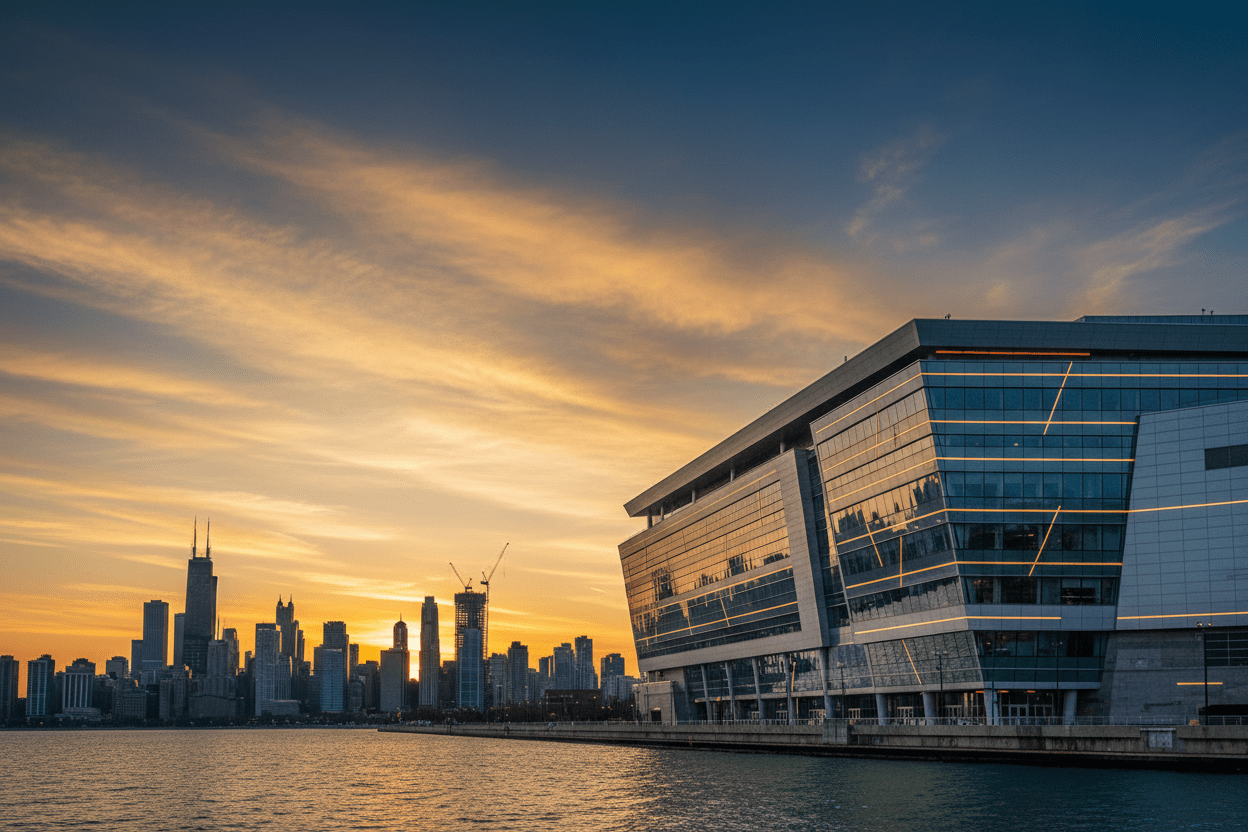
The arena’s exterior features a striking glass and steel facade that reflects the surrounding cityscape during the day and glows invitingly at night. The building’s footprint was carefully planned to minimize disruption to the existing neighborhood while maximizing the interior space available for seating and amenities. One of the most impressive aspects of the design is how the architects managed to create excellent sightlines from every seat, despite the constraints of the urban lot.
Inside, the arena boasts some of the steepest seating angles in college basketball, ensuring that even fans in the upper levels feel close to the action. The lower bowl seats are positioned just 37 feet from the court at their closest point, creating an intimidating environment for visiting teams and an electric atmosphere for home games. The design team also incorporated advanced acoustics technology, making the arena surprisingly loud despite its relatively modest size.
Cutting-Edge Technology and Fan Experience
What truly sets Wintrust Arena apart from older venues is its commitment to technological innovation and fan experience. From the moment visitors approach the building, they encounter features designed to enhance their experience and streamline operations.
The arena features a state-of-the-art LED lighting system that can be programmed for different events, creating unique atmospheres for basketball games versus concerts. The main scoreboard is a massive high-definition display that provides crystal-clear replays and statistics, while smaller displays throughout the concourses keep fans informed no matter where they are in the building.
One of the most impressive technological features is the arena’s advanced sound system, which was specifically tuned for the venue’s unique acoustics. Whether you’re listening to the roar of the crowd during a crucial free throw or enjoying a concert performance, the audio quality remains exceptional throughout the facility.
The arena also prioritizes connectivity, with robust Wi-Fi infrastructure that can handle thousands of simultaneous users sharing their experiences on social media. This might seem like a small detail, but in today’s digital age, it’s crucial for fan engagement and the overall success of events.
Sustainable Building Practices and Environmental Considerations
Chicago has long been a leader in sustainable urban development, and Wintrust Arena continues this tradition with numerous environmentally conscious features. The building achieved LEED Silver certification, demonstrating the commitment to sustainable construction and operation practices.
The arena incorporates energy-efficient LED lighting throughout the facility, significantly reducing power consumption compared to traditional lighting systems. The HVAC system uses advanced controls to optimize energy usage based on occupancy and weather conditions, while high-performance windows and insulation minimize heating and cooling costs.
Water conservation was another priority during construction. The arena features low-flow fixtures and a rainwater collection system that helps irrigate nearby landscaping. These features might not be visible to the average visitor, but they represent Chicago’s commitment to responsible development practices.
Perhaps most importantly, the arena’s location promotes sustainable transportation options. Situated near multiple public transit lines and bike paths, many visitors can attend events without relying on personal vehicles, reducing the facility’s overall environmental impact.
Economic Impact and Community Benefits
The construction of Wintrust Arena represented a significant economic investment in Chicago’s South Loop neighborhood, but the benefits have extended far beyond the initial construction phase. The project created hundreds of construction jobs and now provides permanent employment for dozens of operations staff, security personnel, and event workers.
Local businesses have seen increased foot traffic on event days, with restaurants, bars, and shops benefiting from the influx of visitors. The arena has also attracted new businesses to the area, contributing to the ongoing development of the South Loop as a vibrant mixed-use neighborhood.
Property values in the surrounding area have generally increased since the arena’s opening, though this has been a double-edged sword for some long-time residents concerned about affordability. City officials have worked to balance development benefits with affordable housing initiatives to maintain the neighborhood’s diversity.
The venue has also provided Chicago with a mid-sized entertainment option that was previously lacking. While the United Center handles major concerts and sporting events, Wintrust Arena fills the gap for smaller touring acts, college sports, and community events that need a professional venue but don’t require a massive capacity.
Challenges and Lessons Learned
Despite its many successes, the development of Wintrust Arena wasn’t without challenges. Construction delays pushed the opening back several months, and cost overruns required additional funding from both public and private sources. These issues highlighted the complexities of building major infrastructure projects in dense urban environments.
Traffic and parking concerns that were raised during the planning phase did materialize to some extent, particularly during major events. However, the arena’s management has worked with the city to implement traffic management plans and encourage public transit use through partnerships with the Chicago Transit Authority.
One unexpected challenge has been balancing the different needs of various user groups. College basketball games require different setups and atmospheres than concerts or community events, and the venue operations team has had to develop efficient systems for quick turnarounds between different types of events.
These challenges have provided valuable lessons for future venue development projects in Chicago and other cities. The importance of realistic timeline and budget projections, comprehensive traffic studies, and flexible design elements have all been reinforced through the Wintrust Arena experience.
The Future of Chicago’s Entertainment Landscape
As Wintrust Arena approaches its tenth year of operation, its impact on Chicago’s entertainment landscape continues to evolve. The venue has established itself as a premier destination for college basketball, hosting not only DePaul games but also conference tournaments and other collegiate events.
The arena’s success has also influenced discussions about future venue development in Chicago. City planners and developers have taken note of the positive community impact and economic benefits, leading to conversations about similar projects in other neighborhoods.
Looking ahead, Wintrust Arena is positioned to remain a vital part of Chicago’s sports and entertainment infrastructure. Ongoing technological upgrades ensure that the facility stays current with evolving fan expectations, while its flexible design allows for adaptation to new types of events and entertainment formats.
The venue has also become a model for other cities looking to develop mid-sized entertainment facilities. Delegations from other metropolitan areas have visited to study the design, operations, and community integration strategies that have made Wintrust Arena successful.
Wintrust Arena stands as a testament to what’s possible when vision, planning, and execution come together in service of both athletic excellence and community development. From its innovative design that maximizes intimacy and atmosphere to its commitment to sustainability and technological advancement, the arena represents the best of modern venue development. While challenges certainly arose during its development and early operations, the facility has proven that thoughtful urban planning can create spaces that serve multiple constituencies while enhancing the fabric of city life. As Chicago continues to evolve and grow, Wintrust Arena will undoubtedly remain a cornerstone of the city’s entertainment landscape, providing memorable experiences for athletes, performers, and fans for generations to come.