
Buckingham Fountain at 100: Celebrating Chicago’s Crown Jewel Water Feature
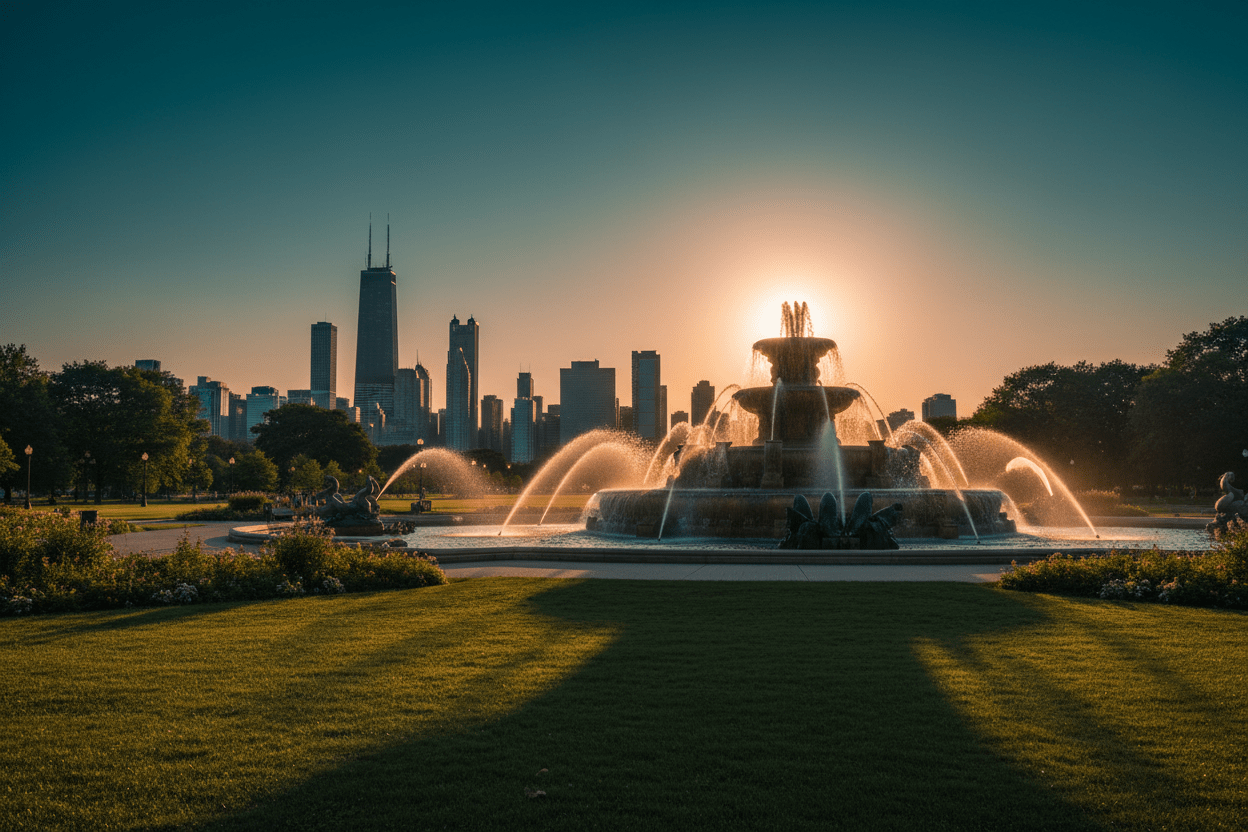
Standing majestically in Grant Park, Buckingham Fountain has been Chicago’s most beloved water feature for an entire century. As we celebrate this remarkable milestone, it’s worth reflecting on how this architectural marvel has become synonymous with the Windy City itself. From its grand debut in 1927 to its status today as one of the world’s largest fountains, Buckingham Fountain continues to captivate millions of visitors who flock to Chicago each year.
The fountain’s centennial celebration isn’t just about marking time—it’s about honoring a piece of living history that has witnessed Chicago’s transformation through decades of change. Whether you’re a longtime Chicago resident or planning your first visit to the city, understanding the story behind this magnificent water display adds depth to any encounter with this urban oasis.

The Vision Behind Chicago’s Magnificent Water Display
The story of Buckingham Fountain begins with Kate Sturges Buckingham, a philanthropist whose love for Chicago ran as deep as her pockets were generous. After inheriting a substantial fortune from her family’s grain elevator business, Buckingham decided to create something extraordinary for her beloved city. Her vision was inspired by the Latona Fountain at the Palace of Versailles, but she wanted to create something even grander for Chicago.
Working with renowned architects Bennett, Parsons & Frost, Buckingham’s dream took shape as a rococo wedding cake design that would become the centerpiece of Grant Park. The fountain was conceived not just as a water feature, but as a symbol of Chicago’s ambition and artistic sophistication. At a cost of $750,000—equivalent to over $11 million today—this wasn’t just any municipal improvement project.
The design process took years of careful planning, with every detail scrutinized to ensure the fountain would stand the test of time. The architects incorporated elements that would make the fountain functional year-round while creating a spectacle that would rival any water feature in the world.
Architectural Marvel: Design Elements That Define a Century
Buckingham Fountain’s design is a masterpiece of early 20th-century engineering and artistry. The fountain consists of three main tiers, each representing a different body of water surrounding Chicago. The bottom tier symbolizes Lake Michigan, the middle tier represents the three states that border the lake, and the top tier honors the city of Chicago itself.
The fountain stretches 280 feet across and uses pink Georgia marble that has weathered beautifully over the decades. Four seahorses, each representing one of the four states that originally bordered Lake Michigan, guard the corners of the fountain. These bronze sculptures, created by French artist Marcel Loyau, add an element of classical mythology to the Chicago landscape.
What truly sets Buckingham Fountain apart is its water display capabilities. The central jet can shoot water up to 150 feet in the air, creating a spectacular column that can be seen from blocks away. The fountain uses approximately 1.5 million gallons of water, recycled through a complex pumping system that was revolutionary for its time and has been continuously updated to meet modern efficiency standards.
A Century of Memorable Moments and Cultural Impact
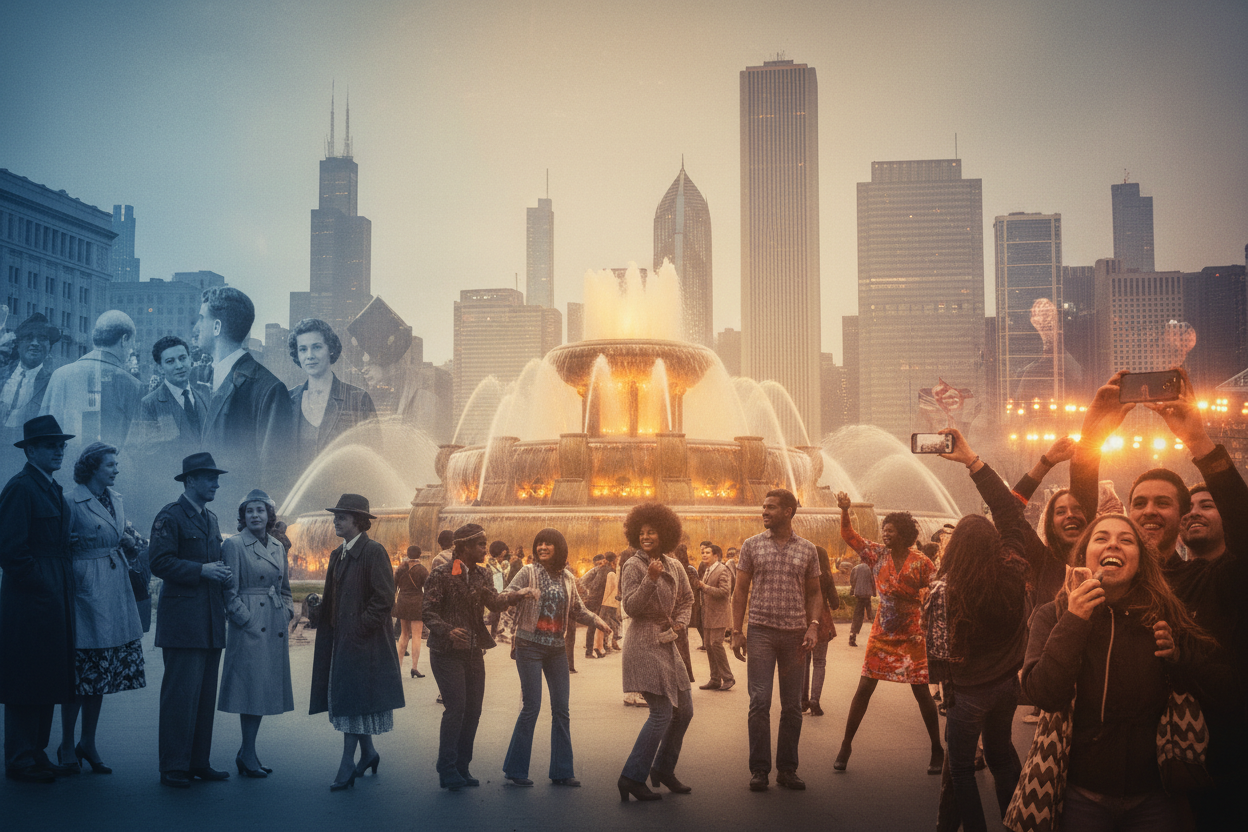
Over the past 100 years, Buckingham Fountain has served as the backdrop for countless proposals, wedding photos, family gatherings, and tourist snapshots. It’s appeared in numerous films and television shows, most famously in the opening credits of the sitcom “Married… with Children,” introducing millions of viewers worldwide to this Chicago landmark.
The fountain has witnessed significant historical moments throughout its century of operation. During World War II, it continued operating as a symbol of normalcy and hope for Chicagoans on the home front. In the 1960s and 70s, it became a gathering place for various social movements and celebrations. The fountain has hosted everything from political rallies to cultural festivals, always serving as a neutral ground where all of Chicago could come together.
Musicians have performed around its perimeter, artists have sketched its flowing waters, and writers have found inspiration in its constant motion. The fountain represents not just Chicago’s past, but its ongoing vitality and commitment to public spaces that bring communities together.
Modern Renovations and Technological Upgrades
Maintaining a 100-year-old fountain requires constant attention and periodic major renovations. The most significant restoration occurred in the 1990s when the entire fountain was dismantled and rebuilt with modern materials and updated systems. This $2.8 million project ensured that Buckingham Fountain would continue operating efficiently well into the 21st century.
Recent technological upgrades have included LED lighting systems that illuminate the fountain’s evening water shows with spectacular color displays. These energy-efficient lights have reduced the fountain’s environmental impact while enhancing its visual appeal. Computer-controlled pumping systems now manage the water displays with precision that would have amazed the fountain’s original designers.
Environmental considerations have become increasingly important in the fountain’s operations. Water conservation measures, including advanced filtration and recycling systems, ensure that this magnificent display operates responsibly. The Chicago Park District has implemented sustainable maintenance practices that protect both the fountain and the surrounding Grant Park ecosystem.
Seasonal Rhythms: From Spring Awakening to Winter Rest
Buckingham Fountain follows a seasonal rhythm that has become part of Chicago’s annual calendar. Each spring, usually in early May, the fountain awakens from its winter hibernation in a ceremony that marks the unofficial beginning of Chicago’s outdoor season. This spring opening has become a beloved tradition, drawing crowds eager to welcome warmer weather.
During the operating season, which runs from May through October, the fountain provides hourly water shows that are timed to music. The evening shows, enhanced by dramatic lighting, transform the fountain into a spectacular light and water symphony. These performances have become must-see attractions for tourists and remain popular with locals who never tire of the display.
As autumn approaches and temperatures drop, the fountain gradually reduces its operations before being drained and winterized. This annual cycle of rest and renewal has helped preserve the fountain’s mechanical systems and ensures its longevity. Even in winter, when the fountain basins are empty, the structure itself remains a striking architectural presence in Grant Park.
Buckingham Fountain’s Role in Modern Chicago
Today, Buckingham Fountain serves multiple roles in Chicago’s urban landscape. It remains one of the city’s top tourist attractions, drawing millions of visitors annually who come to experience its grandeur firsthand. The fountain anchors Grant Park’s southern end and provides a focal point for the museum campus, which includes the Field Museum, Shedd Aquarium, and Adler Planetarium.
For Chicago residents, the fountain represents continuity and civic pride. It’s a place where generations of families have created memories, where first dates have blossomed into lifelong partnerships, and where the simple pleasure of watching water dance in the air provides a moment of peace in an increasingly busy world.
The fountain also plays an important role in Chicago’s tourism economy. Its iconic status makes it a must-photograph location for visitors, and its presence enhances the appeal of nearby attractions. Hotels, restaurants, and tour companies have built businesses around the steady stream of visitors who come to see this magnificent water feature.
Looking Forward: The Next Century
As Buckingham Fountain enters its second century, plans are already underway to ensure its continued operation and relevance. The Chicago Park District has committed to ongoing maintenance and periodic upgrades that will preserve the fountain’s structural integrity while incorporating new technologies that enhance efficiency and environmental responsibility.
Future improvements may include advanced water recycling systems, smart sensors that optimize water usage based on weather conditions, and interactive features that engage younger generations while respecting the fountain’s classical design. The challenge lies in balancing preservation of the fountain’s historical character with the need to adapt to changing environmental and technological landscapes.
Educational programs are being developed to help visitors understand the fountain’s history and significance. These initiatives will ensure that future generations appreciate not just the fountain’s beauty, but its role in Chicago’s development and its reflection of the city’s values and aspirations.
As we celebrate Buckingham Fountain’s centennial, we’re not just honoring a remarkable piece of public art—we’re celebrating Chicago’s commitment to creating and maintaining spaces that bring joy, beauty, and community together. For 100 years, this magnificent fountain has stood as proof that visionary philanthropy, skilled craftsmanship, and dedicated maintenance can create something truly timeless. Here’s to the next century of this crown jewel continuing to inspire wonder in all who encounter its magnificent waters dancing against the Chicago skyline.