The Ultimate Guide to Chicago’s Public Art: Sculptures, Murals, and Installations
Chicago stands as one of America’s most vibrant cultural capitals, and nowhere is this more evident than in its spectacular collection of public art. From towering sculptures that have become iconic symbols of the city to hidden murals tucked away in neighborhood corners, the Windy City offers an outdoor gallery experience unlike any other. Whether you’re a longtime resident or a first-time visitor, discovering Chicago’s public art scene will transform the way you see and experience this magnificent metropolis.
This comprehensive guide will take you through the most impressive sculptures, breathtaking murals, and innovative installations that make Chicago a world-renowned destination for public art enthusiasts. Get ready to embark on a journey through the streets, parks, and neighborhoods where art comes alive in the most unexpected places.
Chicago’s Iconic Sculptures: Monuments That Define the Skyline
When people think of Chicago’s public art, certain sculptures immediately come to mind. These masterpieces have transcended their artistic origins to become beloved symbols of the city itself.
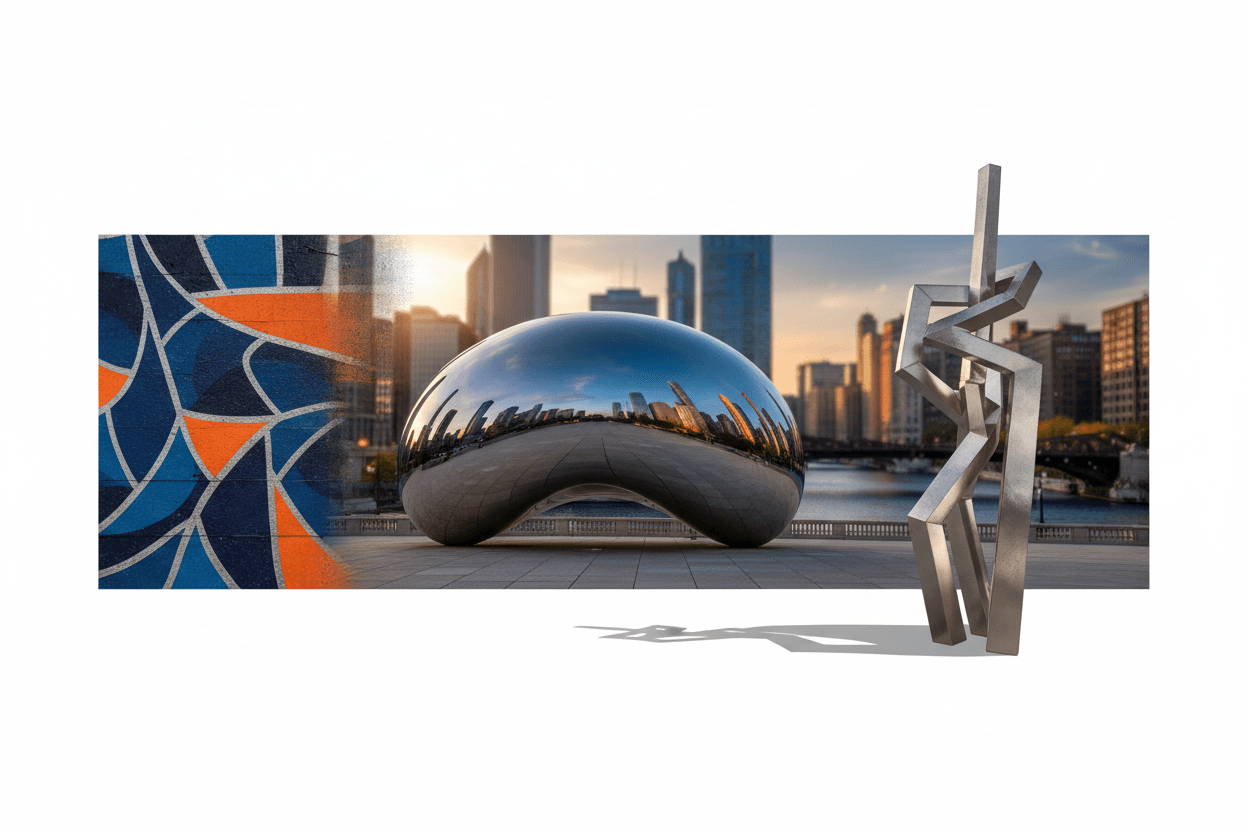
Cloud Gate, affectionately known as “The Bean,” remains Chicago’s most photographed piece of public art. Anish Kapoor’s mirror-finished stainless steel sculpture in Millennium Park reflects the city’s skyline in ways that seem almost magical. Standing beneath its curved surface, visitors experience a unique perspective of both themselves and the surrounding urban landscape. The sculpture’s popularity has made it a must-see destination, drawing millions of visitors annually who come to capture that perfect reflection shot.
Just steps away, Crown Fountain showcases how public art can be both beautiful and functional. Jaume Plensa’s innovative design features two 50-foot glass towers that display rotating faces of Chicago residents. During warmer months, water cascades down the towers, creating an interactive fountain where children and adults alike can cool off while experiencing art. The fountain represents the diversity of Chicago’s population, making it deeply meaningful beyond its aesthetic appeal.
The Picasso sculpture in Daley Plaza sparked controversy when it was unveiled in 1967, but has since become an cherished part of Chicago’s identity. Standing 50 feet tall and weighing 162 tons, this untitled Cor-Ten steel sculpture was Pablo Picasso’s gift to the city. Its abstract form continues to inspire debate about its meaning, with interpretations ranging from a woman’s head to a baboon, proving that great art keeps people talking decades after its creation.
Neighborhood Murals: Street Art That Tells Chicago’s Stories
Chicago’s mural scene extends far beyond downtown, spreading into neighborhoods where local artists tell the stories of their communities through vibrant wall paintings. These murals serve as both artistic expressions and historical documents, preserving the cultural heritage of diverse neighborhoods.
Pilsen stands out as Chicago’s premier mural destination, where Mexican-American culture comes alive through stunning street art. The neighborhood’s walls feature works by renowned artists like Francisco Mendoza and Aurelio Diaz, whose pieces celebrate Latino heritage while addressing contemporary social issues. Walking through Pilsen feels like touring an open-air museum where every corner reveals another masterpiece that speaks to the immigrant experience and cultural pride.
The Logan Square area has emerged as another hotbed of mural activity, particularly along the 606 elevated trail. Here, artists have transformed concrete walls and building sides into canvases that reflect the neighborhood’s evolving character. These murals often incorporate themes of gentrification, community resilience, and artistic expression, creating thought-provoking dialogue about urban change.
Wicker Park and Bucktown showcase how murals can revitalize urban spaces while maintaining neighborhood character. The murals here range from large-scale commissioned pieces to smaller, more intimate works that surprise passersby. Many feature local landmarks, historical figures, and cultural symbols that resonate specifically with area residents while appealing to visitors exploring these trendy neighborhoods.
Contemporary Installations: Where Innovation Meets Public Space
Chicago’s commitment to contemporary public art extends beyond traditional sculptures and murals into the realm of innovative installations that challenge conventional ideas about art in public spaces.
The Chicago Riverwalk features several contemporary installations that enhance the waterfront experience while celebrating the city’s relationship with the Chicago River. These pieces often incorporate interactive elements, allowing visitors to engage with art while enjoying one of the city’s most scenic areas. The installations change periodically, ensuring that regular visitors always discover something new along their walks.
Maggie Daley Park showcases how playground design can be elevated to art form. The park’s climbing walls, play structures, and landscape design blur the lines between functional recreation and artistic installation. Children play on sculptures while parents appreciate the thoughtful integration of art into everyday family activities, proving that public art doesn’t need to be untouchable to be meaningful.
The 606 elevated park and trail system itself serves as a massive installation, transforming former railway infrastructure into a linear park that connects neighborhoods. Along its 2.7-mile length, visitors encounter various art installations, performance spaces, and viewing areas that offer new perspectives on the city below. This project demonstrates how large-scale urban planning can be approached as an artistic endeavor.
Discovering Hidden Gems: Off-the-Beaten-Path Artistic Treasures
While Chicago’s famous pieces attract most of the attention, some of the city’s most rewarding artistic discoveries wait in unexpected locations throughout the metropolitan area.
The Garfield Park Conservatory houses both botanical wonders and artistic installations that create immersive experiences combining nature and art. The glass houses provide unique settings for temporary installations that respond to the changing seasons and plant collections, offering visitors a chance to experience art in an environment unlike anywhere else in the city.
CTA stations throughout the city feature commissioned artworks that transform daily commutes into cultural experiences. From mosaic installations at Wilson Station to the dramatic light installations at various Red Line stops, public transportation becomes an opportunity for artistic encounter. These pieces prove that art can enhance the most mundane aspects of urban life.
Neighborhood business districts often feature smaller-scale installations and murals that reflect local character and history. Areas like Devon Avenue, Chinatown, and Little Village showcase how immigrant communities use public art to maintain cultural connections while contributing to Chicago’s broader artistic landscape. These pieces often require more intentional seeking out, but reward visitors with authentic cultural experiences.
Planning Your Chicago Public Art Adventure
Experiencing Chicago’s public art scene requires some strategic planning to make the most of your artistic exploration. The city’s size and diversity mean that different neighborhoods offer distinct artistic experiences, and weather considerations can significantly impact your outdoor art viewing.
Spring through fall provides the best conditions for extensive outdoor art exploration, with comfortable temperatures and longer daylight hours. Winter viewing is certainly possible, but requires appropriate clothing and may limit time spent at each location. Many indoor installations and CTA station artworks provide excellent cold-weather alternatives.
Consider organizing your visits by neighborhood or theme to maximize your time and minimize travel. A Loop and Near North focus might include Cloud Gate, Crown Fountain, and the Picasso, while a Pilsen adventure could center on murals and Latino cultural sites. The 606 trail offers a linear route connecting multiple neighborhoods and their distinct artistic offerings.
Photography enthusiasts should plan visits during golden hour for the best lighting conditions, particularly for reflective pieces like Cloud Gate. However, remember that some installations look dramatically different throughout the day, so multiple visits can reveal new aspects of familiar pieces.
Supporting Chicago’s Public Art Future
Chicago’s public art scene continues evolving through ongoing commissioning programs, community initiatives, and private partnerships that bring new works to public spaces. Understanding how to support these efforts helps ensure the city’s artistic landscape continues growing and diversifying.
The Chicago Public Art Group and various neighborhood organizations regularly organize events, tours, and educational programs that connect residents with local artists and their work. Participating in these activities provides deeper context for the art while supporting the artists and organizations that make public art possible.
Many murals and installations depend on community support for maintenance and protection. Respecting artwork, reporting vandalism, and supporting local businesses in artistic neighborhoods helps sustain the economic ecosystem that makes public art viable.
Chicago’s public art scene represents more than just decoration for urban spaces. These sculptures, murals, and installations create shared experiences that bring together residents and visitors, spark conversations about culture and community, and transform ordinary city blocks into extraordinary cultural destinations. From world-famous pieces that define Chicago’s skyline to hidden neighborhood gems that tell local stories, the city’s commitment to public art ensures that culture remains accessible to everyone who walks its streets. Whether you spend a day touring the highlights or months discovering every hidden mural, Chicago’s public art will continuously reveal new layers of meaning and beauty in this remarkable city.