Andersonville: Exploring Chicago’s Swedish Heritage and LGBTQ+ Community
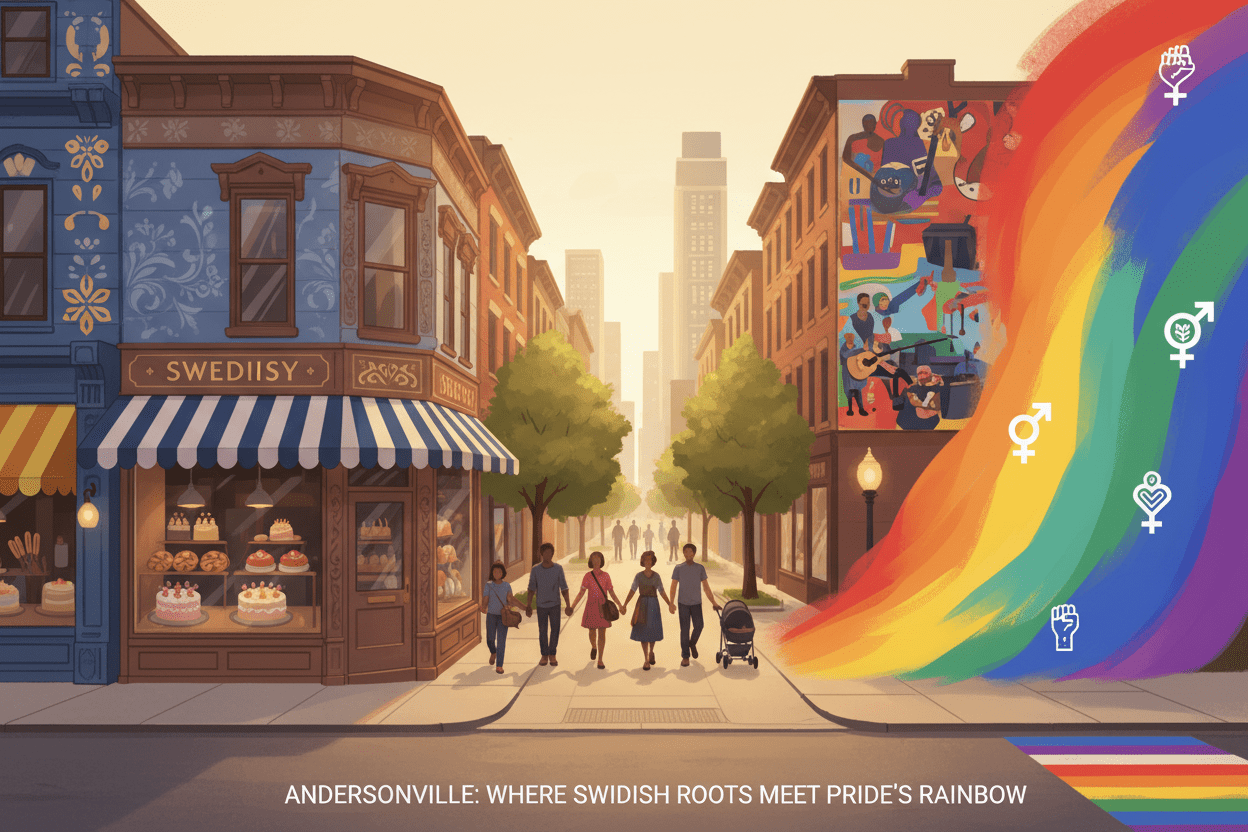
Tucked away on Chicago’s North Side lies a neighborhood that tells two remarkable stories of community, identity, and belonging. Andersonville, stretching along Clark Street between Foster and Bryn Mawr, stands as a testament to how diverse cultures can coexist and thrive together. This charming enclave has evolved from a Swedish immigrant stronghold into one of the city’s most vibrant LGBTQ+ havens, all while maintaining its Scandinavian roots that date back over a century.
Walking through Andersonville today feels like stepping into a living museum where Swedish bakeries sit comfortably next to rainbow-flagged businesses, where traditional folk festivals happen alongside Pride celebrations, and where the past and present create something entirely unique. It’s this beautiful blend that makes Andersonville not just a destination, but a community worth exploring and understanding.
The Swedish Foundation: How Andersonville Became Little Sweden
The story of Andersonville begins in the 1850s when Swedish immigrants first started settling in this area, drawn by affordable land and the promise of opportunity in America’s growing industrial landscape. These early settlers weren’t just looking for a place to live; they were seeking to recreate the sense of community they’d left behind in Sweden.
By the 1890s, the neighborhood had earned the nickname “Swede Town,” and Clark Street buzzed with Swedish-language newspapers, traditional bakeries, and import shops selling goods from the homeland. The Swedish American Museum, which still stands today as a cornerstone of the community, was founded in 1976 to preserve this rich heritage that might otherwise have been lost to urban development and assimilation.
What’s fascinating about Andersonville’s Swedish heritage is how it shaped the neighborhood’s character in ways that still resonate today. The Swedish concept of “lagom” – meaning “just the right amount” or balanced moderation – seems to permeate the area’s approach to development and community building. Unlike other Chicago neighborhoods that experienced rapid gentrification, Andersonville has managed to grow and change while maintaining its essential character.

Swedish Cultural Landmarks and Traditions That Endure
The Swedish influence in Andersonville isn’t just historical – it’s alive and thriving. The Swedish American Museum serves as the neighborhood’s cultural anchor, housing artifacts, photographs, and stories that chronicle the Swedish-American experience. Their annual Midsommar festival transforms Clark Street into a celebration of Swedish culture, complete with traditional dancing, flower crowns, and the iconic maypole.
Ann Sather restaurant has been serving Swedish pancakes and cinnamon rolls since 1981, becoming an institution that bridges the gap between old and new Andersonville. The restaurant’s walls are lined with photographs documenting the neighborhood’s evolution, creating an informal timeline that visitors can explore while enjoying traditional Swedish fare.
The Swedish Bakery, another beloved institution, continues to produce traditional pastries and breads using recipes passed down through generations. Their princess cake and cardamom cookies aren’t just desserts – they’re edible connections to a cultural heritage that refuses to fade away despite the neighborhood’s changing demographics.
The Evolution into an LGBTQ+ Haven
The transformation of Andersonville into a prominent LGBTQ+ community didn’t happen overnight, nor did it occur in opposition to the Swedish heritage. Instead, it evolved organically, beginning in the 1980s and 1990s when LGBTQ+ individuals and couples began moving to the area, attracted by its welcoming atmosphere, affordable housing, and strong sense of community.
What made Andersonville particularly appealing to LGBTQ+ residents was the Swedish cultural emphasis on tolerance, equality, and community support – values that aligned naturally with the LGBTQ+ community’s needs for acceptance and belonging. The neighborhood’s existing infrastructure of local businesses, community organizations, and civic engagement provided a foundation upon which a new kind of community could flourish.
Women and Bar, which opened in 1986, became one of the first lesbian-owned businesses in the area and helped establish Andersonville as a safe space for LGBTQ+ women. This was particularly significant because, at the time, most gay bars and establishments were primarily oriented toward gay men, leaving lesbian and bisexual women with few options for community gathering spaces.
LGBTQ+ Businesses and Community Spaces
Today’s Andersonville boasts one of the most diverse and thriving LGBTQ+ business districts in the Midwest. The concentration of LGBTQ+-owned and LGBTQ+-friendly businesses along Clark Street creates an environment where visitors and residents can feel completely comfortable being themselves.
Early to Bed, a women-focused sexuality boutique, exemplifies the neighborhood’s sex-positive, inclusive approach to business and community building. The shop provides education, resources, and products in an environment that prioritizes comfort and inclusivity over profit margins.
The Landmark Grill and Lounge has become a community gathering place where locals come not just for food and drinks, but for the sense of belonging that permeates every interaction. Their Sunday brunch has become something of an institution, drawing both neighborhood residents and visitors from across the city.
Perhaps most significantly, the Chicago Women’s Health Center has operated in Andersonville for decades, providing healthcare services specifically tailored to women and LGBTQ+ individuals. This isn’t just a business – it’s a vital community resource that addresses healthcare disparities and provides culturally competent care.
Where Two Communities Intersect: Shared Values and Mutual Respect
One of the most remarkable aspects of modern Andersonville is how Swedish heritage and LGBTQ+ culture have found common ground rather than conflict. Both communities share values of inclusivity, social justice, and community support that have allowed them to coexist and even strengthen each other.
The Swedish concept of “jantelagen” – a cultural norm that emphasizes equality and discourages individual showiness – aligns beautifully with LGBTQ+ community values of acceptance and non-judgment. Both cultures have historically faced challenges related to acceptance and belonging, creating natural empathy and understanding between community members.
This intersection is perhaps most visible during community events. The annual Midsommar festival welcomes LGBTQ+ participants and businesses as sponsors and vendors, while Pride celebrations often feature Swedish-American organizations and businesses. It’s this kind of mutual support and inclusion that makes Andersonville special – it’s not just tolerance, but active celebration of diversity.
Exploring Andersonville Today: A Visitor’s Guide
Modern Andersonville offers visitors a unique opportunity to experience both Swedish heritage and LGBTQ+ culture in a single walkable neighborhood. The best way to explore is on foot, starting at the Swedish American Museum and working your way south along Clark Street.
The neighborhood’s compact size – roughly eight blocks – makes it perfect for a leisurely afternoon of exploration. You can start with coffee and pastries at the Swedish Bakery, browse the unique shops and boutiques that line Clark Street, have lunch at Ann Sather or one of the many LGBTQ+-owned restaurants, and finish with a visit to the museum or one of the neighborhood’s many bars and lounges.
What strikes most visitors is the genuine sense of community that permeates every interaction. Shop owners know their customers by name, restaurant staff remember your preferences, and there’s an overall feeling that you’re not just visiting a neighborhood – you’re being welcomed into a community.
The Future of Andersonville’s Dual Identity
As Chicago continues to evolve and grow, Andersonville faces the same challenges as many urban neighborhoods: rising property values, changing demographics, and the pressure to choose between preservation and progress. However, the neighborhood’s unique dual identity may actually be its greatest strength in navigating these challenges.
The strong organizational infrastructure built by both the Swedish-American community and LGBTQ+ residents has created multiple layers of community advocacy and support. Organizations like the Andersonville Chamber of Commerce work actively to maintain the neighborhood’s character while supporting sustainable growth and development.
Recent initiatives have focused on supporting local businesses, maintaining affordable housing options, and ensuring that new development respects the neighborhood’s historic character. The goal isn’t to freeze Andersonville in time, but to ensure that growth happens in ways that strengthen rather than diminish the community’s unique identity.
Conclusion: A Model for Inclusive Community Building
Andersonville’s story offers valuable lessons about how communities can evolve while maintaining their essential character and values. The neighborhood demonstrates that heritage and progress aren’t mutually exclusive – that honoring the past can actually create a stronger foundation for building an inclusive future.
Whether you’re interested in Swedish culture, LGBTQ+ history, great food, unique shopping, or simply experiencing one of Chicago’s most welcoming neighborhoods, Andersonville offers something special. It’s a place where you can enjoy traditional Swedish pancakes for breakfast and attend a drag show in the evening, where century-old traditions coexist with cutting-edge activism, and where the concept of community is both deeply rooted and constantly evolving.
In a world that often feels divided, Andersonville stands as proof that different communities can not only coexist but actually strengthen each other. It’s this spirit of mutual respect, shared values, and genuine inclusivity that makes Andersonville more than just a neighborhood – it’s a model for what community can be when we choose to celebrate our differences rather than fear them.