Chicago’s Street Art Scene: Murals and Graffiti That Tell the City’s Story
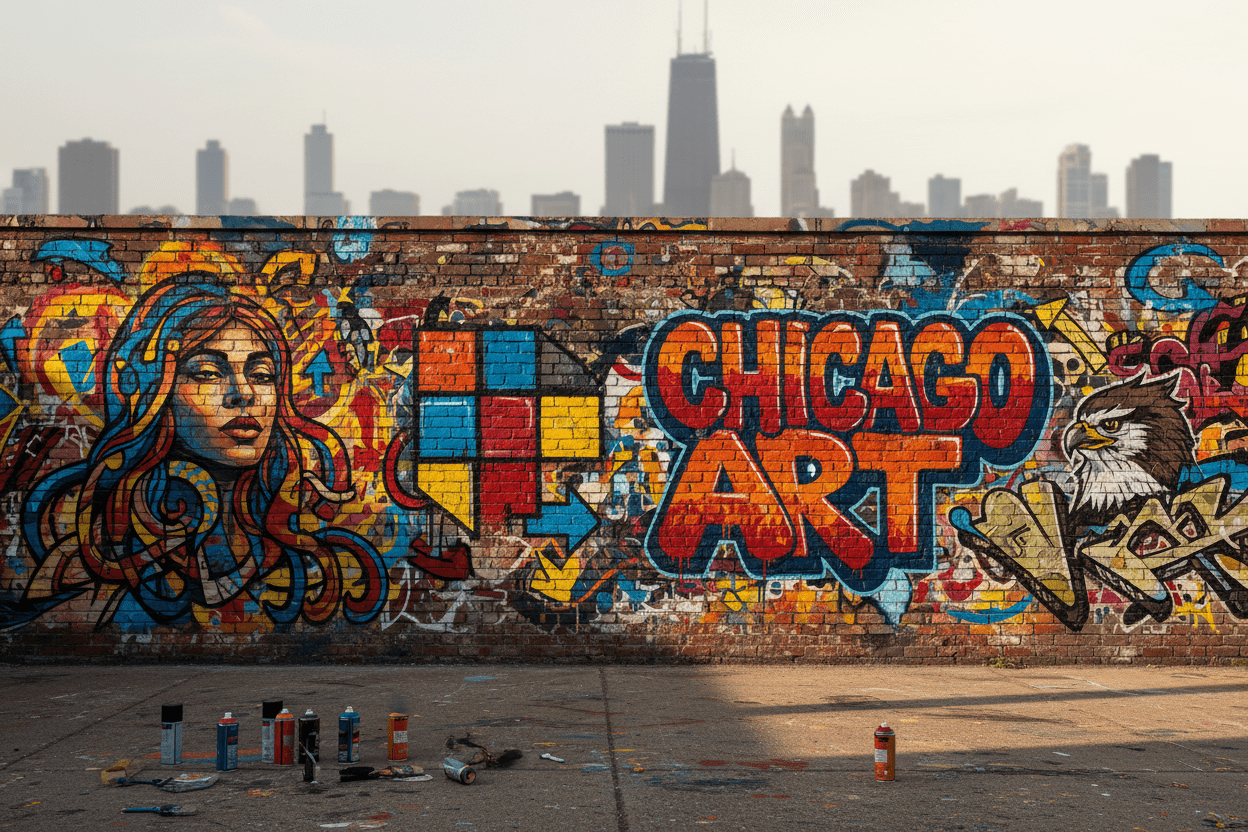
Walking through Chicago’s neighborhoods feels like flipping through a massive, open-air art gallery. Every corner, every alleyway, every underpass holds the potential for discovering something extraordinary painted across brick walls and concrete surfaces. The city’s street art scene isn’t just about pretty pictures – it’s a living, breathing chronicle of Chicago’s soul, capturing everything from its industrial heritage to its ongoing struggles and triumphs.
What makes Chicago’s street art particularly compelling is how it mirrors the city’s character: bold, resilient, and unapologetically authentic. From the politically charged murals in Pilsen to the abstract masterpieces adorning Lincoln Park, these artworks serve as both decoration and documentation, telling stories that might otherwise go untold.
The Evolution of Chicago Street Art: From Rebellion to Recognition
Chicago’s relationship with street art hasn’t always been smooth. Like many major cities, Chicago initially viewed graffiti and unauthorized murals as vandalism – something to be painted over rather than preserved. But as the city evolved, so did its perspective on public art.
The transformation really began gaining momentum in the 1990s when community organizations started recognizing the power of murals to revitalize neighborhoods and give voice to local stories. What started as underground expression gradually found its way into city planning discussions and cultural initiatives.
Today, Chicago actively supports street art through various programs, including the Chicago Public Art Group and numerous community-driven mural projects. The city has learned that when you give artists legal walls to work on, you get better art – and stronger communities.
Pilsen: Where Culture Meets Canvas
If you want to understand Chicago’s street art scene, Pilsen is your essential first stop. This historically Mexican-American neighborhood has transformed itself into one of the city’s most vibrant artistic districts, largely through the power of murals.
Walking down 16th Street, you’ll encounter massive murals that celebrate Mexican heritage while addressing contemporary issues like gentrification and immigration. The artwork here isn’t just decorative – it’s activist art that speaks directly to the community’s experiences and aspirations.
One of the most striking aspects of Pilsen’s street art is how it balances tradition with innovation. You’ll find murals featuring Aztec imagery alongside contemporary portraits of community leaders, creating a visual timeline that spans centuries of cultural heritage.
The neighborhood’s commitment to street art goes beyond individual pieces. Annual events like the Pilsen Art Walk showcase both established and emerging artists, ensuring that the tradition continues to evolve while honoring its roots.
The Wabash Arts Corridor: Chicago’s Outdoor Museum
South of downtown, the Wabash Arts Corridor represents one of Chicago’s most ambitious street art projects. This mile-long stretch of Wabash Avenue features over 30 large-scale murals created by artists from around the world.
What sets the Wabash Arts Corridor apart is its intentional curation. Rather than random artistic expression, each mural is carefully planned to contribute to a cohesive artistic experience. The result is something that feels more like an outdoor museum than a collection of individual artworks.
The corridor showcases Chicago’s commitment to using art as a tool for neighborhood development. What was once a somewhat neglected stretch of the South Loop has become a destination that attracts both tourists and locals, proving that street art can be both culturally significant and economically beneficial.
Artists like JC Rivera, whose “Don’t Take My Kodachrome Away” mural has become an Instagram sensation, demonstrate how contemporary street art can capture both personal nostalgia and universal themes.
Logan Square and Wicker Park: Where Underground Meets Mainstream
The neighborhoods of Logan Square and Wicker Park offer a different flavor of Chicago street art – one that’s heavily influenced by the areas’ music scenes and alternative culture. Here, you’ll find everything from elaborate wheat-paste installations to intricate stencil work that reflects the neighborhoods’ creative energy.
These areas showcase how street art evolves organically within communities. Unlike the planned installations of the Wabash Arts Corridor, much of the art in Logan Square and Wicker Park emerges spontaneously, created by local artists responding to their immediate environment.
The constant evolution of artwork in these neighborhoods means that each visit offers something new. Pieces appear and disappear, get painted over and reimagined, creating a dynamic artistic landscape that never stays the same for long.
Political Expression Through Paint: Chicago’s Activist Art
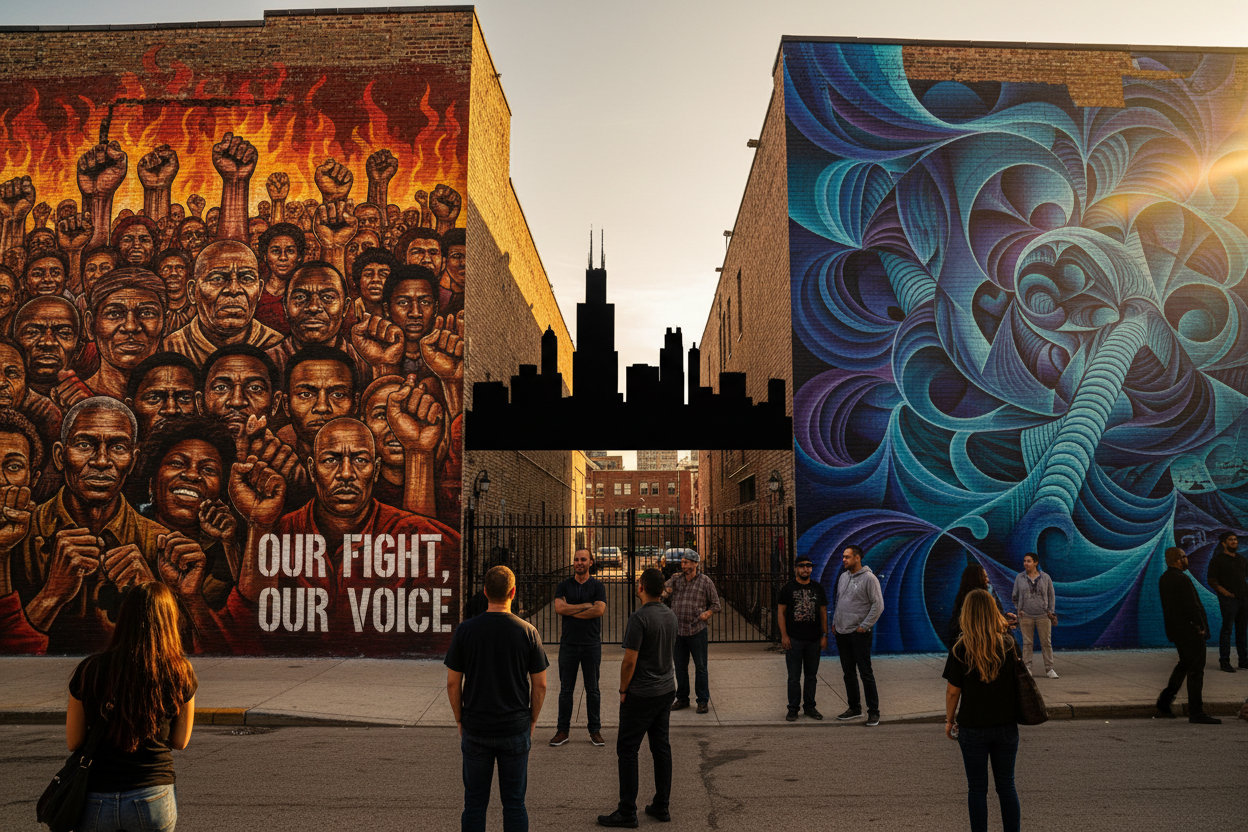
Chicago’s street art scene has never shied away from political commentary. From murals addressing police violence to artwork celebrating LGBTQ+ rights, the city’s walls serve as platforms for social and political expression.
The 2020 protests following George Floyd’s death sparked a new wave of politically charged street art throughout Chicago. Murals honoring victims of police violence appeared across the city, while messages of hope and calls for justice transformed boarded-up storefronts into powerful statements.
What’s particularly striking about Chicago’s political street art is its sophistication. Rather than simple slogans, many pieces incorporate complex imagery and symbolism that invites deeper reflection on social issues.
This tradition of activist art connects Chicago’s contemporary street art scene to the city’s long history of social movements and community organizing, proving that art and activism have always been intertwined in the Windy City.
The Artists Behind the Walls: Chicago’s Street Art Community
Behind every stunning mural is an artist with a story, and Chicago’s street art community is remarkably diverse and collaborative. Artists like Hebru Brantley have gained international recognition while maintaining strong connections to Chicago’s neighborhoods and communities.
Many of Chicago’s street artists started with graffiti before transitioning to commissioned murals, bringing underground techniques and aesthetics into mainstream public art. This evolution reflects the city’s growing acceptance of street art as a legitimate artistic medium.
The community aspect of Chicago’s street art scene is particularly strong. Artists regularly collaborate on large-scale projects, mentor newcomers, and participate in community events that bring art directly to residents.
Local organizations like the Chicago Public Art Group have been instrumental in connecting artists with communities, ensuring that murals reflect neighborhood values and stories rather than imposing external artistic visions.
Discovering Chicago’s Hidden Artistic Gems
While the major murals get most of the attention, some of Chicago’s most interesting street art exists in unexpected places. Utility boxes throughout the city have been transformed into miniature canvases, while underpasses and bridges showcase elaborate pieces that most people never notice.
Exploring Chicago’s street art requires a willingness to wander off the beaten path. Some of the most compelling pieces exist in industrial areas or residential neighborhoods where they serve local communities rather than tourist audiences.
The ephemeral nature of street art means that discovery often involves an element of luck. A piece that wasn’t there last week might appear overnight, while a longtime favorite might disappear just as suddenly.
This constant change keeps Chicago’s street art scene dynamic and ensures that even longtime residents can continue discovering new artistic treasures throughout the city.
The Future of Chicago Street Art
As Chicago continues to evolve, so does its street art scene. New technologies are beginning to influence how artists create and share their work, while changing neighborhoods present both opportunities and challenges for maintaining artistic communities.
The city’s growing recognition of street art’s value has led to more official support and funding, but this mainstream acceptance also raises questions about maintaining the authentic, grassroots character that made the scene so compelling in the first place.
Gentrification remains a complex issue, as the very murals that celebrate neighborhood culture sometimes contribute to changes that displace longtime residents. Artists and communities are working to navigate these challenges while preserving the authentic character of their neighborhoods.
Despite these challenges, Chicago’s street art scene continues to thrive, attracting new artists while honoring the pioneers who established its foundation. The future likely holds even more integration between official public art programs and grassroots artistic expression.
Chicago’s street art scene represents far more than decorative painting on walls – it’s a complex, evolving narrative that captures the city’s essence in ways that traditional art forms simply cannot. From the culturally rich murals of Pilsen to the cutting-edge installations of the Wabash Arts Corridor, these artworks document Chicago’s ongoing story of resilience, creativity, and community.
Whether you’re a longtime resident or a first-time visitor, exploring Chicago’s street art offers unique insights into the city’s character and values. Each mural, each piece of graffiti, each artistic intervention represents someone’s attempt to make their mark on the urban landscape and contribute to the ongoing conversation about what Chicago is and what it could become.
The beauty of Chicago’s street art scene lies not just in individual masterpieces, but in how these works collectively create a visual symphony that celebrates the city’s diversity, acknowledges its struggles, and points toward its possibilities. In a city known for its architecture and museums, the streets themselves have become one of Chicago’s most compelling galleries – one that’s always open, always changing, and always telling the story of the people who call this city home.