
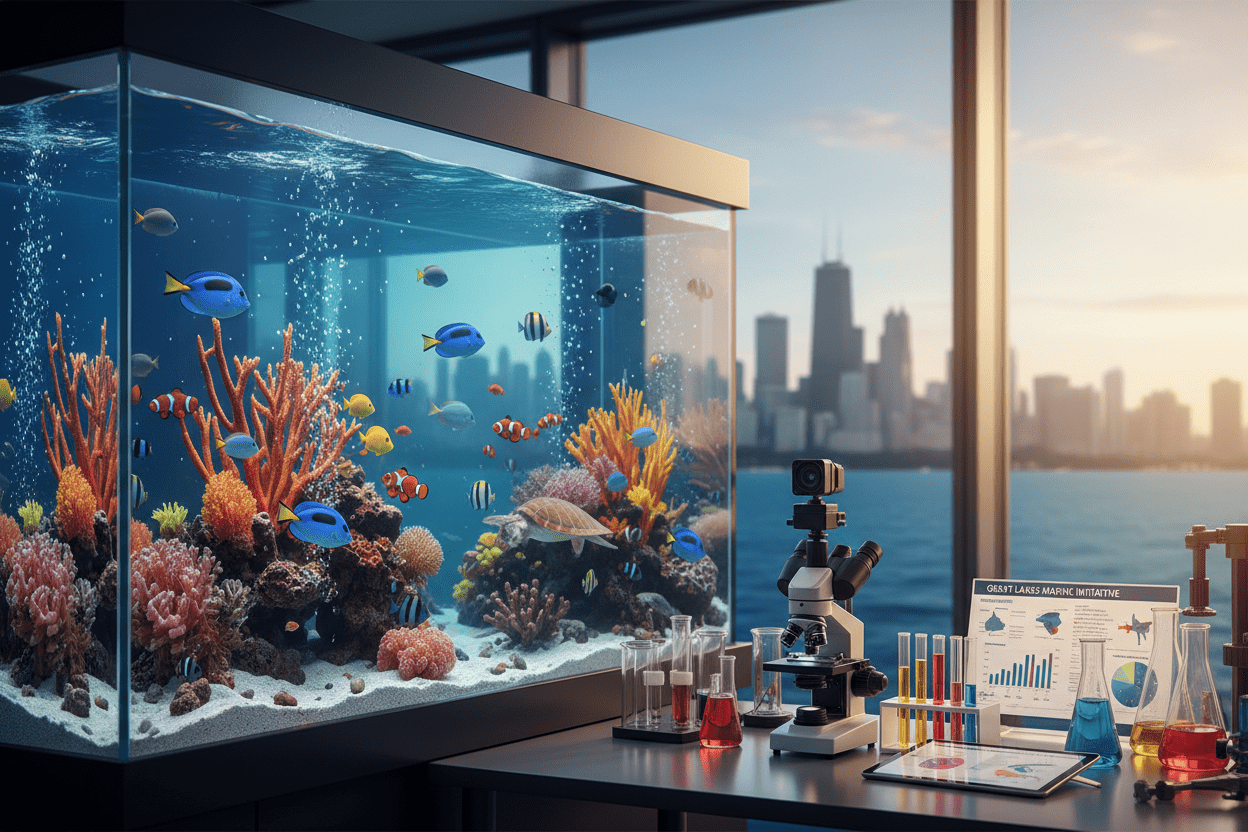
The Science Behind Shedd Aquarium: Marine Conservation in the Heart of the Midwest
When you think of marine conservation, landlocked Chicago might not be the first place that comes to mind. Yet nestled along the shores of Lake Michigan stands one of the world’s most influential aquariums, quietly revolutionizing our understanding of aquatic ecosystems and leading groundbreaking conservation efforts. The Shedd Aquarium has been making waves in marine science for nearly a century, proving that you don’t need to be oceanside to make a profound impact on global marine conservation.
Since opening its doors in 1930, the Shedd has grown from a simple public aquarium into a world-renowned research institution and conservation powerhouse. Today, it houses over 32,000 aquatic animals representing 1,500 species, but numbers alone don’t tell the full story. Behind the mesmerizing exhibits and educational programs lies a sophisticated network of scientists, researchers, and conservationists working tirelessly to protect our planet’s most vulnerable aquatic species.
A Legacy of Scientific Innovation
The Shedd Aquarium’s commitment to scientific research runs deeper than its impressive collection of marine life. From its earliest days, the institution has prioritized research alongside public education, establishing itself as a legitimate scientific research facility rather than merely an entertainment venue. This dual mission has allowed the Shedd to contribute meaningfully to our understanding of aquatic ecosystems while inspiring millions of visitors to care about marine conservation.
The aquarium’s research initiatives span multiple disciplines, from marine biology and animal behavior to water chemistry and ecosystem dynamics. Scientists at the Shedd conduct both field research and controlled laboratory studies, often collaborating with universities, government agencies, and international conservation organizations. This collaborative approach has positioned the Shedd as a respected voice in the global marine conservation community.

One of the most remarkable aspects of the Shedd’s scientific program is its ability to conduct meaningful research despite being located hundreds of miles from the nearest ocean. The facility’s state-of-the-art laboratories and controlled environments actually provide unique advantages for certain types of research, allowing scientists to study marine organisms under carefully monitored conditions that would be impossible in the wild.
Cutting-Edge Research Programs
The Shedd’s research portfolio encompasses several critical areas of marine science, each addressing pressing conservation challenges facing our oceans today. The aquarium’s scientists are particularly known for their work in animal reproduction, population genetics, and habitat restoration.
The reproductive biology program at the Shedd has achieved remarkable success in breeding endangered species, including several firsts in the aquarium world. These breeding programs serve a dual purpose: they help maintain genetically diverse captive populations while advancing our understanding of reproductive biology in marine species. The knowledge gained from these programs often proves invaluable for conservation efforts in the wild.
Genetic research at the Shedd focuses on understanding population structure and genetic diversity in threatened species. Using advanced DNA analysis techniques, researchers can trace the evolutionary history of species, identify distinct populations, and assess the genetic health of both captive and wild populations. This information is crucial for developing effective conservation strategies and ensuring the long-term survival of endangered species.
The aquarium’s habitat restoration research takes a broader ecosystem approach, studying how different species interact within their environments and how human activities affect these delicate relationships. This research often involves field studies in locations ranging from the Great Lakes to tropical coral reefs, demonstrating the Shedd’s global reach despite its Midwestern location.
Conservation Success Stories
The true measure of the Shedd’s impact lies in its conservation success stories, which span the globe and encompass a diverse array of species. One of the most celebrated achievements involves the aquarium’s work with beluga whales, where researchers have made significant contributions to our understanding of beluga behavior, communication, and physiology.
The Shedd’s beluga research program has provided insights that have directly benefited wild populations, particularly in the Arctic where climate change poses increasing threats to these magnificent marine mammals. By studying belugas in controlled environments, researchers have been able to document everything from their complex social structures to their remarkable echolocation abilities, information that proves invaluable for protecting wild populations.
Another remarkable success story involves the aquarium’s work with Pacific dolphins and their role in advancing marine mammal medicine. Veterinary techniques developed at the Shedd have been applied to treat injured wild dolphins and whales around the world. The aquarium’s veterinary team regularly consults on marine mammal strandings and rescues, sharing their expertise with wildlife rehabilitation centers globally.
The Shedd has also made significant contributions to shark conservation, an area of critical importance as shark populations face unprecedented threats worldwide. Through their shark research program, scientists have studied everything from shark reproduction to migration patterns, providing data that informs conservation policies and fishing regulations.
The Great Lakes Connection
While the Shedd’s marine conservation work often captures headlines, the aquarium’s commitment to protecting the Great Lakes ecosystem demonstrates how local conservation efforts can have global significance. The Great Lakes represent the world’s largest freshwater system, and the Shedd has positioned itself as a leading advocate for their protection.
Research programs focused on the Great Lakes address issues ranging from invasive species management to water quality monitoring. The aquarium’s scientists study how invasive species like zebra mussels and Asian carp affect native ecosystems, developing strategies to control these invasions and protect indigenous species.
The Shedd’s Great Lakes research also examines the effects of climate change on freshwater ecosystems. As water temperatures rise and precipitation patterns shift, these massive lakes face unprecedented challenges. The aquarium’s research helps predict how these changes will affect everything from fish populations to water quality, providing crucial data for resource managers and policymakers.
Perhaps most importantly, the Shedd’s Great Lakes work demonstrates the interconnectedness of all aquatic ecosystems. Many species that spend part of their lives in the Great Lakes also depend on marine environments, highlighting how freshwater and marine conservation efforts must work hand in hand.
Education and Public Engagement
The Shedd’s scientific research would have limited impact without effective public engagement and education programs. The aquarium has masterfully woven its research findings into compelling educational experiences that inspire visitors to become conservation advocates.
Interactive exhibits showcase ongoing research projects, allowing visitors to see science in action. Touch tanks and behind-the-scenes tours provide intimate encounters with marine life while educating the public about conservation challenges. These programs transform casual visitors into informed advocates who understand the importance of marine conservation.
The aquarium’s school programs reach thousands of students annually, many of whom have never seen an ocean. By bringing marine science to the Midwest, the Shedd expands the constituency for marine conservation far beyond coastal communities. These educational programs often spark lifelong interests in marine science, creating the next generation of ocean advocates and researchers.
Professional development programs for educators multiply the Shedd’s impact, training teachers to bring marine science into classrooms across the region. This approach ensures that the aquarium’s conservation message reaches far beyond its physical walls, creating a ripple effect of environmental awareness throughout the Midwest.
Technology and Innovation
Modern conservation requires cutting-edge technology, and the Shedd has embraced innovation to enhance both its research capabilities and public engagement efforts. Advanced water filtration systems, sophisticated monitoring equipment, and state-of-the-art laboratories enable researchers to conduct world-class science in the heart of Chicago.
The aquarium has also pioneered the use of technology in public education, incorporating virtual reality experiences, interactive displays, and digital storytelling to make marine science more accessible and engaging. These technological innovations help bridge the gap between complex scientific concepts and public understanding, making conservation science more relatable to diverse audiences.
Remote monitoring systems allow Shedd researchers to study wild populations without disturbing their natural behaviors. Satellite tags, underwater cameras, and acoustic monitoring devices provide unprecedented insights into the lives of marine animals in their natural habitats, data that would be impossible to collect through traditional observation methods.
Global Partnerships and Collaboration
The Shedd’s influence extends far beyond Chicago through strategic partnerships with conservation organizations, research institutions, and government agencies worldwide. These collaborations amplify the aquarium’s impact and ensure that research findings translate into real-world conservation action.
International partnerships have enabled Shedd researchers to work in diverse marine environments, from coral reefs in the Caribbean to kelp forests in the Pacific. These collaborations provide opportunities to study species in their natural habitats while contributing local expertise and resources to global conservation efforts.
The aquarium also participates in species survival plans and breeding programs coordinated by the Association of Zoos and Aquariums, contributing to genetic diversity and population management for endangered species. These collaborative efforts demonstrate how institutions can work together to achieve conservation goals that no single organization could accomplish alone.
Looking Toward the Future
As marine ecosystems face unprecedented challenges from climate change, pollution, and overexploitation, the Shedd Aquarium’s role in conservation science becomes increasingly vital. The institution continues to evolve, expanding its research programs and developing new approaches to marine conservation.
Emerging research areas include the study of ocean acidification, microplastics pollution, and the effects of noise pollution on marine life. These contemporary challenges require innovative research approaches and interdisciplinary collaboration, areas where the Shedd’s diverse expertise and collaborative spirit position it for continued success.
The aquarium is also exploring new ways to engage the public in conservation action, recognizing that scientific knowledge alone is insufficient to address the scale of current environmental challenges. Citizen science programs, community engagement initiatives, and advocacy campaigns represent evolving approaches to conservation that extend far beyond traditional research and education.
The Shedd Aquarium stands as a testament to the power of combining rigorous science with passionate public engagement. From its position in the heart of the Midwest, this remarkable institution has proven that geography is no barrier to making a global impact on marine conservation. Through innovative research, educational excellence, and unwavering commitment to conservation, the Shedd continues to inspire hope for the future of our planet’s aquatic ecosystems. As we face the mounting challenges of the 21st century, institutions like the Shedd remind us that science, education, and public engagement remain our most powerful tools for creating a more sustainable world.