Chicago’s Music Scene: From Blues Legends to Modern Electronic Dance Music
Chicago isn’t just the Windy City – it’s the heartbeat of American music. From the smoky clubs of the South Side where blues legends were born to the underground warehouses where house music first pulsed through massive sound systems, Chicago has consistently shaped the soundtrack of our lives. This incredible musical journey spans over a century, weaving together stories of migration, innovation, and pure artistic genius that continue to influence artists worldwide today.
Walking through Chicago’s neighborhoods, you can almost hear the echoes of musical history reverberating off the brick buildings and down the tree-lined streets. The city’s unique position as a crossroads of American culture, combined with its working-class spirit and diverse communities, created the perfect storm for musical innovation that would change the world forever.
The Birth of Chicago Blues: Where It All Began
The story of Chicago’s musical dominance begins in the early 1900s, when the Great Migration brought thousands of African Americans from the rural South to the industrial North. They carried with them more than just hopes for better opportunities – they brought the Delta blues, work songs, and field hollers that would soon transform in the urban landscape of Chicago.
The South Side became the epicenter of this musical revolution. Clubs like the Checkerboard Lounge and Kingston Mines became legendary venues where raw talent met electric innovation. The acoustic guitars of the Delta gave way to amplified instruments, creating that distinctive Chicago blues sound – grittier, more electric, and undeniably urban.
Muddy Waters, often called the father of Chicago blues, exemplified this transformation. Born McKinley Morganfield in Mississippi, he arrived in Chicago in 1943 and revolutionized blues music by plugging in his guitar and adding a full band. His influence rippled through the music world, inspiring everyone from Chuck Berry to The Rolling Stones, who actually named themselves after one of his songs.
Blues Legends Who Shaped a Generation
Chicago’s blues scene wasn’t built by one person – it was a collective effort of incredibly talented musicians who pushed boundaries and created something entirely new. Howlin’ Wolf, with his powerful voice and commanding stage presence, brought a raw intensity that could fill any room. His performances weren’t just concerts; they were spiritual experiences that left audiences breathless and wanting more.
Little Walter revolutionized the harmonica, transforming it from a simple folk instrument into a lead instrument capable of competing with electric guitars. His innovative use of amplification and effects pedals created sounds that had never been heard before, influencing harmonica players for generations to come.
Buddy Guy, still performing today in his eighties, brought a theatrical element to blues guitar that predated rock and roll showmanship. His wild performances, complete with playing guitar with his teeth and venturing into the audience, showed that blues could be both emotionally deep and incredibly entertaining.
Chess Records, founded by Leonard and Phil Chess, became the label that documented and distributed this incredible music. Located at 2120 South Michigan Avenue, the Chess Records studio was where magic happened on a regular basis, recording not just blues legends but also early rock and roll pioneers like Chuck Berry and Bo Diddley.
Jazz and Soul: The Sophisticated Side of Chicago Music
While blues was electrifying the South Side, Chicago’s jazz scene was developing its own sophisticated sound. The city’s jazz clubs, particularly in the downtown area, attracted musicians from across the country who wanted to be part of something special. The Chicago jazz sound was different from New York or New Orleans – it had a harder edge, influenced by the city’s industrial character.
Curtis Mayfield and The Impressions brought soul music to new heights in Chicago, creating socially conscious music that spoke to the civil rights movement. Mayfield’s guitar style and songwriting influenced countless musicians, and his solo career produced classics like “Superfly” that defined the sound of the 1970s.
The city also nurtured gospel music, with artists like Mahalia Jackson calling Chicago home. The connection between gospel, blues, and soul created a rich musical ecosystem where artists could draw inspiration from multiple traditions, creating something uniquely Chicago.
Rock and Punk: Chicago’s Rebellious Phase
As the 1960s and 70s rolled around, Chicago’s music scene continued to evolve. The city’s blues foundation provided the perfect launching pad for rock music, with bands like Chicago (originally Chicago Transit Authority) bringing horn sections and complex arrangements to rock music in ways that hadn’t been done before.
The punk movement of the late 1970s found a natural home in Chicago’s working-class neighborhoods. Clubs like the Metro and the Empty Bottle became breeding grounds for alternative and punk bands. The city’s DIY ethic, born from its industrial roots, perfectly matched punk’s do-it-yourself philosophy.
Bands like Big Black, led by Steve Albini, created a harsh, industrial sound that reflected the city’s landscape. This wasn’t pretty music – it was honest, raw, and unapologetic, much like the city itself. The influence of these bands can still be heard in alternative and indie rock today.
The House Music Revolution: Chicago Creates Dance Music
Perhaps no musical innovation is more closely associated with Chicago than house music. In the early 1980s, in the underground clubs of the South and West sides, DJs began creating something entirely new. Using drum machines, synthesizers, and existing disco records, they crafted a sound that would eventually conquer dance floors worldwide.
Frankie Knuckles, known as the “Godfather of House Music,” was spinning at the Warehouse club, creating extended mixes and adding electronic elements to disco tracks. The music he played became known as “house music,” literally named after the club where it was born. This wasn’t just about playing records – Knuckles and other DJs like Ron Hardy were creating new music in real-time, using technology to extend and transform existing songs.
The Warehouse and other clubs like the Music Box became temples of dance music, where predominantly Black and Latino communities, including many LGBTQ+ individuals, found acceptance and expression through music. These weren’t just parties – they were cultural movements that provided safe spaces for marginalized communities.
House Music Goes Global: From Chicago Basements to International Fame
What started in Chicago’s underground clubs didn’t stay underground for long. House music producers like Marshall Jefferson, Larry Heard, and Chip E. began creating original tracks that captured the energy of the club scene. Songs like “Move Your Body” by Marshall Jefferson became anthems that defined the genre.
The influence of Chicago house music spread internationally, particularly to the UK, where it helped spawn the entire rave culture of the late 1980s and early 1990s. European DJs and producers took Chicago’s innovations and created their own variations, but they always acknowledged the Chicago roots of the music.
Labels like Trax Records and DJ International became crucial in documenting and distributing house music, helping to establish Chicago as the undisputed birthplace of electronic dance music. The city’s influence on global dance music culture cannot be overstated – from techno to EDM, the DNA of Chicago house music can be found in virtually every electronic dance music genre.
Modern Chicago: Where Electronic Meets Everything
Today’s Chicago music scene is more diverse than ever, but the city’s electronic music heritage remains strong. Festivals like Spring Awakening and North Coast Music Festival showcase both local and international electronic artists, while smaller venues continue to nurture underground talent.
Modern Chicago producers are pushing electronic music in new directions, incorporating elements from the city’s rich musical history. Artists are blending house music with hip-hop, rock with electronic elements, and creating fusion sounds that reflect the city’s multicultural character.
The city’s music venues, from intimate clubs like Smart Bar to massive festivals in Grant Park, continue to provide platforms for both established and emerging artists. Chicago’s music scene has always been about more than just the big names – it’s about the community of musicians, producers, DJs, and fans who keep the music alive and evolving.
The Lasting Legacy: Why Chicago’s Music Scene Matters
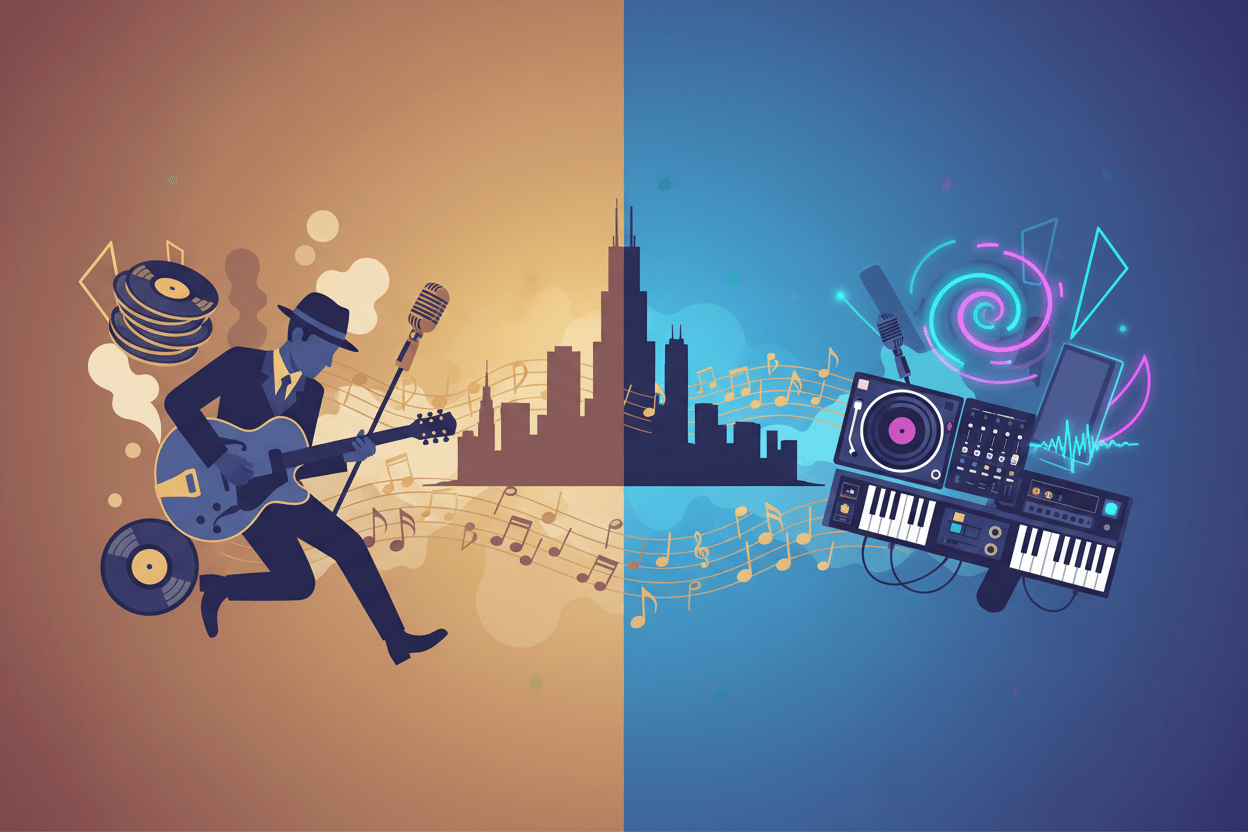
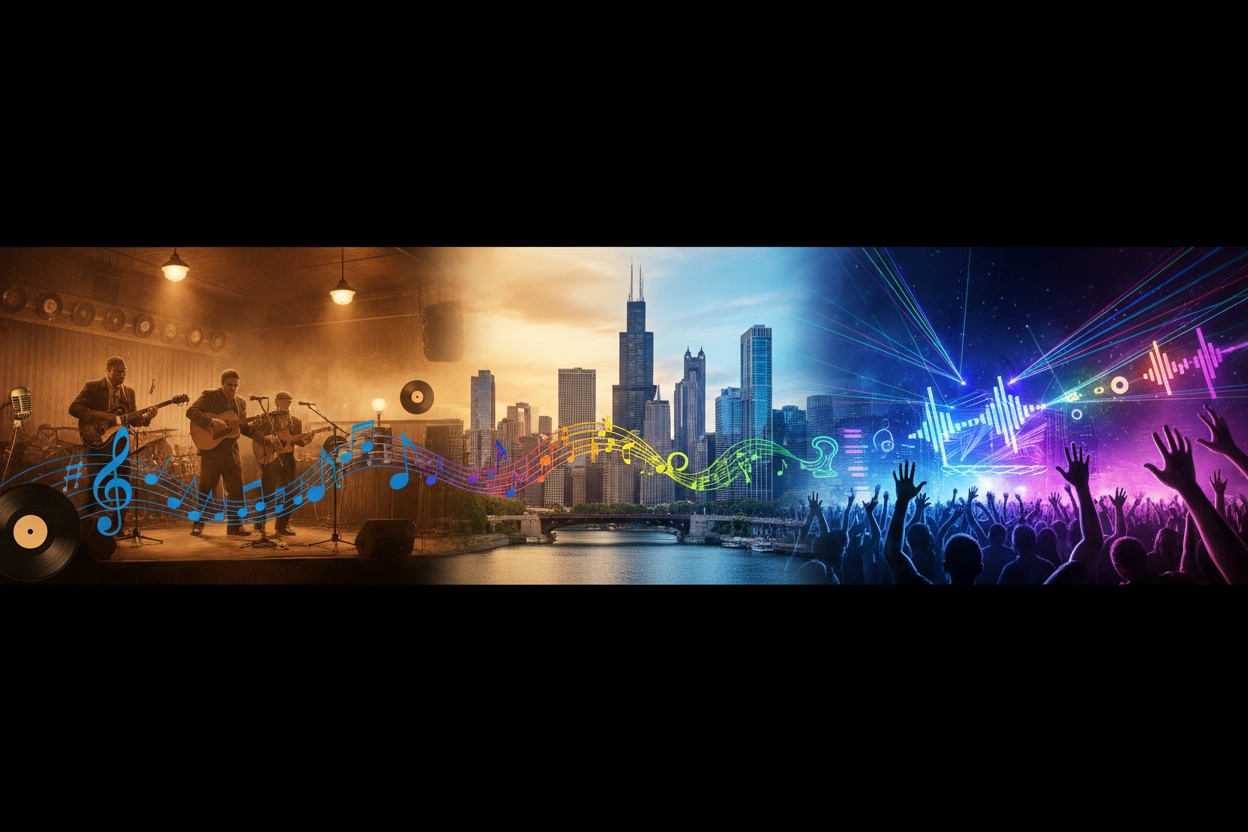
Chicago’s contribution to world music extends far beyond any single genre or era. The city created a template for musical innovation that continues to influence artists worldwide. The blues-to-house progression shows how music evolves while maintaining its emotional core – the same passion that drove Muddy Waters to plug in his guitar can be heard in the electronic beats of modern house producers.
The city’s music scene has always reflected its character: hardworking, innovative, and unafraid to break rules. From blues legends playing in small clubs to house DJs creating new sounds in underground warehouses, Chicago musicians have consistently prioritized authenticity and innovation over commercial appeal.
This musical heritage isn’t just history – it’s a living, breathing part of Chicago’s identity that continues to attract musicians from around the world. Young artists come to Chicago not just to perform, but to be part of a musical tradition that values creativity, community, and pushing boundaries.
Chicago’s music scene represents more than entertainment – it’s a testament to the power of cultural diversity, urban innovation, and the human spirit’s ability to create beauty in any environment. From the blues clubs of the 1940s to the electronic festivals of today, Chicago continues to prove that great music comes from great communities, and that the best innovations often happen when different cultures and traditions come together in unexpected ways.
Whether you’re a music history buff, an aspiring musician, or simply someone who loves great music, Chicago’s musical journey offers lessons in creativity, perseverance, and the transformative power of art. The city that gave us both Muddy Waters and house music continues to write new chapters in its musical story, ensuring that its influence on world music will continue for generations to come.