
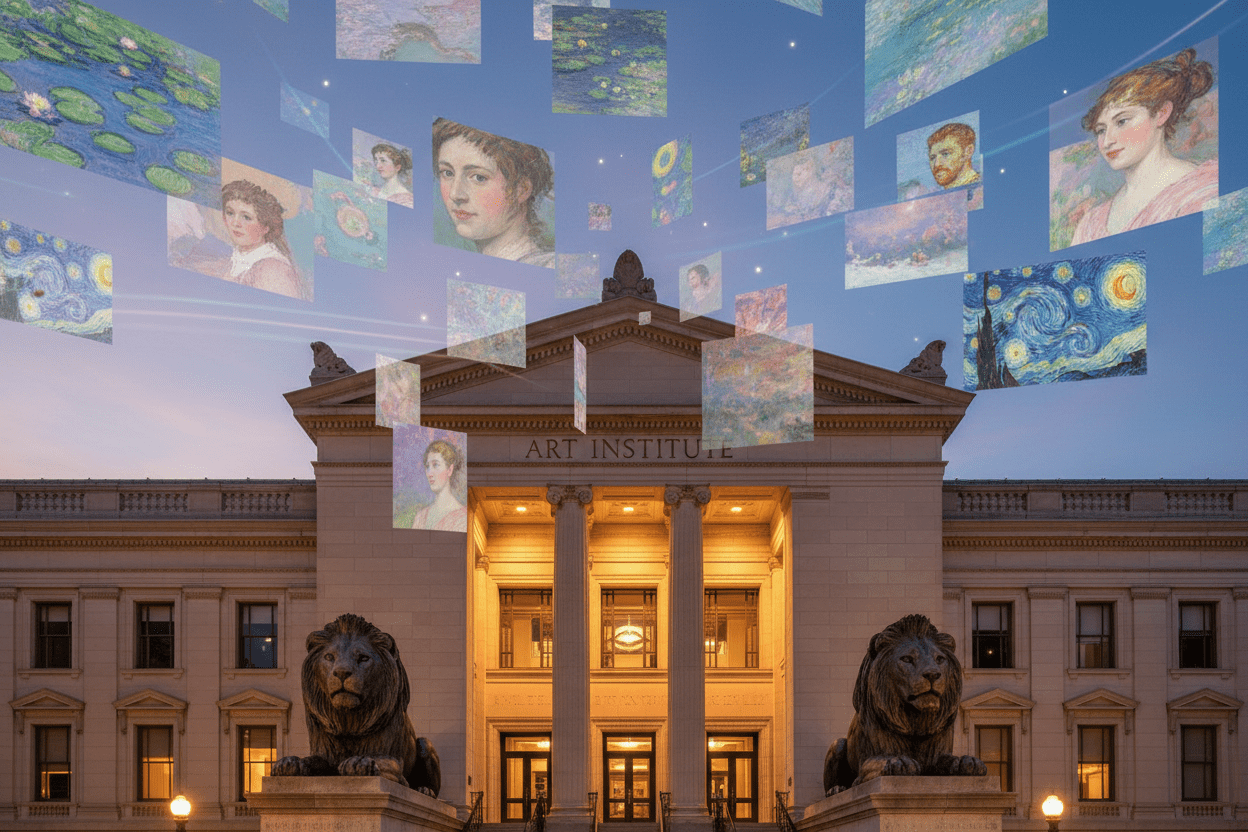
The Art Institute of Chicago: Why It Houses the World’s Best Impressionist Collection
When art lovers think of the world’s greatest Impressionist collections, their minds might initially wander to Paris, where the movement was born. Yet surprisingly, one of the most comprehensive and extraordinary assemblages of Impressionist masterpieces resides thousands of miles away in the heart of America’s Midwest. The Art Institute of Chicago has quietly assembled what many experts consider the finest collection of Impressionist art outside of France, and arguably the most cohesive and spectacular anywhere in the world.
This remarkable achievement didn’t happen by accident. Through strategic acquisitions, generous donations, and an unwavering commitment to excellence spanning more than a century, the Art Institute has created an Impressionist collection that tells the complete story of this revolutionary artistic movement. From Monet’s luminous water lilies to Renoir’s vibrant portraits, from Degas’ intimate ballet scenes to Cézanne’s groundbreaking landscapes, Chicago’s collection offers visitors an unparalleled journey through the golden age of Impressionism.
The Foundation of Excellence: Early Collecting Vision
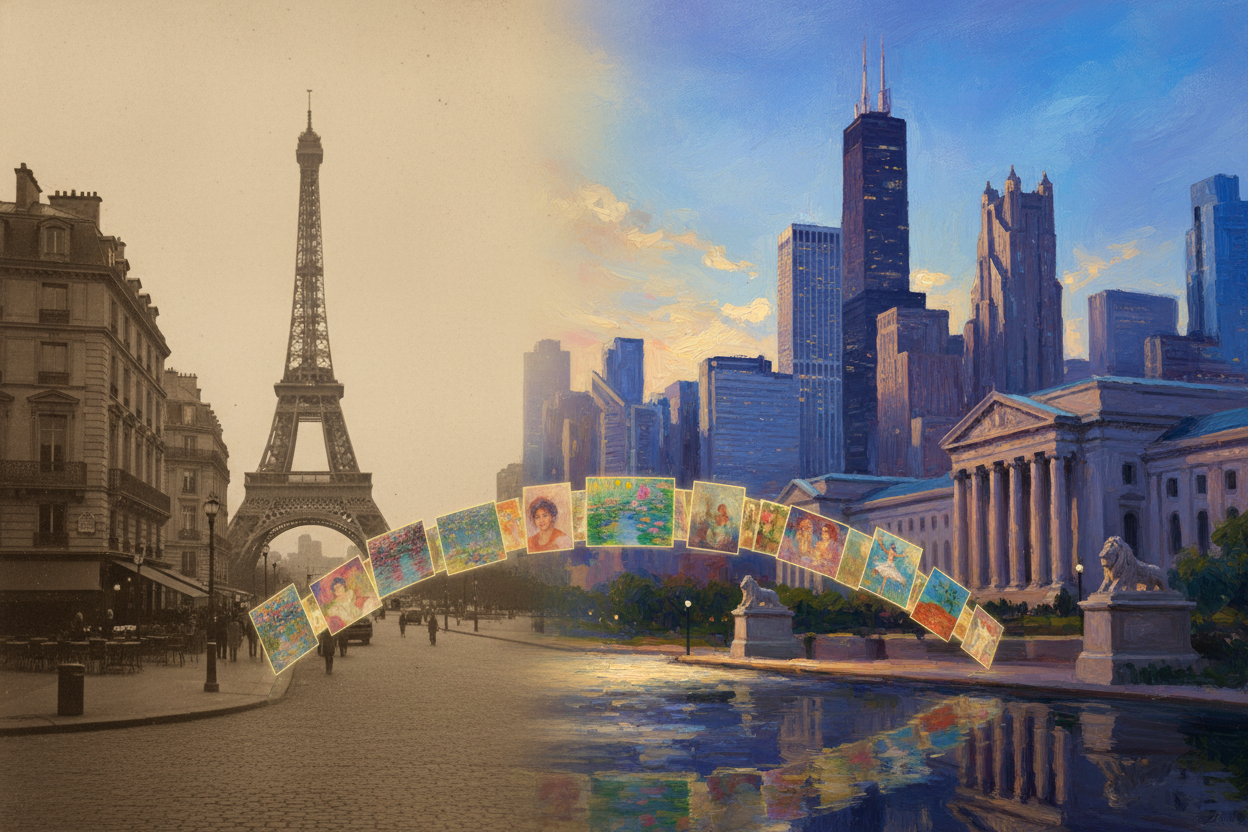
The Art Institute of Chicago’s journey to Impressionist greatness began in the late 19th century, coinciding remarkably with the movement itself. Founded in 1879, the museum demonstrated an almost prophetic understanding of Impressionism’s importance when many established institutions still viewed these works as radical experiments.
The museum’s early leadership possessed something many of their contemporaries lacked: vision. While European museums were often slow to embrace Impressionist works, Chicago’s curators recognized their revolutionary significance. This forward-thinking approach allowed the Art Institute to acquire masterpieces when they were still relatively affordable and available, laying the groundwork for what would become an unrivaled collection.
Martin A. Ryerson, one of the museum’s most influential early trustees, played a pivotal role in shaping the collection’s direction. His personal passion for French art, combined with his substantial financial resources, enabled the museum to pursue ambitious acquisitions. Ryerson’s donations alone included works by Monet, Renoir, and Toulouse-Lautrec that remain among the museum’s most treasured pieces today.
Strategic Acquisitions That Changed Everything
The Art Institute’s collecting strategy has always been characterized by quality over quantity. Rather than attempting to acquire every available work, the museum’s curators have consistently focused on obtaining the finest examples of each artist’s output. This selective approach has resulted in a collection where nearly every piece could serve as a textbook example of its creator’s genius.
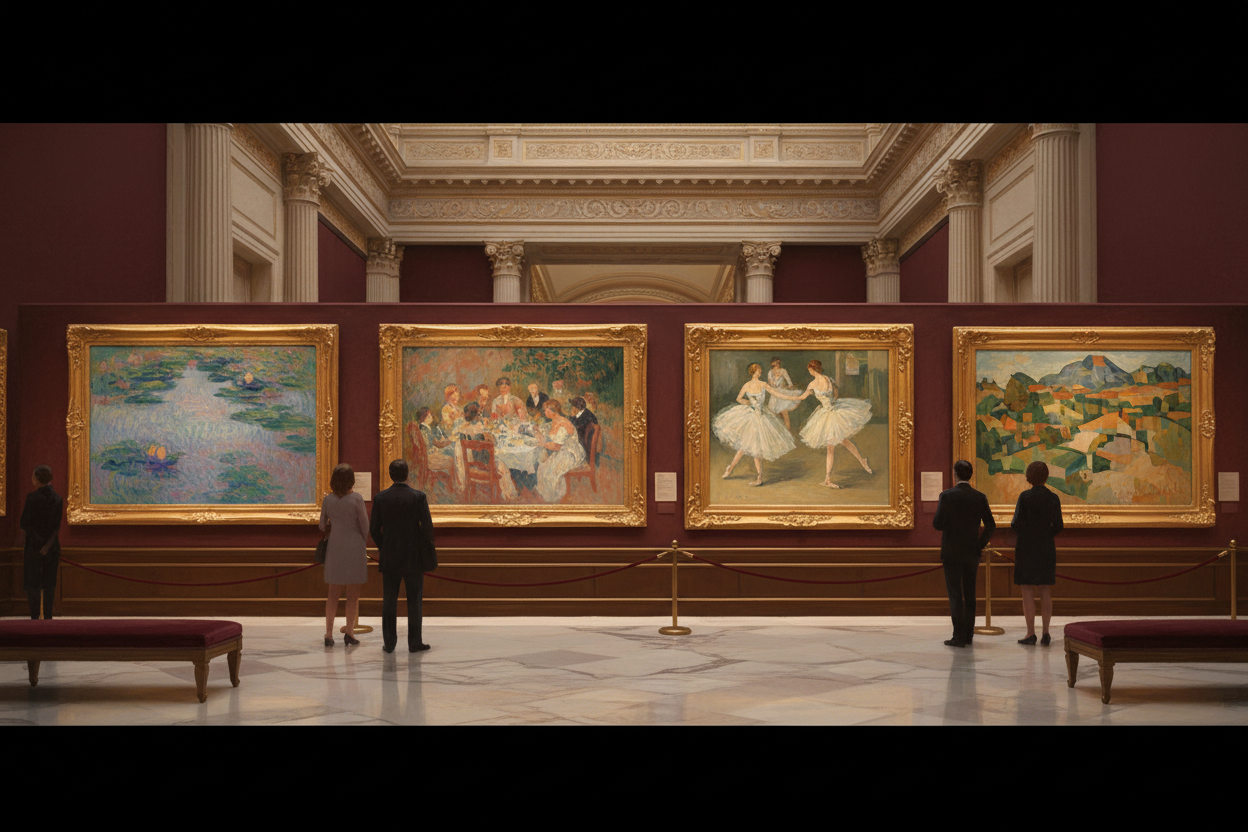
One of the most significant acquisitions came in 1933 when the museum purchased Gustave Caillebotte’s “Paris Street; Rainy Day.” This masterpiece, now one of the most recognizable paintings in the world, exemplifies the museum’s ability to identify and secure works of lasting importance. The painting’s perfect balance of Impressionist technique with urban realism makes it a cornerstone of any serious Impressionist collection.
The museum’s acquisition of Georges Seurat’s monumental “A Sunday on La Grande Jatte” in 1926 represents another triumph of curatorial vision. This Neo-Impressionist masterpiece, which took Seurat two years to complete, demonstrates the evolution of Impressionist techniques and remains one of the most studied and celebrated paintings in art history. The work’s presence in Chicago has attracted countless scholars and visitors, cementing the museum’s reputation as a serious center for Impressionist studies.
The Monet Collection: A Crown Jewel
Perhaps nowhere is the Art Institute’s excellence more evident than in its Claude Monet collection. With over 30 works by the master of light and color, Chicago possesses one of the most comprehensive Monet collections anywhere. These aren’t simply random acquisitions but carefully chosen pieces that represent every major period of the artist’s career.
The museum’s six paintings from Monet’s famous Haystacks series offer visitors a unique opportunity to observe the artist’s revolutionary approach to capturing changing light and atmospheric conditions. Few institutions can claim to own multiple works from this groundbreaking series, making Chicago’s holdings particularly significant for understanding Monet’s artistic evolution.
Equally impressive are the museum’s examples from Monet’s Water Lilies series. These large-scale canvases, created during the artist’s final years at Giverny, represent the culmination of his lifelong exploration of light, color, and reflection. The Art Institute’s Water Lilies paintings provide visitors with an immersive experience that few other museums can match.
Renoir’s Masterworks and Human Connection
The Art Institute’s Pierre-Auguste Renoir collection showcases another dimension of Impressionist excellence. With works spanning from his early, more traditional period through his later, more experimental phases, the collection tells the complete story of one of Impressionism’s most beloved masters.
“Two Sisters (On the Terrace)” stands as one of the museum’s most popular works, and for good reason. This 1881 masterpiece captures Renoir’s ability to combine Impressionist technique with profound human emotion. The painting’s warmth and intimacy have made it a favorite among visitors for over a century, demonstrating how great art transcends time and cultural boundaries.
The museum’s Renoir holdings also include several examples of his famous luncheon scenes, which showcase his mastery of complex compositions involving multiple figures. These works demonstrate why Renoir remains one of the most accessible and beloved of the Impressionist masters, combining technical brilliance with genuine human warmth.
Beyond the Famous Names: Depth and Breadth
While the Art Institute’s holdings of works by household names like Monet, Renoir, and Degas are impressive, the collection’s true strength lies in its comprehensive representation of the entire Impressionist movement. The museum houses significant works by lesser-known but equally important artists who contributed to the movement’s development.
Gustave Caillebotte, often overshadowed by his more famous contemporaries, is beautifully represented in the collection. Beyond “Paris Street; Rainy Day,” the museum owns several other Caillebotte works that demonstrate his unique perspective on urban life and his technical innovations within the Impressionist framework.
The collection also includes important works by Camille Pissarro, whose role as a mentor to younger Impressionists cannot be overstated. Pissarro’s landscapes and urban scenes in the Art Institute’s collection show his evolution from traditional landscape painting to his later experiments with Neo-Impressionist techniques.
The Chicago Advantage: Context and Presentation
What sets the Art Institute of Chicago apart isn’t just what it owns, but how it presents its Impressionist collection. The museum’s galleries are designed to create an immersive experience that helps visitors understand not just individual works, but the movement as a whole.
The museum’s commitment to scholarship has resulted in extensive research and documentation of its holdings. This scholarly foundation enhances every visitor’s experience, whether they’re casual art lovers or serious students. The detailed provenance research and technical analysis conducted by the museum’s staff have contributed significantly to our understanding of Impressionist techniques and history.
The Art Institute’s educational programs have also played a crucial role in promoting appreciation for Impressionist art. Through lectures, workshops, and publications, the museum has helped countless people develop a deeper understanding of this revolutionary artistic movement.
A Living Collection That Continues to Grow
Despite already possessing one of the world’s finest Impressionist collections, the Art Institute continues to refine and expand its holdings. Recent acquisitions have filled important gaps and added new dimensions to the collection’s narrative.
The museum’s ongoing commitment to conservation ensures that these masterpieces will remain in pristine condition for future generations. State-of-the-art conservation facilities and techniques help preserve the vibrant colors and delicate surfaces that make Impressionist paintings so captivating.
This dedication to preservation extends beyond the physical works themselves. The Art Institute’s digital initiatives have made its collection accessible to a global audience, sharing Chicago’s treasures with art lovers who may never have the opportunity to visit in person.
The Global Impact of Chicago’s Collection
The Art Institute of Chicago’s Impressionist collection has had a profound impact on art appreciation worldwide. Millions of visitors from every continent have experienced these masterpieces firsthand, taking their inspiration and knowledge back to their home countries.
The collection has also influenced countless artists, critics, and scholars. The opportunity to study these works up close has contributed to our understanding of Impressionist techniques and has inspired new generations of artists to explore similar themes and approaches.
Through traveling exhibitions and loans to other institutions, the Art Institute has shared its treasures with audiences around the world. These collaborations have strengthened international cultural connections and have helped establish Chicago as a major center for art scholarship and appreciation.
The Art Institute of Chicago’s claim to housing the world’s best Impressionist collection isn’t mere boastfulness – it’s a recognition earned through more than a century of thoughtful collecting, careful stewardship, and unwavering commitment to excellence. From its visionary early acquisitions to its continued growth and scholarship, the museum has created something truly extraordinary: a collection that not only preserves the legacy of Impressionism but continues to inspire new generations of art lovers.
Whether you’re drawn by Monet’s revolutionary approach to light, Renoir’s celebration of human joy, or Degas’ intimate glimpses into 19th-century life, the Art Institute of Chicago offers an unparalleled opportunity to experience the full richness of the Impressionist movement. In a world where truly great art collections are increasingly rare, Chicago’s treasure trove of Impressionist masterpieces stands as a testament to the power of vision, dedication, and the enduring appeal of beautiful art.