Why Chicago’s Skyline is Considered the Most Beautiful in America: An Architectural Analysis
When travelers and architecture enthusiasts debate America’s most stunning skyline, Chicago consistently emerges as the frontrunner. While New York boasts impressive height and Los Angeles sprawls endlessly toward the horizon, the Windy City offers something truly special: a harmonious blend of architectural innovation, historical significance, and breathtaking natural beauty that creates an unparalleled urban panorama.
Standing along the shores of Lake Michigan, gazing up at the towering structures that define Chicago’s downtown core, you’re witnessing more than just buildings. You’re experiencing over a century of architectural evolution, from the world’s first skyscrapers to cutting-edge modern marvels that continue to push the boundaries of design and engineering.
The Birth of the Modern Skyline: Chicago’s Architectural Revolution
Chicago’s claim to skyline supremacy begins with its revolutionary role in architectural history. Following the devastating Great Chicago Fire of 1871, the city became a blank canvas for ambitious architects and engineers. This tragedy, while destructive, ultimately gave birth to the Chicago School of Architecture and the world’s first skyscrapers.
The Home Insurance Building, completed in 1885, is widely recognized as the world’s first skyscraper. Standing at just ten stories, it may seem modest by today’s standards, but its steel-frame construction method revolutionized building design forever. This innovation laid the groundwork for the vertical city that Chicago would become.
What makes Chicago’s architectural foundation so remarkable isn’t just the historical significance, but how these early innovations created a cohesive aesthetic language that continues to influence the city’s skyline today. The emphasis on clean lines, functional beauty, and structural honesty established by pioneers like Louis Sullivan and Daniel Burnham still echoes through contemporary Chicago architecture.
Iconic Structures That Define Chicago’s Character
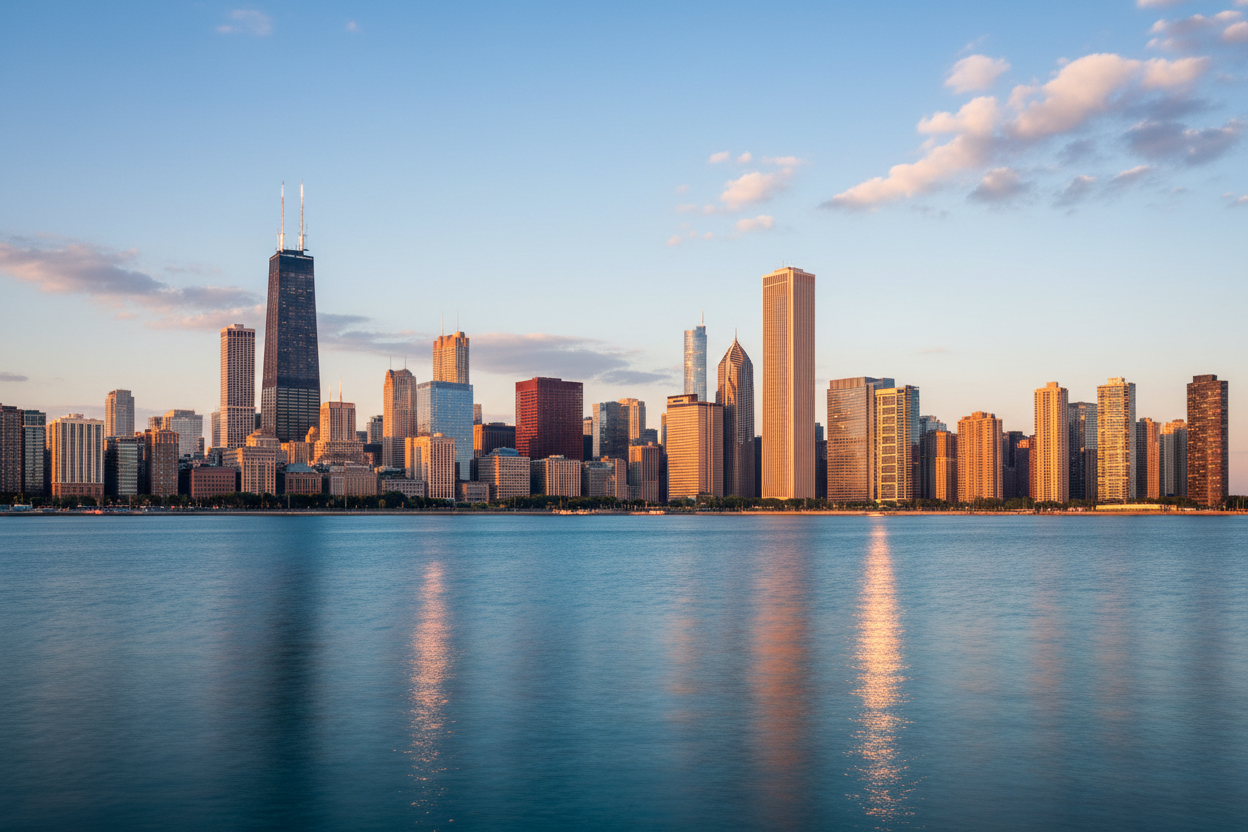
Every great skyline needs its defining monuments, and Chicago delivers with structures that are instantly recognizable worldwide. The Willis Tower, formerly known as the Sears Tower, dominated the skyline for decades as the world’s tallest building. Its distinctive black facade and stepped crown create a powerful anchor point that draws the eye upward.
The John Hancock Center, with its distinctive X-braced exterior, demonstrates how structural engineering can become architectural art. These diagonal supports aren’t just functional elements; they create a visual rhythm that makes the building unmistakably Chicago. The tapering form, wider at the base and narrower at the top, adds elegant proportions that complement the surrounding structures.
More recently, the Trump International Hotel and Tower has added a new dimension to the skyline with its gleaming stainless steel surface and setback design that creates interesting shadow play throughout the day. The building’s curved facade catches and reflects light in ways that make it appear almost sculptural against the sky.
The Aqua Tower represents Chicago’s continued architectural innovation. Designed by Jeanne Gang, its undulating balconies create a fluid, organic appearance that contrasts beautifully with the rigid geometry of older skyscrapers. This building proves that Chicago’s skyline isn’t stuck in the past but continues to evolve with bold, contemporary designs.
The Perfect Natural Backdrop: Lake Michigan’s Role
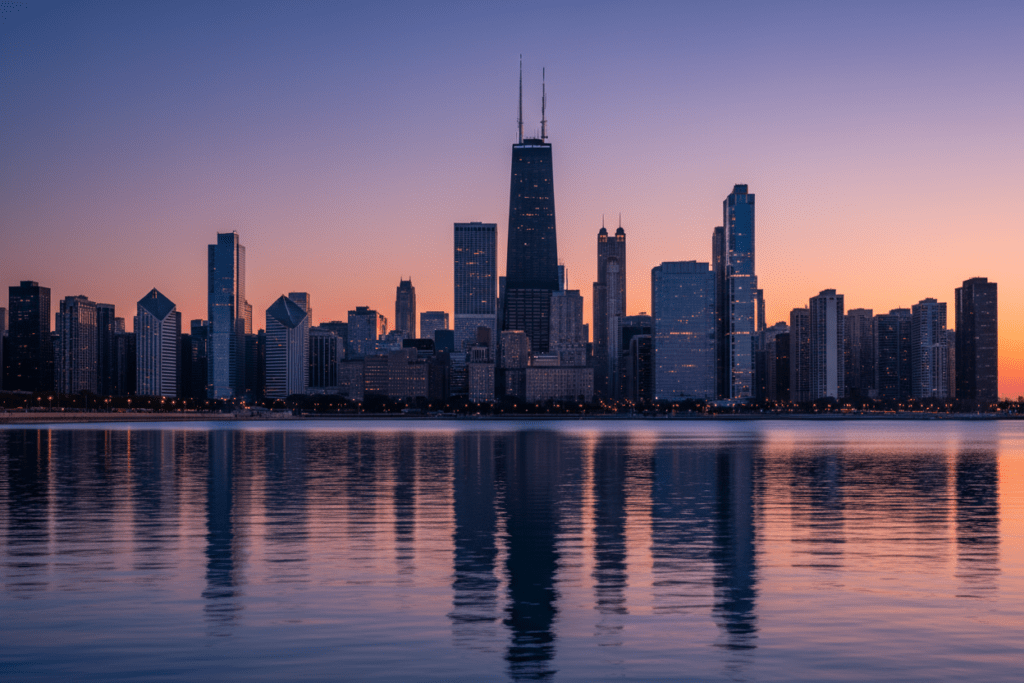
What truly sets Chicago’s skyline apart from its competitors is its stunning natural setting. Lake Michigan provides more than just a pretty backdrop; it creates a unique viewing perspective that’s impossible to replicate in landlocked cities. The vast expanse of blue water stretches to the horizon, making the skyline appear to rise directly from the lake like a modern Atlantis.
This waterfront location offers multiple viewing angles that showcase the skyline’s depth and complexity. From Navy Pier, visitors can see how the buildings create layers of visual interest, with shorter structures in the foreground gradually giving way to towering giants in the distance. The lake also provides perfect reflection opportunities during calm weather, essentially doubling the visual impact of the skyline.
The seasonal changes around Lake Michigan add another dimension to Chicago’s skyline beauty. Winter ice formations create a stark, crystalline foreground that makes the warm lights of the buildings glow even more dramatically. Spring and summer bring sailboats and recreational watercraft that add scale and life to photographs and views of the skyline.
Architectural Diversity: A Timeline in Steel and Glass
Chicago’s skyline tells the story of American architecture through its incredible diversity of styles and periods. Walking through the Loop, you can trace the evolution from the ornate facades of early skyscrapers like the Rookery Building to the sleek minimalism of Mies van der Rohe’s modernist towers.
The Chicago School buildings, with their emphasis on vertical lines and large windows, established the foundation for modern commercial architecture. These structures, including the Marquette Building and the Fisher Building, demonstrate how functional requirements can create beautiful proportions and details.
The Art Deco period brought glamour and sophistication to Chicago’s skyline with buildings like the Chicago Board of Trade Building. Its stepped profile and decorative elements add visual interest and break up what could otherwise be monotonous vertical lines.
Mid-century modernism found perfect expression in Chicago through the work of Ludwig Mies van der Rohe. His IBM Plaza and other International Style buildings introduced the concept of the glass curtain wall, creating structures that seem to float weightlessly despite their massive scale.
Contemporary additions like the Vista Tower and 150 North Riverside demonstrate that Chicago’s architectural innovation continues. These buildings incorporate sustainable design principles while maintaining the aesthetic quality that makes Chicago’s skyline so distinctive.
The Human Scale Factor: Livability Meets Beauty
Unlike some cities where skyscrapers create canyon-like streets that feel oppressive, Chicago’s downtown maintains a human scale that makes it both beautiful and livable. The city’s grid system, established in Daniel Burnham’s 1909 Plan of Chicago, ensures that even the tallest buildings don’t overwhelm the urban experience.
The integration of public spaces like Millennium Park and Grant Park creates breathing room that allows residents and visitors to step back and appreciate the skyline’s full impact. These green spaces serve as outdoor galleries where the skyline becomes public art that everyone can enjoy.
The Chicago Riverwalk adds another layer to this human-scale experience. Following the Chicago River as it winds through downtown, visitors can experience the skyline from water level, creating intimate moments with these architectural giants. The varying heights and setbacks of buildings along the river create interesting compositions that change with every step.
Photography and Popular Culture: Chicago’s Skyline as Icon
Chicago’s skyline has become one of the most photographed urban landscapes in America, and for good reason. The combination of architectural diversity, natural beauty, and dramatic lighting conditions creates endless opportunities for stunning images.
Professional photographers and Instagram enthusiasts alike are drawn to locations like North Avenue Beach, the Adler Planetarium, and various points along Lake Shore Drive for their skyline shots. The city’s skyline has appeared in countless movies, television shows, and advertisements, cementing its status as an American icon.
The skyline’s photogenic qualities aren’t accidental. The careful spacing between major buildings, the variety of heights and architectural styles, and the interplay between old and new create natural compositions that are visually pleasing from multiple angles and distances.
Conclusion: The Enduring Appeal of Chicago’s Architectural Masterpiece
Chicago’s skyline stands as America’s most beautiful not just because of individual architectural achievements, but because of how these elements work together to create something greater than the sum of their parts. The combination of historical significance, architectural innovation, natural beauty, and human scale creates an urban landscape that satisfies both emotional and intellectual appreciation.
From the pioneering skyscrapers of the late 19th century to the sustainable towers rising today, Chicago’s skyline represents the best of American architectural ambition. It’s a living museum of design evolution, a testament to human creativity, and a beautiful backdrop for millions of residents and visitors.
As cities around the world continue to build upward, they would do well to study Chicago’s example. True skyline beauty isn’t just about height or novelty; it’s about creating harmony between human needs, architectural excellence, and natural setting. In this regard, Chicago remains unmatched, continuing to earn its reputation as home to America’s most beautiful skyline.