
Inside Willis Tower’s Skydeck: Engineering Marvel 103 Floors Above Chicago
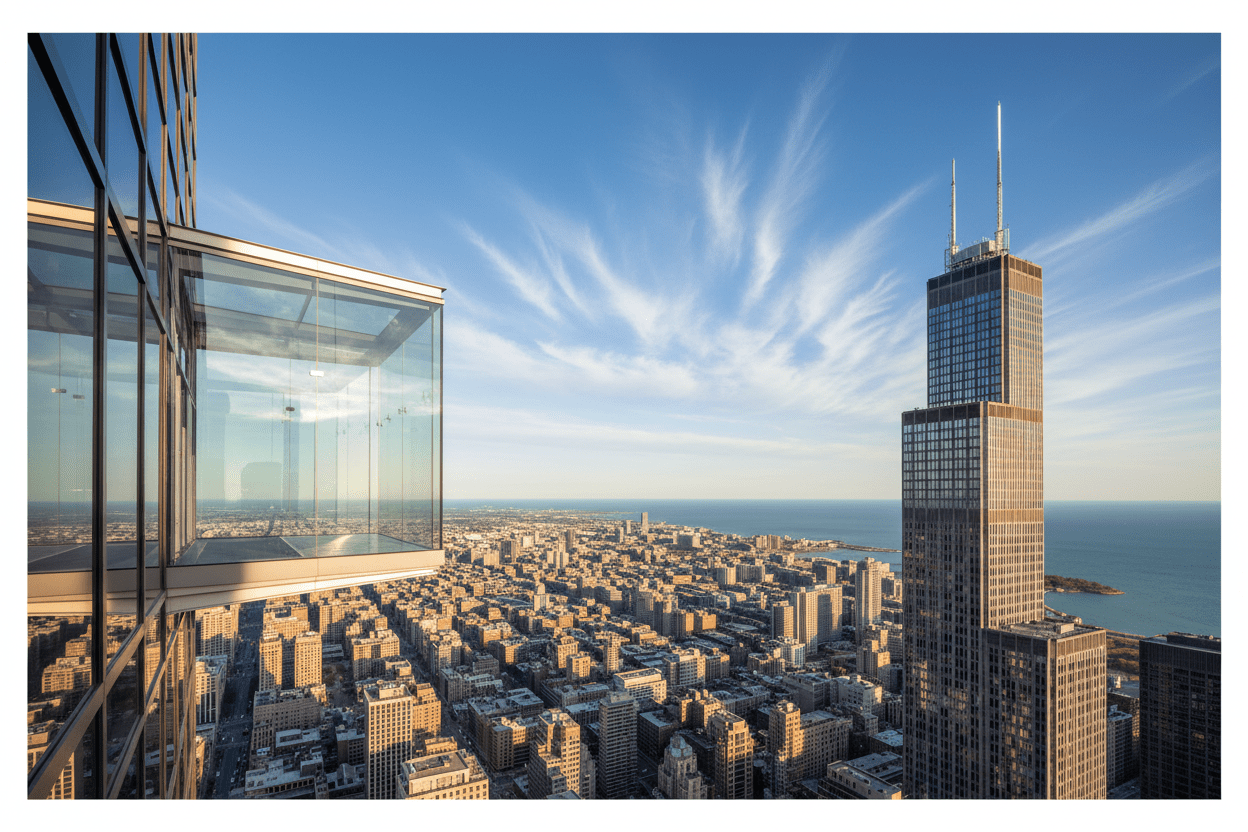
Standing 1,353 feet above the bustling streets of Chicago, the Willis Tower’s Skydeck represents one of the most audacious architectural achievements in modern engineering. What was once known as the Sears Tower continues to captivate millions of visitors who dare to step onto glass ledges suspended more than a quarter-mile above the Windy City. This engineering marvel isn’t just about height – it’s a testament to human ingenuity, cutting-edge technology, and the relentless pursuit of pushing boundaries in both construction and visitor experience.
The Skydeck experience begins long before you step onto those famous glass boxes. It’s a journey through decades of architectural evolution, innovative engineering solutions, and the vision of creating something truly extraordinary. From its groundbreaking construction in the 1970s to the revolutionary glass ledges added in 2009, every aspect of this attraction tells a story of human ambition meeting technological possibility.
The Architectural Foundation: Building to Touch the Sky
The Willis Tower’s journey to becoming Chicago’s most iconic observation deck began in 1970 when construction started on what would become the world’s tallest building. The tower’s unique bundled tube design, conceived by architect Bruce Graham and structural engineer Fazlur Rahman Khan, wasn’t just an aesthetic choice – it was an engineering necessity that would later make the Skydeck possible.
This revolutionary structural system consists of nine square tubes bundled together, creating a building that could withstand the enormous wind loads at such extreme heights. The design allows the structure to sway naturally with Chicago’s notorious winds while maintaining structural integrity. Without this innovative approach, the idea of suspending glass boxes from the 103rd floor would have remained nothing more than a fantasy.
The building’s steel frame contains approximately 76,000 tons of steel, and its concrete foundation extends 100 feet below street level. These numbers aren’t just impressive statistics – they represent the engineering foundation that makes it possible for visitors to safely experience the thrill of standing in mid-air above one of America’s greatest cities.
Glass Box Innovation: Defying Gravity and Fear
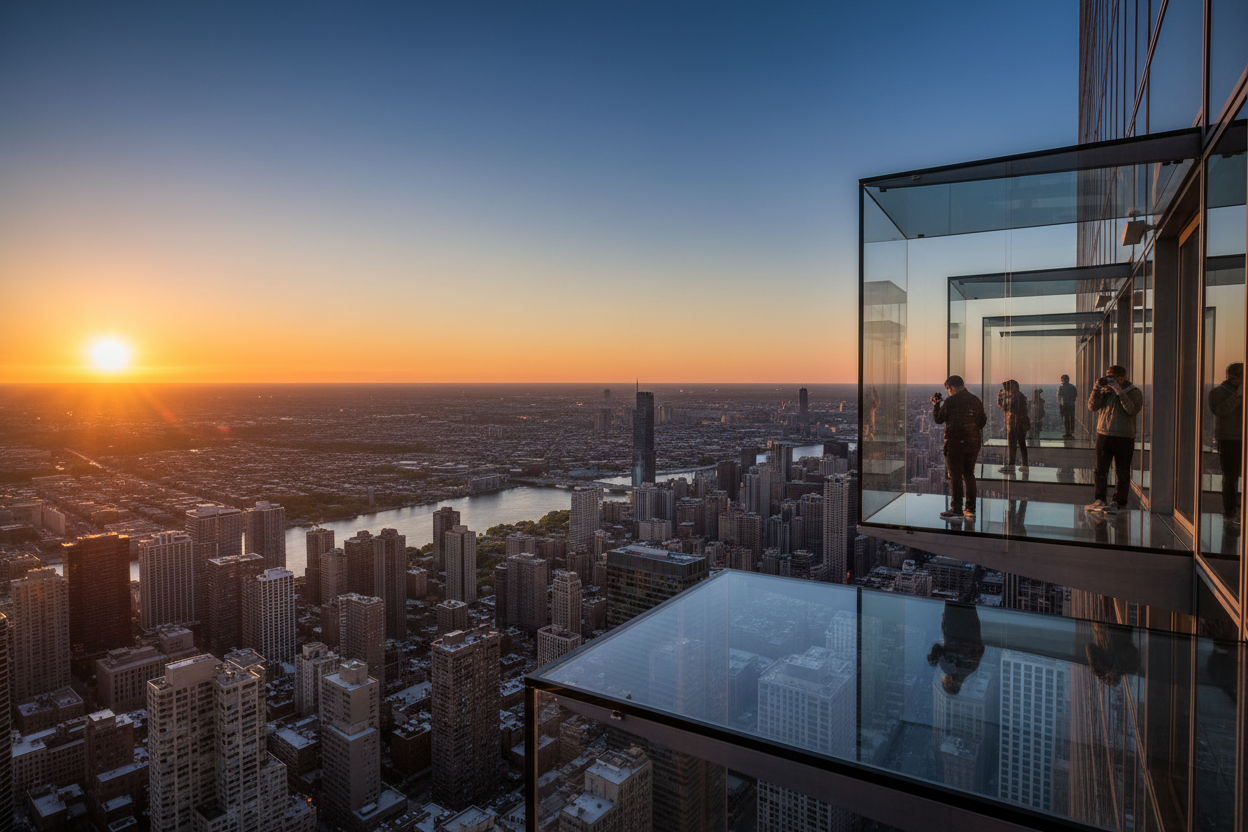
The Skydeck’s glass ledges, known as “The Ledge,” represent perhaps the most psychologically challenging aspect of the entire experience. These four glass boxes extend 4.3 feet from the building’s west side, creating the sensation of floating in space above Chicago’s urban landscape. But behind this seemingly simple concept lies a complex web of engineering calculations and safety considerations.
Each glass box is constructed using three layers of half-inch thick glass, creating a total thickness of 1.5 inches. This laminated glass system can withstand up to 10,000 pounds of pressure – equivalent to the weight of approximately five cars. The glass itself undergoes rigorous testing, including impact resistance trials and thermal stress analysis to ensure it can handle Chicago’s extreme temperature variations.
The installation process for these glass boxes required precision that would make a Swiss watchmaker proud. Each box weighs approximately 1,500 pounds and had to be carefully positioned using specialized cranes and rigging systems. The margin for error was essentially zero, as any miscalculation could have resulted in catastrophic failure or, at minimum, an unusable installation.
Safety Systems: Engineering Peace of Mind
While the glass boxes grab headlines and Instagram posts, the real engineering marvel lies in the comprehensive safety systems that operate invisibly behind the scenes. The Skydeck employs multiple redundant safety measures, each designed to function independently while working together to create an environment where millions of visitors can safely experience this extraordinary attraction.
The building’s elevator system represents an engineering achievement in its own right. High-speed elevators transport visitors from ground level to the 103rd floor in approximately 60 seconds, traveling at speeds of up to 1,600 feet per minute. These elevators incorporate advanced safety systems including multiple cables, emergency brakes, and backup power systems that ensure safe operation even during power outages.
Wind monitoring systems continuously track weather conditions, with automated protocols that can temporarily close the Skydeck when wind speeds exceed safe thresholds. These systems don’t just measure wind speed – they analyze wind patterns, gusts, and directional changes to provide comprehensive safety assessments in real-time.
The glass boxes themselves undergo daily inspection protocols, with trained technicians examining every surface, joint, and structural connection. Advanced monitoring systems can detect microscopic changes in the glass structure, alerting maintenance teams to potential issues long before they could become safety concerns.
Visitor Experience: Where Engineering Meets Human Psychology
The Skydeck experience extends far beyond the engineering marvel of the structure itself. The attraction incorporates sophisticated crowd management systems, climate control technology, and interactive exhibits that enhance the visitor experience while maintaining safety and operational efficiency.
Climate control at 103 floors above ground level presents unique challenges. The observation deck must maintain comfortable temperatures despite extreme variations in external conditions, wind exposure, and the heat generated by thousands of daily visitors. The HVAC system incorporates multiple zones and backup systems to ensure consistent comfort regardless of Chicago’s notoriously unpredictable weather.
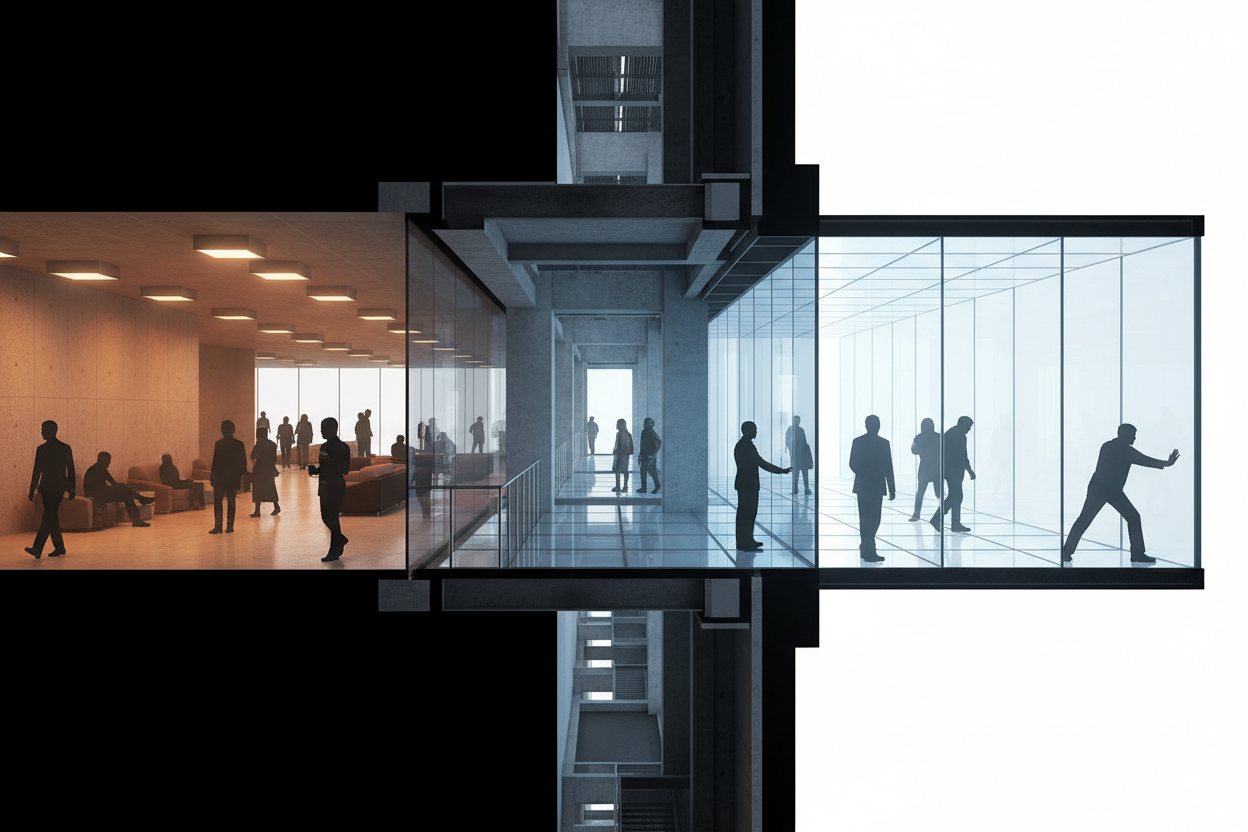
The psychological aspect of the Skydeck experience required careful consideration during design and construction. The transition from the enclosed observation deck to the glass ledges is designed to be gradual, allowing visitors to acclimate to the height before stepping onto the most dramatic elements. Even the flooring materials and lighting systems were selected to minimize psychological stress while maximizing the dramatic impact of the experience.
Interactive technology throughout the space provides educational content about Chicago’s history, the building’s construction, and the engineering principles that make the entire experience possible. These systems operate on hardened networks designed to function reliably in the challenging electromagnetic environment created by the building’s height and the city’s radio frequency landscape below.
Maintenance and Longevity: Preserving an Icon
Maintaining an attraction 103 floors above ground level requires specialized equipment, highly trained personnel, and maintenance protocols that would be unnecessary at ground level. The glass boxes require regular cleaning and inspection, but traditional window washing techniques simply aren’t feasible at this height and exposure level.
Specialized robotic cleaning systems and carefully choreographed human maintenance procedures ensure that the glass surfaces remain crystal clear for optimal viewing. These operations must be coordinated with weather conditions, building occupancy, and the complex logistics of moving equipment and personnel to such extreme heights.
The structural monitoring systems continuously collect data about the building’s performance, the glass box integrity, and the overall safety of the installation. This data feeds into predictive maintenance algorithms that can identify potential issues before they impact visitor safety or experience quality.
Long-term preservation strategies account for the gradual effects of weather exposure, thermal cycling, and the constant stress of supporting thousands of visitors daily. Component replacement schedules, material upgrades, and system improvements are planned years in advance to ensure the Skydeck continues operating safely and efficiently for decades to come.
The Future of Extreme Architecture
The Willis Tower Skydeck has inspired similar attractions worldwide, but it remains unique in its combination of height, engineering sophistication, and visitor experience design. As building technology continues to advance, the principles established in creating the Skydeck continue to influence new projects and push the boundaries of what’s possible in extreme architecture.
Future developments may incorporate even more advanced materials, smart glass technology that can adjust transparency and thermal properties, and augmented reality systems that enhance the viewing experience without compromising the fundamental thrill of standing in space above a great city.
The success of the Skydeck has proven that people will embrace extraordinary experiences when they can trust the engineering behind them. This balance between thrilling adventure and absolute safety continues to drive innovation in attraction design and extreme architecture worldwide.
Conclusion: Where Human Ambition Meets Engineering Excellence
The Willis Tower Skydeck stands as more than just a tourist attraction – it represents the pinnacle of engineering ambition and human courage working in perfect harmony. From the innovative bundled tube structure that makes the building possible to the precision-engineered glass boxes that create an unforgettable experience, every element demonstrates the extraordinary achievements possible when vision meets technical expertise.
The millions of visitors who have stepped onto those glass ledges have experienced something that would have been pure science fiction just decades ago. They’ve walked on air above one of the world’s great cities, supported by engineering systems that represent the best of human innovation and safety consciousness.
As Chicago continues to evolve and grow below, the Skydeck remains a constant reminder of what becomes possible when we refuse to accept limitations. It stands as proof that the most ambitious dreams can become reality when supported by rigorous engineering, unwavering attention to safety, and the courage to build something that has never been built before. In a world where we often focus on digital innovations, the Skydeck reminds us that physical engineering achievements can still take our breath away and expand our understanding of what’s possible when we dare to reach for the sky.