
Cloud Gate Through the Seasons: How The Bean Transforms Throughout the Year
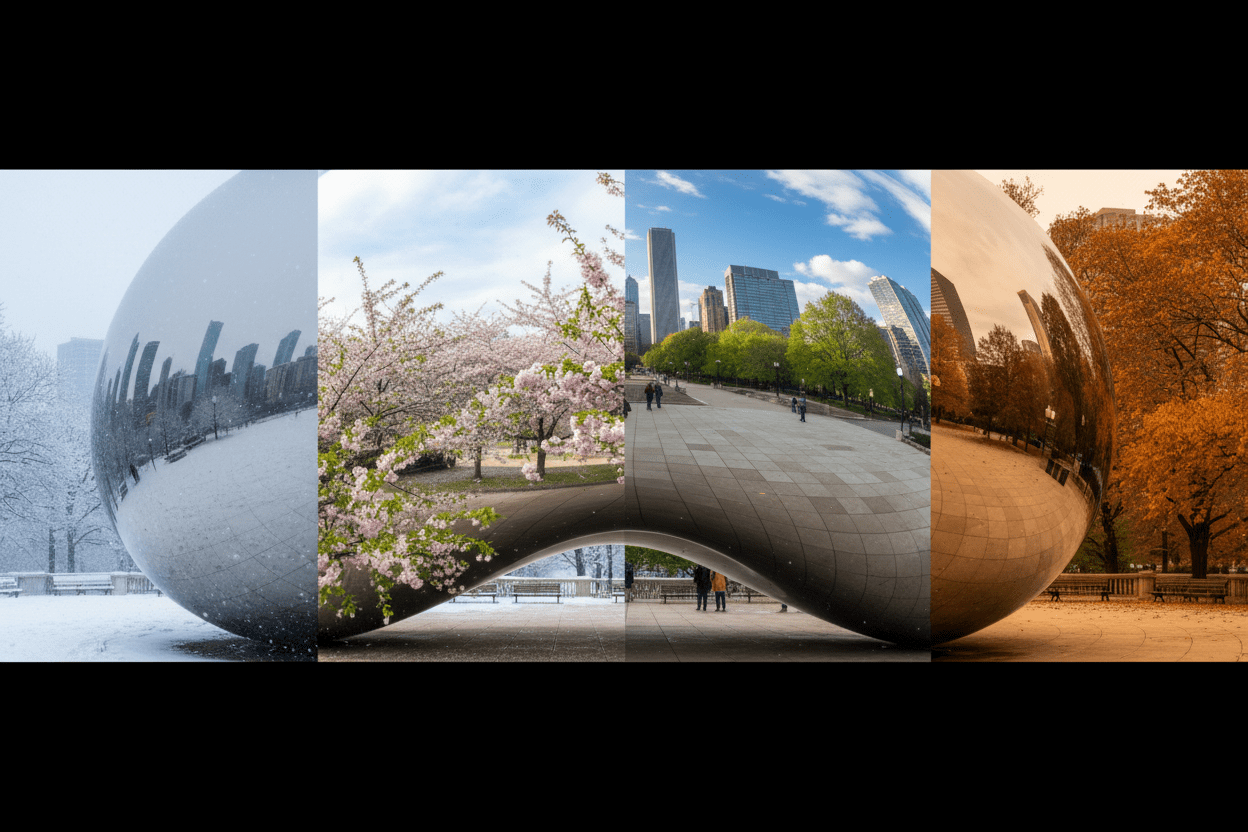
Standing majestically in Chicago’s Millennium Park, Cloud Gate has become more than just a sculpture—it’s a living canvas that changes with the rhythm of the seasons. Affectionately known as “The Bean” by locals and tourists alike, this stunning piece of public art by British artist Anish Kapoor offers visitors a completely different experience depending on when they visit throughout the year.
Since its completion in 2006, Cloud Gate has captured the hearts and cameras of millions of visitors, but few realize just how dramatically this reflective masterpiece transforms as Chicago’s weather patterns shift from season to season. The interplay between the sculpture’s mirror-like surface and the ever-changing elements creates a dynamic visual experience that keeps photographers, artists, and casual observers coming back time and again.
Spring Awakening: The Bean Emerges from Winter’s Grip
As Chicago shakes off the last remnants of winter, Cloud Gate begins its annual transformation. Spring brings a unique energy to The Bean that’s both refreshing and inspiring. The sculpture’s polished stainless steel surface reflects the tentative green buds appearing on surrounding trees, creating an almost ethereal blend of urban architecture and natural renewal.
During March and April, visitors often catch Cloud Gate in transition moments—perhaps with patches of melting snow still clinging to nearby walkways while cherry blossoms begin to bloom in the background. The spring light in Chicago has a particular quality that photographers absolutely love; it’s softer than summer’s harsh glare but more vibrant than winter’s muted tones.
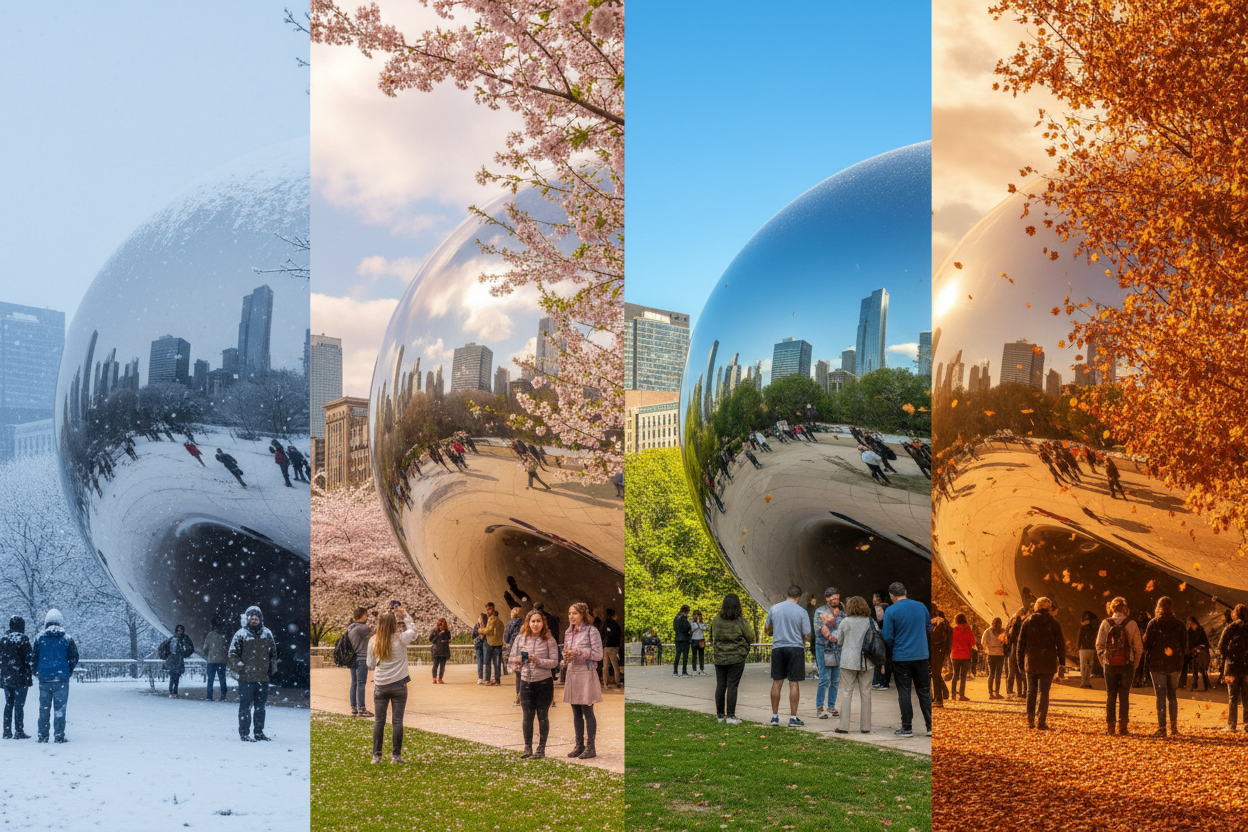
The crowds during spring are manageable compared to summer’s tourist rush, making it an ideal time for those seeking a more contemplative experience with the sculpture. Early morning visits in late April or May offer some of the most spectacular lighting conditions, as the rising sun casts warm golden reflections across The Bean’s surface while the city slowly awakens around it.
Summer Splendor: When The Bean Becomes Chicago’s Mirror
Summer transforms Cloud Gate into something truly spectacular. The intense Illinois sun creates brilliant reflections that can be almost blinding at midday, turning the sculpture into a gleaming beacon visible from blocks away. This is when The Bean truly lives up to its reputation as one of the world’s most photographed public art installations.
The summer months bring the largest crowds to Millennium Park, and Cloud Gate becomes the centerpiece of countless family photos, engagement shoots, and tourist selfies. The sculpture’s ability to capture and distort the Chicago skyline reaches its peak during these months, with the clear blue skies and puffy white clouds creating dramatic contrasts against the reflective surface.
What many visitors don’t realize is that The Bean actually changes temperature throughout the day during summer. Early morning touches reveal a cool, almost refreshing surface, while afternoon contact can be surprisingly warm. This tactile element adds another dimension to the sensory experience of interacting with Kapoor’s creation.
Summer thunderstorms provide some of the most dramatic moments for Cloud Gate enthusiasts. The sculpture’s surface becomes a canvas for lightning flashes and rapidly changing cloud formations, creating photography opportunities that are both challenging and rewarding for those brave enough to weather the storms.
Autumn Transformation: The Bean Reflects Nature’s Grand Finale
Perhaps no season showcases Cloud Gate’s transformative power quite like autumn. As the trees surrounding Millennium Park burst into brilliant reds, oranges, and golds, The Bean becomes a kaleidoscope of fall colors. The sculpture’s curved surface captures and multiplies these warm hues, creating reflections that seem to set the entire installation ablaze with autumn fire.
October and November offer some of the most stunning photographic opportunities at Cloud Gate. The combination of crisp air, clear skies, and vibrant foliage creates perfect conditions for capturing the sculpture’s reflective magic. Many professional photographers consider this the absolute best time to photograph The Bean, as the natural lighting is spectacular and the color palette is simply unmatched.
The autumn crowds are typically smaller than summer but more appreciative of the subtle beauty that this season brings to the sculpture. There’s something almost meditative about watching the reflected fall leaves dance across Cloud Gate’s surface as gentle breezes rustle through the park’s trees.
As autumn progresses toward winter, visitors can witness the gradual transformation in real-time. The vibrant colors slowly fade to browns and bare branches, while the quality of light shifts from warm and golden to cooler and more subdued, preparing for winter’s arrival.
Winter Wonder: The Bean in Its Most Dramatic Setting
Winter transforms Cloud Gate into something almost otherworldly. When snow blankets Millennium Park and ice crystals form on nearby surfaces, The Bean becomes a stark, gleaming contrast against the monochromatic winter landscape. This season offers perhaps the most dramatic visual impact, as the sculpture’s warm, curved lines stand out boldly against the harsh geometric lines of a snow-covered cityscape.
The winter light in Chicago has a unique quality that photographers and artists have celebrated for generations. It’s crisp, clear, and often creates stunning contrasts between light and shadow. Cloud Gate captures this winter light beautifully, sometimes appearing almost blue-white in the reflection of snow and winter sky.
While winter visits require proper clothing and preparation, they offer rewards that many visitors never experience. The crowds are at their smallest during the coldest months, allowing for intimate encounters with the sculpture that are impossible during peak tourist seasons. Early morning visits after fresh snowfall provide some of the most magical moments, when The Bean appears to float above a pristine white landscape.
Ice formation around the sculpture’s base creates additional visual interest during particularly cold spells. While the sculpture itself doesn’t accumulate ice due to its smooth surface and the heat generated by the city around it, the surrounding area can become a winter wonderland that enhances the overall visual impact.
The Technical Marvel Behind the Seasonal Changes
Understanding why Cloud Gate appears so different throughout the seasons requires appreciating the technical brilliance behind its construction. The sculpture consists of 168 stainless steel plates welded together and polished to eliminate visible seams, creating what appears to be a single, seamless surface.
This mirror-like finish is what makes the seasonal transformations so dramatic. Unlike painted surfaces that might fade or weather differently, the stainless steel maintains its reflective properties year-round, ensuring that each season’s unique lighting conditions and color palettes are captured with perfect clarity.
The sculpture’s orientation and positioning within Millennium Park were carefully calculated to maximize these seasonal effects. Kapoor and the installation team considered the path of the sun throughout the year, the surrounding architecture, and the natural elements to create optimal viewing experiences regardless of the season.
Planning Your Seasonal Visit to Cloud Gate
Each season offers unique advantages for visiting Cloud Gate, and the best choice depends on your personal preferences and photography goals. Spring and fall provide the most comfortable weather conditions and stunning natural backdrops, while summer offers the most vibrant energy and longest daylight hours for extended visits.
Winter visits require more planning but reward hardy visitors with some of the most dramatic and unique photographic opportunities. The key is dressing appropriately and timing your visit for optimal lighting conditions—typically within two hours of sunrise or sunset for the most spectacular effects.
Regardless of when you visit, arriving early in the morning or later in the evening will provide the best lighting conditions and smaller crowds. The sculpture’s appearance changes dramatically throughout the day as the sun moves across the sky, so even multiple visits during the same season can yield completely different experiences.
Conclusion: A Year-Round Masterpiece
Cloud Gate’s genius lies not just in its striking design or technical execution, but in its ability to serve as a constantly changing reflection of Chicago’s natural and urban rhythms. Through spring’s renewal, summer’s vibrancy, autumn’s transformation, and winter’s stark beauty, The Bean continues to surprise and delight visitors who return to witness its seasonal metamorphoses.
This remarkable sculpture proves that great public art doesn’t just occupy space—it transforms it, creating new experiences and perspectives with each passing season. Whether you’re a first-time visitor or a longtime Chicago resident, Cloud Gate offers fresh discoveries throughout the year, making it truly worthy of its status as one of the world’s most beloved public art installations.
The next time you find yourself in Chicago, consider timing your visit to Cloud Gate around the seasonal changes. You might just discover that The Bean’s most beautiful reflection is the one that captures the ever-changing spirit of the city itself.